




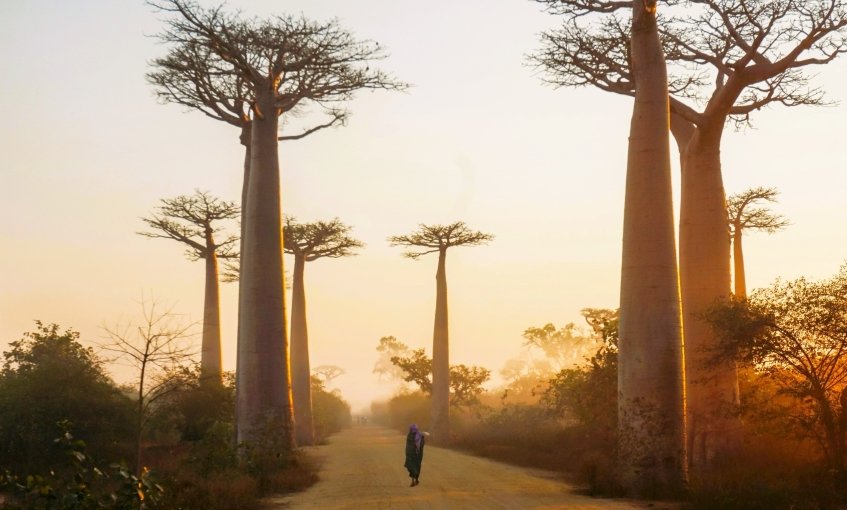
Hey there, tree huggers and wanderlusters! Ever seen a tree that looks like it was planted upside down by a giant who had one too many coconut cocktails? Well, pack your bags (and maybe a neck brace for all the looking up you’ll be doing) because we’re heading to the Avenue of the Baobabs in western Madagascar! This isn’t just any old road with some trees – it’s nature’s very own Cirque du Soleil, where the performers are ancient, massive, and decidedly bark-covered. Get ready for a sight that’ll make you question everything you thought you knew about trees!
Alright, let’s set the scene. Picture this: you’re in western Madagascar, an island that decided to break off from Africa millions of years ago to do its own thing (talk about social distancing!). The Avenue of the Baobabs is a dirt road stretching about 260 meters long, lined with around 25 towering baobab trees. These aren’t your average trees – they’re the Brad Pitts of the plant world, ancient, majestic, and ridiculously photogenic.
These baobabs are of the species Adansonia grandidieri, found only in Madagascar. They’re somewhere between 100 and 800 years old, which makes your grandpa look like a spring chicken in comparison. Standing at up to 30 meters tall, they’re basically nature’s skyscrapers.
But here’s the kicker – this surreal landscape is actually the result of deforestation. Once upon a time, this whole area was thick, tropical forest. But humans, being humans, cleared it all for agriculture, leaving only these baobabs standing. It’s like Mother Nature’s last “up yours” to deforestation – “Fine, cut down the forest, but I’m leaving these weirdos here to confuse your descendants!”
Today, the Avenue of the Baobabs is one of Madagascar’s most popular attractions and a photographer’s dream. It’s like nature’s own version of Insta-famous influencers – they’ve even been featured in music videos!
Off-the-Beaten-Path Recommendations:
- Baobab Climbing: While you can’t climb the ones on the avenue (unless you want to get real cozy with the local authorities), there are nearby baobabs that you can scale. It’s like rock climbing, but more… barky.
- Night Photography: The avenue is magical at night. Bring a tripod and try your hand at some astrophotography. The baobabs against a starry sky look like something straight out of a sci-fi movie.
- Baobab Fruit Tasting: If you’re feeling adventurous, try some baobab fruit. It’s got a tangy, citrusy flavor and is packed with vitamin C. It’s like nature’s own sour patch kid!
- Local Villages: Visit nearby villages to see how locals live alongside these arboreal celebrities. Just remember, waving at a villager and waving at a baobab will get you very different responses.
- Sunset Picnic: Bring some snacks and enjoy a sunset picnic among the baobabs. It’s romantic, unless you start anthropomorphizing the trees – then it might get a bit weird.
Activities:
- Photography Tours: Join a photography tour to capture these woody wonders in the best light. Warning: May cause extreme camera envy.
- Baobab Preservation Workshops: Learn about efforts to preserve these unique trees. Spoiler alert: It involves more than just giving them a hug (though that’s encouraged too).
- Sunrise Yoga: Nothing says “namaste” like doing your sun salutations among ancient trees. Just don’t be surprised if your tree pose feels a bit inadequate here.
- Painting Sessions: Channel your inner Van Gogh and try painting the baobabs. Don’t worry if they end up looking like giant mushrooms – that’s half the fun!
- Nocturnal Wildlife Spotting: The avenue comes alive at night with lemurs, chameleons, and other critters. It’s like a nature documentary, but you’re in it!
- Malagasy Dance Lessons: Some tour operators offer traditional Malagasy dance lessons near the avenue. It’s fun, cultural, and a great way to look silly in front of trees that have seen it all.
Travel Tips and Practical Information
Listen up, future baobab buddies! Here’s what you need to know:
- Getting There: The avenue is about an hour’s drive from Morondava. You can take a taxi or join a tour. Just don’t try to hitch a ride on a lemur – they’re not as helpful as they look.
- Best Time to Visit: May to October for dry weather. The rainy season (November to April) can turn the dirt road into a mud slip ‘n slide.
- Time of Day: Sunrise and sunset are prime times for that perfect photo op. The light is magical, and the trees look even more otherworldly.
- What to Bring: Camera (duh!), water, sunscreen, and a sense of wonder. Maybe leave the chainsaw at home, yeah?
- Guides: Local guides can enhance your experience with their knowledge and spotting skills. Plus, they know which trees have the best personalities.
- Respect the Environment: Stay on designated paths and don’t carve your initials into the trees. They’re not into body modification.
Nearby Points of Interest & Landmarks
- Kirindy Forest: A dry deciduous forest where you can spot lemurs, fossa (Madagascar’s largest predator), and more baobab species.
- Tsingy de Bemaraha National Park: A UNESCO World Heritage site with unique limestone formations. It’s like nature’s version of a obstacle course.
- Morondava Beach: Relax on this beautiful beach after your tree-watching adventures. The seafood here is fresher than a lemur’s dance moves.
- Baobab Amoureux: Two baobabs twisted together, supposedly in an eternal embrace. It’s like a soap opera, but with more bark.
- Mangrove Forests: Take a boat trip through the nearby mangrove forests. It’s like the Venice of Madagascar, minus the gondolas and plus some crocodiles.
Final Thoughts
The Avenue of the Baobabs isn’t just a bunch of weird-looking trees by a dirt road – it’s a testament to nature’s resilience, creativity, and downright wackiness. It’s a place where you can stand in the presence of living things that have watched centuries pass, witnessed the landscape change around them, and still managed to look fabulous doing it.
From the golden light of sunrise to the star-studded skies at night, the Avenue of the Baobabs is a reminder of the magic that still exists in our world. It’s a place that makes you question your understanding of trees, time, and maybe even gravity (seriously, how do they stay upright?).
So go on, take that classic “tiny human, big trees” photo. Hug a baobab (gently, please). Watch a sunset that’ll make your heart do backflips. And remember, in a world that often feels chaotic and unpredictable, these trees have been standing strong for centuries – and they’re not planning on going anywhere anytime soon.
Just one piece of advice: if you hear the trees start whispering “I am Groot,” it might be time to lay off the baobab fruit juice!