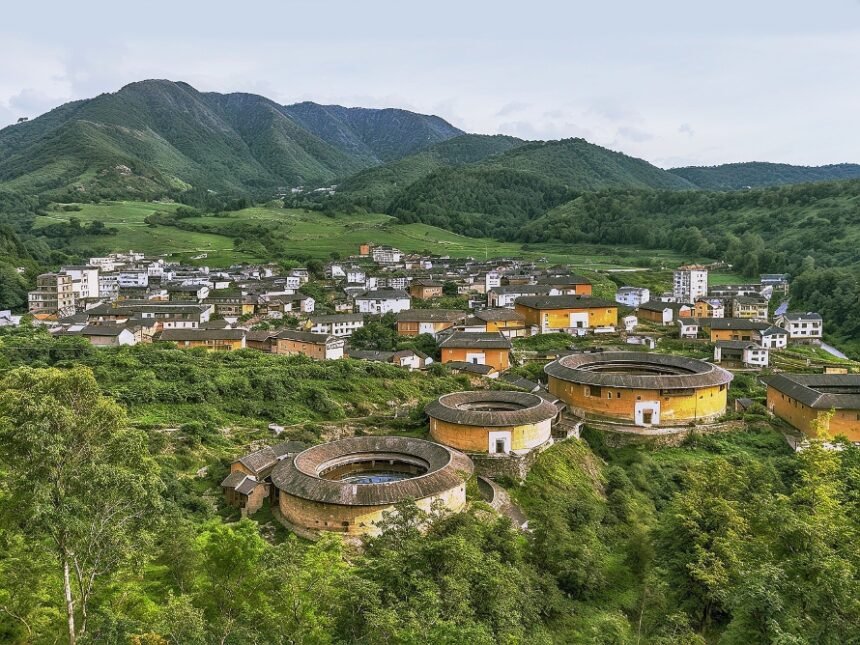
Situated amidst the rolling hills of Yongding County in Fujian Province, the Chuxi Tulou Cluster is a stunning testament to China’s rich cultural heritage. These unique, circular earthen buildings (tulou) have stood for centuries, blending practicality with architectural ingenuity.
A visit to the Chuxi Tulou Cluster is like stepping back in time. From their fascinating design to their role in fostering tight-knit communities, these structures embody the resilience and resourcefulness of the Hakka people. Whether you’re a history enthusiast, a photography lover, or a curious traveler, the Chuxi Tulou Cluster offers an experience that’s as enlightening as it is enchanting.
The tulou, or “earthen buildings,” are traditional rural dwellings constructed by the Hakka people, a Chinese ethnic group known for their unique culture and architecture. Built between the 15th and 20th centuries, these structures served as communal homes, housing multiple families under one roof while also offering protection from invaders.
The Chuxi Tulou Cluster is one of the most well-preserved and visually striking tulou sites in Fujian. It consists of five large circular tulou and dozens of rectangular ones, blending harmoniously with the surrounding countryside. In 2008, the Chuxi Tulou and other similar structures in Fujian were designated as a UNESCO World Heritage Site, recognized for their cultural significance and ingenious design.
Main Attraction: The Chuxi Tulou Cluster
The Chuxi Tulou Cluster includes several notable buildings, each with its unique charm:
- Jiqing Lou: The oldest and largest tulou in the cluster, built in 1419. This four-story structure houses 72 families and showcases intricate wooden carvings and traditional Hakka designs.
- Gengqing Lou: Known for its well-preserved interiors and vibrant murals.
- Shanyang Lou: Offers a panoramic view of the cluster and surrounding terraced fields.
- Yuqing Lou: A smaller tulou with an intimate and charming atmosphere.
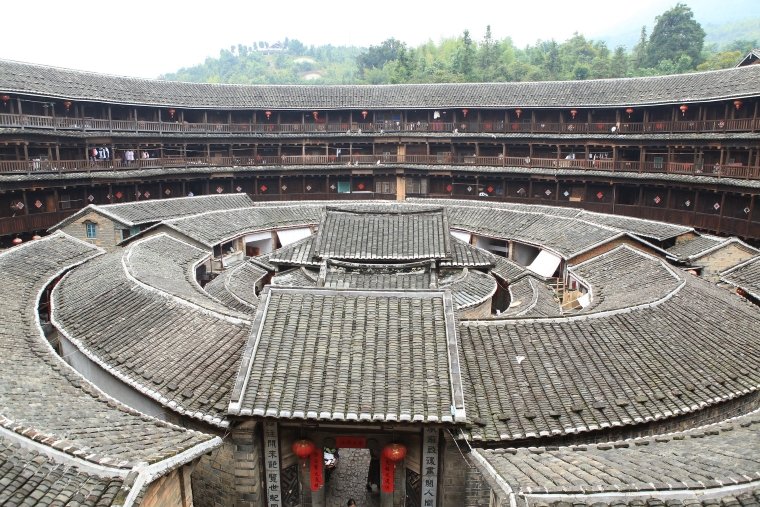
Each tulou is a masterpiece of functionality, featuring an open courtyard, a communal well, and a series of rooms arranged along the inner walls. These structures were designed to withstand earthquakes, fire, and even siege warfare, making them architectural marvels of their time.
Interesting Facts / Key Points / Events
- Natural Air Conditioning: The thick earthen walls of the tulou regulate temperature, keeping the interiors cool in summer and warm in winter.
- Cultural Significance: Tulou were not just homes but also social and cultural hubs, fostering a sense of unity and cooperation among residents.
- UNESCO Recognition: The Chuxi Tulou Cluster is one of 46 tulou included in the UNESCO World Heritage Site listing.
- Hidden Defense: Some tulou feature hidden escape routes and strategic designs to protect residents during times of conflict.
- Cultural Festivals: Visitors may catch traditional Hakka celebrations, including lion dances and lantern festivals, depending on the season.
Travel Tips and Practical Information
- Getting There:
- From Xiamen, take a bus or train to Longyan, then transfer to Yongding County.
- Private car hire or guided tours are convenient options for exploring the tulou.
- Best Time to Visit: Spring (March–May) and autumn (September–November) offer pleasant weather and vibrant landscapes.
- Entry Fee: Approximately ¥50–¥90 (USD 7–12), which includes access to the cluster and local museums.
- What to Bring: Comfortable walking shoes, sunscreen, and a camera to capture the stunning architecture and scenery.
- Local Guides: Hire a local guide to learn about the history and culture of the tulou in depth.
Nearby Points of Interest & Landmarks
- Hongkeng Tulou Cluster: Another well-known tulou site with unique square and circular buildings.
- Gaobei Tulou Cluster: Home to Chengqi Lou, also known as the “King of Tulou.”
- Yongding River: Take a peaceful walk along this scenic river that winds through the region.
- Nanxi Village: A quaint Hakka village offering a glimpse into traditional rural life.
Recap
The Chuxi Tulou Cluster is more than just an architectural wonder—it’s a living, breathing cultural legacy. With its iconic circular designs, rich history, and tranquil surroundings, this UNESCO site offers an unparalleled glimpse into the lives of the Hakka people.
Whether you’re wandering through the centuries-old halls of Jiqing Lou, capturing panoramic views from Shanyang Lou, or learning about the tulou’s ingenious construction, every moment spent in Chuxi is a journey into the heart of China’s heritage. So pack your bags and embark on an adventure to this hidden gem in Fujian—it’s an experience you’ll cherish forever!