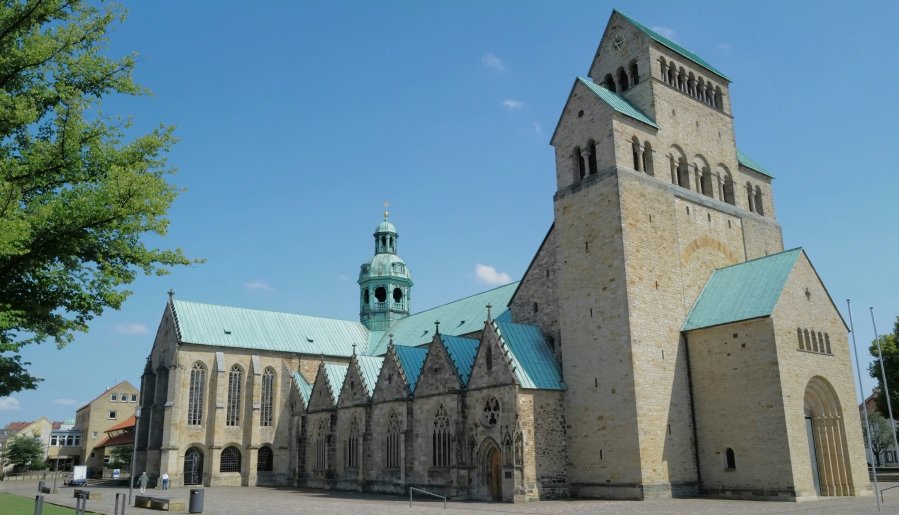
Located in the heart of Hildesheim, Lower Saxony, the stunning Hildesheim Cathedral, or St. Mary’s Cathedral, is a true gem for history and architecture lovers alike. With its centuries-old history and remarkable Romanesque architecture, it’s no wonder the cathedral has earned a spot on the UNESCO World Heritage list. Whether you’re a traveler drawn by its religious significance or someone fascinated by medieval architecture, Hildesheim Cathedral promises a journey back in time. Let’s take a closer look at this extraordinary site and the stories it has to tell.
History:
The story of Hildesheim Cathedral begins over a thousand years ago, in the early 9th century. The original cathedral was built under Bishop Altfrid around 872 AD, making it one of the oldest churches in Germany. Legend has it that the cathedral’s location was chosen after a miraculous event involving a rosebush, which, according to the tale, grew out of the ground when Bishop Altfrid hung a reliquary containing a relic of the Virgin Mary on a nearby tree. This symbolic rosebush still thrives in the cathedral’s courtyard today, known as the “Thousand-Year Rose,” and is a beloved symbol of the city.
The cathedral’s significance grew rapidly during the Middle Ages, not only as a religious center but also as a cultural and artistic hub. Its architecture reflected the Romanesque style, which was then predominant in Northern Europe. However, the cathedral has been through many transformations over the centuries. It was severely damaged during World War II when an air raid destroyed much of Hildesheim, leaving the cathedral in ruins. Thankfully, efforts to rebuild began shortly after the war, with a focus on restoring the building to its original medieval design. By the 1960s, Hildesheim Cathedral was largely restored, allowing visitors to once again marvel at its historical grandeur.
Throughout the centuries, Hildesheim Cathedral has been more than just a religious structure. It’s home to some of the most precious medieval artifacts in Europe. Perhaps the most famous of these is the Bernward Doors, created around 1015 AD by Bishop Bernward, a notable figure in the cathedral’s history. These bronze doors are decorated with intricate biblical scenes, making them a stunning example of Ottonian art. Bishop Bernward was also responsible for other remarkable features of the cathedral, such as the Christ Column, another impressive bronze masterpiece showcasing scenes from Christ’s life.
Despite its tumultuous history, the cathedral continues to stand as a testament to the endurance of faith, art, and culture in the face of adversity. Hildesheim Cathedral is more than just a monument—it’s a living witness to over a thousand years of European history, blending the religious with the artistic and architectural achievements of the ages.
Key Features:
- The Thousand-Year Rose: Growing just outside the cathedral, this rosebush is said to be more than a thousand years old, symbolizing the continuity and resilience of the cathedral itself.
- Bernward Doors: These massive bronze doors are a masterpiece of Ottonian art, featuring detailed biblical scenes that capture the viewer’s imagination.
- The Christ Column: Another significant bronze creation by Bishop Bernward, this column displays intricate depictions of Christ’s life, wrapping around its cylindrical structure.
- Romanesque Architecture: The cathedral’s Romanesque style is evident in its simple yet grand design, with thick walls, rounded arches, and symmetrical forms that evoke a sense of strength and stability.
- UNESCO World Heritage Site: The cathedral, along with nearby St. Michael’s Church, was designated a UNESCO World Heritage site in 1985, acknowledging its cultural and historical significance.
Getting There:
Hildesheim Cathedral is located in the heart of Hildesheim, making it easily accessible for visitors. If you’re traveling from within Germany, the city is about a 30-minute drive from Hanover, or you can take a regional train, which runs regularly. The train station is just a short walk or quick bus ride from the cathedral, so public transportation is a convenient option. If you’re flying in, Hanover Airport is the closest major airport, and from there, you can catch a train or drive. For those driving, there are parking options nearby, though like many historical areas, parking can be limited during peak times.
Final Thoughts:
Hildesheim Cathedral is not just a destination for religious pilgrims but a must-see for anyone fascinated by history, art, and architecture. Its blend of ancient artifacts, legendary stories, and enduring architecture creates a unique experience for visitors. Whether you’re gazing at the intricate Bernward Doors or marveling at the thousand-year-old rosebush, there’s no shortage of awe-inspiring moments at this incredible site. Make sure to put Hildesheim Cathedral on your travel list—you won’t regret it!