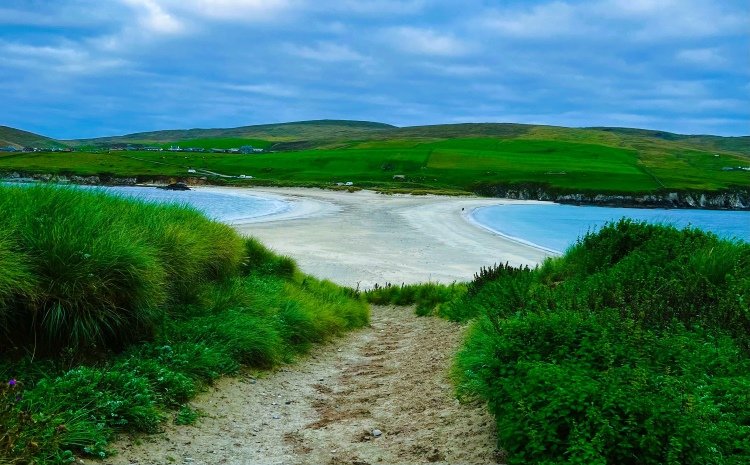
Tucked away in the far reaches of Scotland’s Shetland Islands lies St. Ninian’s Isle, a peaceful haven with one of the most unique and picturesque beaches in the world. Connected to mainland Shetland by a tombolo—a rare sandy causeway—this tiny island offers breathtaking coastal views, rich history, and an off-the-beaten-path vibe. Whether you’re drawn in by the dramatic landscapes, the ancient ruins, or the chance to explore nature at its finest, St. Ninian’s Isle is a must-visit for any traveler seeking a hidden gem in the Shetlands.
St. Ninian’s Isle is located off the southern tip of mainland Shetland and is renowned for its stunning tombolo—the largest active sand tombolo in the UK, stretching between the mainland and the island. This natural causeway appears only at low tide, making it possible to walk across the beach to the island with ease. Named after St. Ninian, an early Christian missionary in Scotland, the isle is also famous for its archaeological significance.
In 1958, an incredible discovery was made on the island: a hoard of medieval treasure buried in the ruins of a chapel dedicated to St. Ninian. This treasure, which includes silver bowls, brooches, and other artifacts, is one of the most important archaeological finds in Scotland. Today, St. Ninian’s Isle remains a quiet and picturesque spot, offering a perfect blend of nature, history, and tranquility for those looking to escape into the serene beauty of Shetland’s coast.
Main Attractions:
- The Tombolo: The star of St. Ninian’s Isle is undoubtedly the stunning tombolo. This narrow strip of sand connects the mainland to the island, flanked by turquoise waters on either side. Whether you’re walking across at low tide or just relaxing on the soft sands, the tombolo offers picture-perfect scenery. On a sunny day, you’d be forgiven for thinking you were on a tropical beach rather than in Scotland!
- St. Ninian’s Chapel: Once you cross the tombolo to the island, you can explore the ruins of St. Ninian’s Chapel. This medieval chapel, where the famous treasure hoard was discovered, provides a fascinating glimpse into Shetland’s religious history. Though much of the structure has crumbled, you can still see the layout of the chapel and imagine what it might have been like centuries ago.
- Wildlife Spotting: St. Ninian’s Isle is a great place for wildlife lovers. Keep your eyes peeled for seals basking on the rocks or bobbing in the water near the shore. The area is also home to a variety of seabirds, including puffins, gulls, and Arctic terns, making it a great spot for birdwatching.
Off-the-Beaten-Path Recommendations:
- Explore the Island’s Coastline: While most visitors stick to the tombolo and chapel, the island itself is worth exploring. Take a walk around its rugged coastline to discover hidden coves, dramatic cliffs, and stunning views of the North Atlantic. It’s a peaceful, solitary experience where you’ll likely have the landscape all to yourself.
- Shell Collecting on the Beach: The sands of the tombolo are often scattered with beautiful shells and sea glass. Take a leisurely stroll along the beach, and you might just find some unique treasures to take home as a reminder of your trip.
- Photography at Sunset: St. Ninian’s Isle is incredibly photogenic, and the light during sunset adds a magical touch to the scenery. Whether you’re capturing the golden glow over the tombolo or the vibrant colors reflecting off the water, it’s a photographer’s paradise.
Local Food and Drink:
- Shetland Lamb: If you’re spending time exploring the nearby areas, make sure to try Shetland lamb, renowned for its distinctive flavor. The sheep roam freely across the hills, giving the meat a unique and rich taste. Local restaurants in the area often serve lamb dishes that highlight this regional specialty.
- Fresh Seafood: The Shetlands are famous for their seafood, and you can’t visit without trying some of the local catch. From freshly caught haddock to mussels and scallops, seafood lovers will find plenty to indulge in at nearby eateries. For something casual, try a simple fish supper from one of the local fish and chip shops.
- Traditional Scottish Fare: Head to a local café or pub to enjoy hearty, traditional dishes like Cullen skink (a creamy smoked fish soup) or clootie dumpling (a spiced fruit pudding). Washed down with a pint of local ale or a dram of whisky, it’s a perfect way to refuel after a day of exploring.
Travel Tips and Practical Information:
- How to Get There: St. Ninian’s Isle is located about 20 miles south of Lerwick, the capital of Shetland. The easiest way to reach it is by car, with plenty of parking available at the site. If you’re traveling without a vehicle, local buses run from Lerwick to Bigton, the nearest village, from where it’s a short walk to the tombolo.
- Best Time to Visit: The best time to visit St. Ninian’s Isle is during the summer months (June to August), when the weather is milder and the days are long. While you can visit year-round, be aware that the weather can be unpredictable in the winter months, and strong winds might make the walk across the tombolo more challenging.
- What to Bring: The Shetlands are known for their rapidly changing weather, so pack layers, including a waterproof jacket and sturdy shoes for walking. If you plan to explore the island beyond the tombolo, bring a small backpack with water and snacks, as there are no facilities on the island itself.
- Respect the Wildlife: When visiting, be mindful of the local wildlife, especially the birds that nest in the area. Stick to the marked paths and avoid disturbing any seals or nesting seabirds you might encounter.
Nearby Points of Interest & Landmarks:
- Jarlshof: Located just a short drive away, Jarlshof is one of Shetland’s most impressive archaeological sites. This ancient settlement, which includes ruins from the Bronze Age, Iron Age, and Norse periods, offers a fascinating glimpse into the island’s long and complex history.
- Sumburgh Head Lighthouse: Just south of St. Ninian’s Isle, Sumburgh Head is a great place to visit for dramatic coastal views and wildlife spotting. The lighthouse, perched on the cliffs, is a popular spot for puffin watching during the summer months.
- Scalloway Castle: About 30 minutes’ drive from St. Ninian’s Isle, Scalloway Castle is a 17th-century tower house that once served as the residence of the notorious Earl Patrick Stewart. It’s a fascinating site for history buffs and offers insight into Shetland’s turbulent past.
Final Thoughts:
St. Ninian’s Isle offers an unbeatable combination of natural beauty, history, and peaceful solitude. Whether you’re crossing the sandy tombolo, exploring ancient ruins, or just soaking in the quiet atmosphere, this remote island in Shetland promises an unforgettable experience. So, pack your hiking boots, bring your camera, and let St. Ninian’s Isle charm you with its wild Scottish beauty.