Hidden amidst the rugged beauty of the Italian Alps lies one of WWII’s lesser-known military marvels—the Kreuzbergpass bunker complex. Perched on the border of Italy and Austria, this network of underground bunkers, tunnels, and fortifications offers a glimpse into the intense wartime efforts to protect Italy’s northern frontier. Originally constructed as part of the “Alpine Wall,” a defensive line established by Mussolini, these bunkers and tunnels remain largely untouched, preserved as eerie time capsules that bear witness to the anxieties of a war-torn Europe.
- History of the Kreuzbergpass Bunker Complex
- The Alpine Wall: Italy’s WWII Northern Fortress
- Description of the Site
- Armament of the Kreuzbergpass Bunker Complex
- Usage of the Kreuzbergpass Bunker Complex
- Interesting Facts About the Kreuzbergpass Bunker Complex
- Activities at the Kreuzbergpass Bunker Complex
- Getting There
- Nearby Points of Interest & Landmarks
- Final Thoughts
For military history buffs, adventure seekers, and curious travelers, the Kreuzbergpass bunker complex is a fascinating journey back in time. Wander through darkened passageways, stand beside massive steel gun ports, and take in sweeping views of the Alps, all while learning about the strategy and fears that shaped Italy’s WWII defenses. In this article, we’ll dive into the intriguing history, explore the site’s hidden nooks, and share tips on how to get there for an unforgettable experience in the Italian Alps.
History of the Kreuzbergpass Bunker Complex
The Kreuzbergpass bunker complex is part of a larger defense system known as the “Alpine Wall,” a fortification effort launched by Italy in the late 1930s. With WWII on the horizon, Mussolini ordered the construction of this extensive network of bunkers, tunnels, and artillery points to protect Italy’s mountainous border with Austria and Switzerland. The goal was to create a formidable defensive line that could repel potential invasions from the north.
However, the reality of the Alpine Wall didn’t quite live up to its ambitious plans. Although several bunkers and artillery posts were completed, many parts of the project were left unfinished, limited by time, resources, and shifting priorities as the war progressed. By the time Italy switched sides and joined the Allies in 1943, the need for the Alpine Wall had waned. Today, the Kreuzbergpass complex is a haunting remnant of these turbulent times, standing as a testament to Italy’s WWII military strategy and the uncertain political landscape of the period.
The Alpine Wall: Italy’s WWII Northern Fortress
The Alpine Wall was inspired by similar defense systems throughout Europe, particularly France’s Maginot Line. Italy’s aim was to create a line of defense strong enough to deter potential threats from Germany and Austria. Stretching from the Ligurian Sea to the Julian Alps, the Alpine Wall covered over 1,500 kilometers, a massive project requiring substantial manpower and materials. However, unlike the Maginot Line, Italy’s Alpine Wall was not built to withstand prolonged assaults; rather, it was designed for short-term defense with the goal of delaying any advancing enemy forces long enough to allow reinforcements to arrive.
Each section of the wall was strategically placed to make use of the natural mountainous terrain, with bunker complexes positioned at key passes like the Kreuzbergpass. Though WWII history often focuses on the battles and alliances that played out on open ground, the Alpine Wall serves as a stark reminder of the intense preparations made to defend against invasion through even the most inaccessible landscapes.
Description of the Site
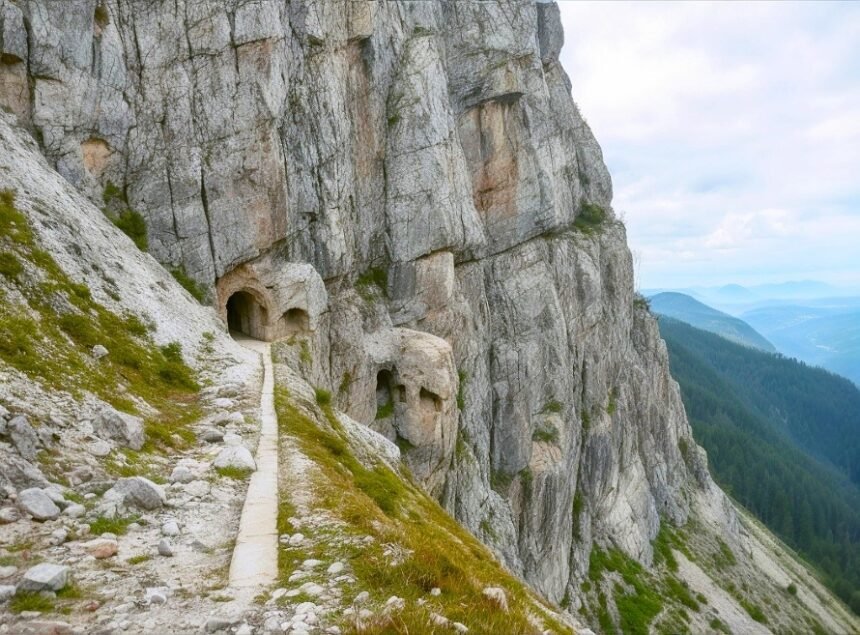
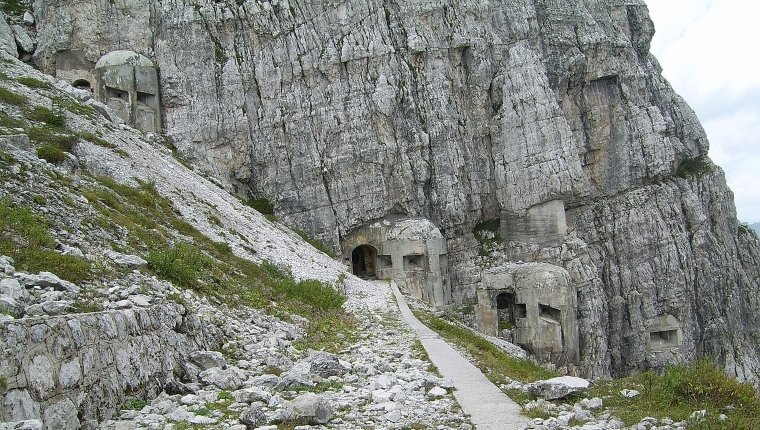
The Kreuzbergpass bunker complex is a hidden gem for history enthusiasts and travelers alike. Located at an elevation of 1,636 meters (5,367 feet) in the Dolomites, the bunkers blend seamlessly into the mountain landscape, their concrete exteriors camouflaged by trees and rugged terrain. The site consists of multiple bunkers interconnected by tunnels that extend into the mountain. Dark, narrow passageways open into fortified chambers and gun positions, where remnants of WWII-era artillery emplacements can still be found.
The bunkers themselves are solidly constructed with thick walls designed to withstand bombardment. Many are reinforced with steel doors, and their interiors feature ventilation shafts and machine gun ports that offer commanding views over the valley. Despite their age, the structures remain in remarkable condition, offering a vivid look into WWII-era fortifications. While some parts of the complex are open to visitors, certain sections remain closed off for safety reasons, adding to the allure and mystery of the site.
Armament of the Kreuzbergpass Bunker Complex
The Kreuzbergpass bunkers were primarily armed with machine guns and small artillery, designed for short-range defense. The gun ports within the complex are strategically placed to cover key approaches through the pass, allowing defenders to hold their ground in case of an attack. Some bunkers were equipped with larger anti-tank guns, intended to repel advancing armored vehicles and infantry. While much of the original weaponry has been removed or lost to time, a few remnants still exist as silent reminders of the complex’s wartime role.
The bunkers’ walls were designed to withstand light artillery fire, though they would not have held up against heavy bombardment. This reflects the Alpine Wall’s broader defensive strategy: to slow down enemy forces, rather than withstand a full-scale assault. Despite this, the strategic positioning of gun emplacements and the clever use of the surrounding terrain made the Kreuzbergpass bunkers a formidable defensive point.
Usage of the Kreuzbergpass Bunker Complex
While the bunkers were part of a larger wartime defensive strategy, they saw limited active use during WWII. Because Italy switched sides in 1943, the Alpine Wall was never used as intended to repel a northern invasion. However, the Kreuzbergpass bunkers and others along the Alpine Wall remained on high alert during the early years of the war. Troops stationed here conducted drills and maintained readiness, prepared to defend Italy’s border in the event of an attack.
After the war, the bunkers were largely abandoned, though they continued to be maintained by the Italian military as a Cold War relic. In recent years, the complex has become a historical site, visited by those interested in WWII history, military fortifications, and the lesser-known defensive structures of Europe.
Interesting Facts About the Kreuzbergpass Bunker Complex
- Strategic Location: The bunkers are located at one of the highest mountain passes in the region, giving defenders a commanding view of the valley below.
- Part of the “Alpine Wall”: The Kreuzbergpass bunkers are just one segment of Italy’s Alpine Wall, a massive WWII fortification network that stretched across the Alps.
- Well-Preserved Tunnels: Many of the tunnels and bunkers are in excellent condition, allowing visitors to experience the site much as it was in the 1940s.
- Abandoned but Maintained: The complex was maintained during the Cold War, but the bunkers were never rearmed or reactivated.
- Hidden Entrances: Many of the bunkers are cleverly concealed within the mountain, making them nearly invisible from a distance.
- Built-in Defense Features: The bunkers were designed with armored doors and small gun ports, allowing defenders to fend off attackers from a secure position.
Activities at the Kreuzbergpass Bunker Complex
- Guided Tours: Join a guided tour to learn about the history and purpose of each section of the complex.
- Photography: With its unique architecture and stunning mountain views, the site is ideal for history-themed photography.
- Hiking: The surrounding area offers a variety of hiking trails, some leading to viewpoints with breathtaking vistas of the Dolomites.
- Historical Exploration: Walk through tunnels and bunkers to experience the eerie atmosphere and learn about WWII-era fortifications.
- Birdwatching and Nature Walks: The area around Kreuzbergpass is home to diverse wildlife, making it a great spot for nature enthusiasts.
Getting There
Reaching the Kreuzbergpass bunker complex is relatively easy. Here’s how:
- Fly to Bolzano or Venice: The nearest major airports are in Bolzano and Venice, both offering access to the Dolomites region.
- Drive or Take a Bus to Sexten (Sesto): From Bolzano or Venice, take a scenic drive or bus ride to the town of Sexten in northern Italy.
- Follow Signs to Kreuzbergpass: Once in Sexten, follow local signs leading to Kreuzbergpass. The bunkers are a short drive or walk from the pass itself.
- Guided Tour Options: If you prefer, arrange for a guided tour from Sexten or nearby towns.
Nearby Points of Interest & Landmarks
- Tre Cime di Lavaredo: A stunning trio of peaks and one of the most iconic landscapes in the Dolomites, perfect for hiking and photography.
- Sesto Dolomites Nature Park: This park offers diverse trails, panoramic views, and plenty of wildlife.
- Monte Piana WWI Memorial: Just a short drive away, Monte Piana features remnants from WWI trenches and bunkers, adding historical context to your trip.
- Lago di Braies: A beautiful alpine lake, ideal for relaxation, boating, and photography.
- San Candido: A charming mountain village nearby with historic architecture, shops, and restaurants.
Final Thoughts
The Kreuzbergpass bunker complex is more than just a remnant of WWII; it’s a hidden piece of military history tucked away in the breathtaking Dolomite Mountains. Visiting this site offers a rare opportunity to step inside the past, explore the intricate bunkers, and experience the rugged beauty of the Italian Alps. For history enthusiasts and outdoor adventurers alike, the Kreuzbergpass complex is a unique destination that combines natural splendor with an intriguing WWII story.
Whether you’re interested in the strategy behind Italy’s defensive efforts, or you simply want to explore an atmospheric historical site, a trip to Kreuzbergpass won’t disappoint. As you stand in the heart of these bunkers, surrounded by mountain peaks and wartime relics, you’ll feel the weight of history and the enduring allure of this hidden gem in the Alps.