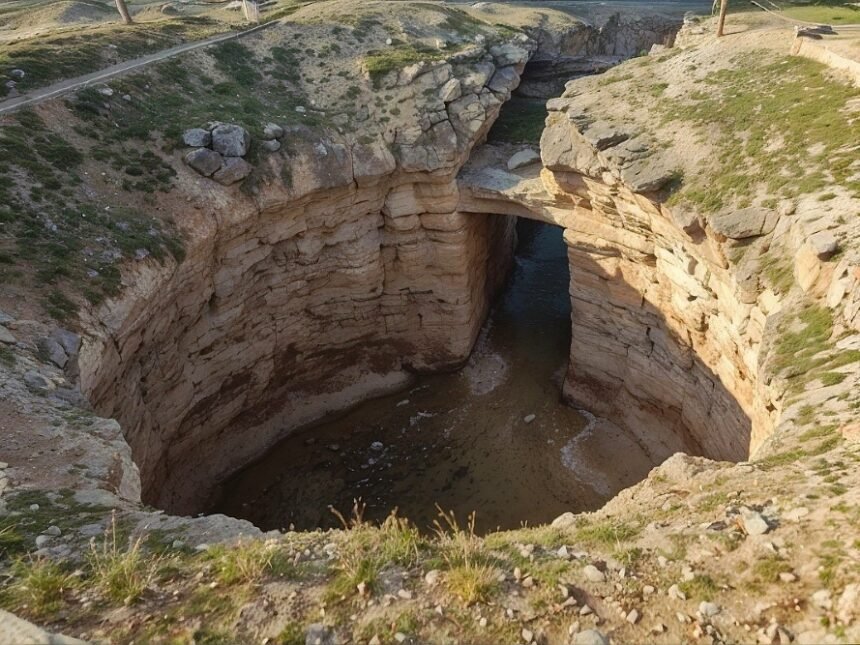
Situated on a low hill overlooking the Pagasetic Gulf, the Neolithic settlement of Dimini stands as one of Greece’s most significant prehistoric sites. Dating back to 4800-4500 BCE, this remarkably preserved settlement offers a fascinating glimpse into one of humanity’s earliest urban communities. Located near modern-day Volos, Dimini showcases sophisticated architectural planning and social organization that was surprisingly advanced for its time. The site’s discovery revolutionized our understanding of Neolithic society in the Aegean region and continues to draw archaeologists and history enthusiasts from around the globe.
History
The story of Dimini began in 1886 when archaeologists Christos Tsountas and Valerios Stais first excavated the site. What they uncovered was extraordinary – a sophisticated settlement that challenged existing perceptions of Neolithic civilization. The site flourished during the Late and Final Neolithic periods (4800-4500 BCE), representing the peak of Neolithic culture in Thessaly.
Successive excavations throughout the 20th century revealed multiple building phases, with the most prominent featuring six concentric stone walls. These walls weren’t just defensive structures – they organized the settlement’s social and economic life, demonstrating an advanced understanding of urban planning that was centuries ahead of its time.
The settlement’s eventual abandonment around 4000 BCE remains a subject of debate among scholars, with theories ranging from climate change to social upheaval.
Description of the Site
The settlement’s most distinctive feature is its concentric organization, with six oval stone walls radiating from the central court. Key architectural elements include:
- Central Court: A spacious communal area measuring 40×45 meters
- Stone-Built Houses: Rectangular structures with multiple rooms and storage areas
- Defensive Walls: Six concentric circles of limestone, creating internal courtyards
- Storage Facilities: Numerous storage rooms for grain and other goods
- Workshops: Designated areas for craft production, including pottery and tool-making
Usage
During its heyday, Dimini served as a thriving community center where:
- Residents engaged in agriculture, cultivating wheat, barley, and legumes
- Craftspeople produced sophisticated pottery, known as “Dimini ware”
- Traders exchanged goods with other settlements across the Aegean
- Religious ceremonies took place in designated ritual areas
- Community gatherings and social activities occurred in the central court
Interesting Facts
- Dimini’s pottery shows evidence of trade networks extending as far as the Cyclades
- The settlement had an advanced drainage system
- Archaeologists found numerous clay figurines suggesting complex religious practices
- The community practiced animal husbandry, primarily raising sheep and goats
- Tools discovered at the site indicate advanced metalworking knowledge
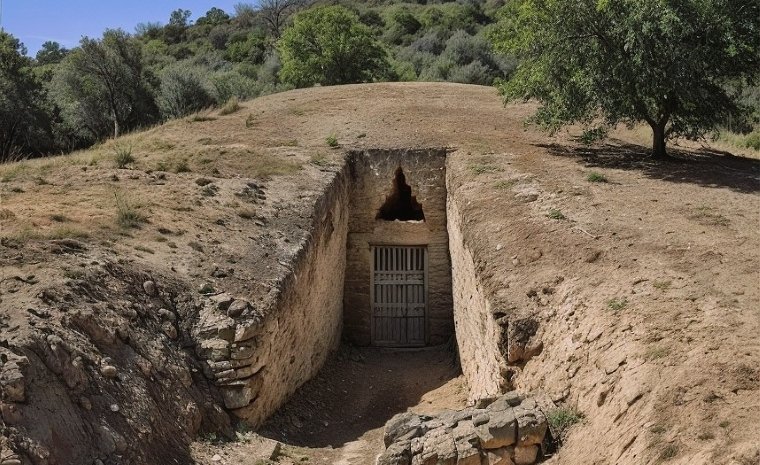
The Two Vaulted Tombs
Near the settlement, archaeologists uncovered two significant tholos tombs:
- The “King’s Tomb”: A large vaulted structure containing valuable grave goods
- The “Queen’s Tomb”: Slightly smaller but equally rich in artifacts
These tombs provide crucial insights into burial practices and social hierarchy.
Activities
Modern visitors can:
- Take guided tours with expert archaeologists
- Visit the on-site museum displaying artifacts
- Participate in educational workshops (seasonal)
- Explore reconstructed Neolithic houses
- Photography (permits required for professional shoots)
Getting There
- By Car: 4km from Volos city center
- By Bus: Regular service from Volos central station
- By Organized Tour: Available from major Greek cities
- Walking: Part of the Pelion hiking trail network
Nearby Points of Interest & Landmarks
- Sesklo Archaeological Site (5km)
- Volos Archaeological Museum
- Pelion Mountain villages
- Makrinitsa traditional settlement
- Portaria village
- Ancient Demetrias ruins
Final Thoughts
Dimini stands as a testament to human ingenuity and early urban planning. Its well-preserved remains continue to provide valuable insights into Neolithic life and challenge our understanding of prehistoric societies. As ongoing research reveals new details about this remarkable site, Dimini remains an essential destination for anyone interested in the roots of European civilization. Whether you’re a history enthusiast or a casual traveler, the site offers an unforgettable journey into humanity’s distant past.