




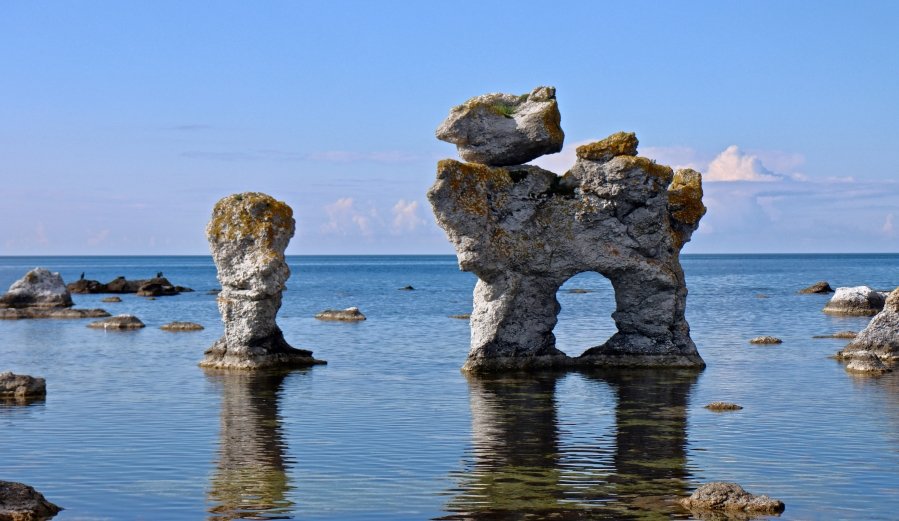
Ever seen a stone giant up close? On Fårö Island, just off the coast of Gotland in Sweden, you’ll find otherworldly limestone formations known as rauks. These towering, weathered rock pillars look like something straight out of a fantasy novel, and they make Fårö a must-visit for nature lovers and photographers alike. As you wander along the shores, you’ll be amazed at how the wind, sea, and time have shaped these ancient rocks into breathtaking sculptures. Ready for an adventure among Sweden’s natural wonders? Let’s explore the rauks of Fårö Island!
At a glance
The rauks of Fårö Island are a product of millions of years of geological processes. These limestone formations were created during the Silurian period, about 430 million years ago, when the area was submerged under a shallow tropical sea. As the water receded over millennia, the softer surrounding rock eroded away, leaving behind the harder limestone towers we see today.
What makes Fårö’s rauks particularly special is their dramatic appearance. These rock formations, some of which are as tall as 10 meters, have been sculpted by centuries of wind and waves, creating unique shapes that resemble everything from faces to mythical creatures. The rauks have become an iconic symbol of Gotland and Fårö, attracting visitors from around the world.
Fårö itself, located just north of Gotland, is famous not only for its rauks but also for its stunning landscapes, peaceful beaches, and being the former home of renowned filmmaker Ingmar Bergman. The island has a charm that feels frozen in time, with quiet fishing villages, windswept coastlines, and of course, the magnificent rauks standing guard over the sea.
The Rauks: Natural Sculptures of the Sea
The rauks on Fårö Island are scattered along the coastline, with some of the most impressive formations found at locations like Langhammars and Gamla Hamn. Each rauk seems to have its own personality—some are jagged and towering, while others are smoother, worn down by the relentless forces of nature.
Langhammars, in particular, is known for having some of the tallest and most well-preserved rauks on the island. This site is a photographer’s paradise, especially during sunrise or sunset, when the light casts dramatic shadows across the rocks. The rauks here are massive, almost giving you the feeling of walking among ancient statues or petrified giants.
At Gamla Hamn, you’ll find a famous rauk known as “The Coffin Lid” (Kaffekvarnen), which resembles an old-style coffee grinder. This rauk stands out not only for its distinctive shape but also for its location right by the water, offering an ideal spot for reflective seascape photos.
Wildlife and Natural Surroundings
The rauks may steal the show, but the natural beauty surrounding these formations is equally impressive. Fårö Island is known for its pristine beaches, wildflower meadows, and rocky coastlines. As you explore the area, keep an eye out for local wildlife, including seabirds like puffins and oystercatchers, as well as the occasional seal basking on the rocks.
The island’s diverse plant life adds to the experience, with lush green fields contrasting the stark, weathered rauks. In the spring and summer, the landscape bursts into color with wildflowers, making it an ideal time for hiking and exploring the island’s trails.
History and Local Legends
The rauks have inspired local myths and stories for centuries. According to folklore, these stone giants were once trolls who were turned to stone when they stayed out too late and were caught by the sunrise. While that might just be a tall tale, the rauks certainly do have a mythical, almost mystical presence, especially when they loom over you on a misty morning.
In addition to the rauks, Fårö Island itself has a rich history. The island’s fishing villages have remained largely unchanged for centuries, giving visitors a glimpse into the simple, rugged life of the past. Many of these villages still retain traditional wooden houses and old stone walls that add to the island’s timeless charm.
Travel Tips and Practical Information
A. Activities
Exploring the rauks is just the beginning! Fårö Island offers plenty of outdoor activities for those looking to immerse themselves in nature. Hiking along the coastline is a popular option, with several trails leading to different rauk sites. If you’re into photography, bring your camera—the rauks and the surrounding landscapes are perfect subjects for dramatic, moody shots.
Swimming is also possible in some areas, though the water can be chilly, even in summer. For a more relaxing experience, consider a picnic by the sea or take a leisurely bike ride around the island to explore its hidden gems.
B. Best Time to Visit
The best time to visit Fårö Island and the rauks is during the late spring and summer months (May to August), when the weather is mild and the days are long. During this time, the island’s landscapes are in full bloom, and the light is perfect for capturing the rauks in all their glory. However, if you prefer fewer crowds and a quieter experience, visiting in the early autumn (September) can be equally rewarding.
Winter visits, though less common, offer a completely different experience. The rauks dusted in snow create a stark, eerie beauty against the cold, grey sea. Just be prepared for colder temperatures and shorter daylight hours.
C. Getting There
To reach Fårö, you’ll first need to get to Gotland, Sweden’s largest island. From there, Fårö is just a short ferry ride away. The ferry is free and runs regularly, making it easy to access the island. Once on Fårö, the rauks can be reached by car or bike, with signposts guiding you to the major sites like Langhammars and Gamla Hamn.
While public transportation is limited, renting a car or bike is a convenient way to explore the island at your own pace. The island is small enough to cover in a day, but many visitors choose to stay longer to fully soak in its peaceful atmosphere.
Nearby Points of Interest & Landmarks
Fårö Island has more to offer beyond the rauks. Be sure to visit the Fårö Lighthouse, which offers fantastic views of the surrounding coastline. If you’re a fan of Ingmar Bergman, the Bergman Center is a must-see. It provides insight into the filmmaker’s life and his deep connection to the island, where he lived and filmed several of his most famous works.
The island’s beaches, like Sudersand Beach, are perfect for a relaxing day by the water. And if you have time, head back to Gotland to explore Visby, a UNESCO World Heritage site known for its medieval architecture and city walls.
Final Thoughts
The rauks of Fårö Island are a testament to the raw beauty and power of nature. These stone giants stand as silent witnesses to centuries of change, yet they remain timeless and awe-inspiring. Whether you’re exploring the rugged coastlines or simply marveling at the rauks’ unique shapes, a visit to Fårö is sure to leave you with unforgettable memories. So pack your bags, charge your camera, and get ready to experience one of Sweden’s most unique natural wonders!