






1. Introduction
In an era of increasing global travel and growing environmental consciousness, a new paradigm is emerging in the tourism industry: sustainable heritage tourism. This approach marries the desire to explore and preserve our cultural heritage with the imperative to minimize negative impacts on local communities and environments. Sustainable heritage tourism can be defined as the practice of visiting historical and cultural sites while ensuring their long-term viability, supporting local economies, and promoting environmental stewardship.
- 1. Introduction
- 2. The Intersection of Heritage and Sustainability
- Cultural Preservation
- Environmental Consciousness
- Economic Benefits for Local Communities
- Social Sustainability
- 3. Key Principles of Sustainable Heritage Tourism
- Conservation of Historical Sites and Artifacts
- Minimizing Environmental Impact
- Supporting Local Economies and Cultures
- Educational Value for Visitors
- 4. Case Studies
- Machu Picchu, Peru: Visitor Management and Conservation Efforts
- Økomuseum Samsø, Denmark: Community-led Sustainable Tourism
- Jurassic Coast, UK: Balancing Geological Preservation with Tourism
- Lessons Learned and Best Practices
- 5. Challenges and Solutions
- 6. The Future of Sustainable Heritage Tourism
- 7. Conclusion
The importance of sustainable heritage tourism has never been more apparent. As global tourism numbers continue to rise, many historical sites face unprecedented challenges, from overcrowding to climate change impacts. Simultaneously, there’s a growing awareness among travelers about the need for responsible tourism practices. This convergence of factors has led to the rise of sustainable heritage tourism as a vital approach to preserving our shared cultural heritage while meeting the demands of modern travelers.
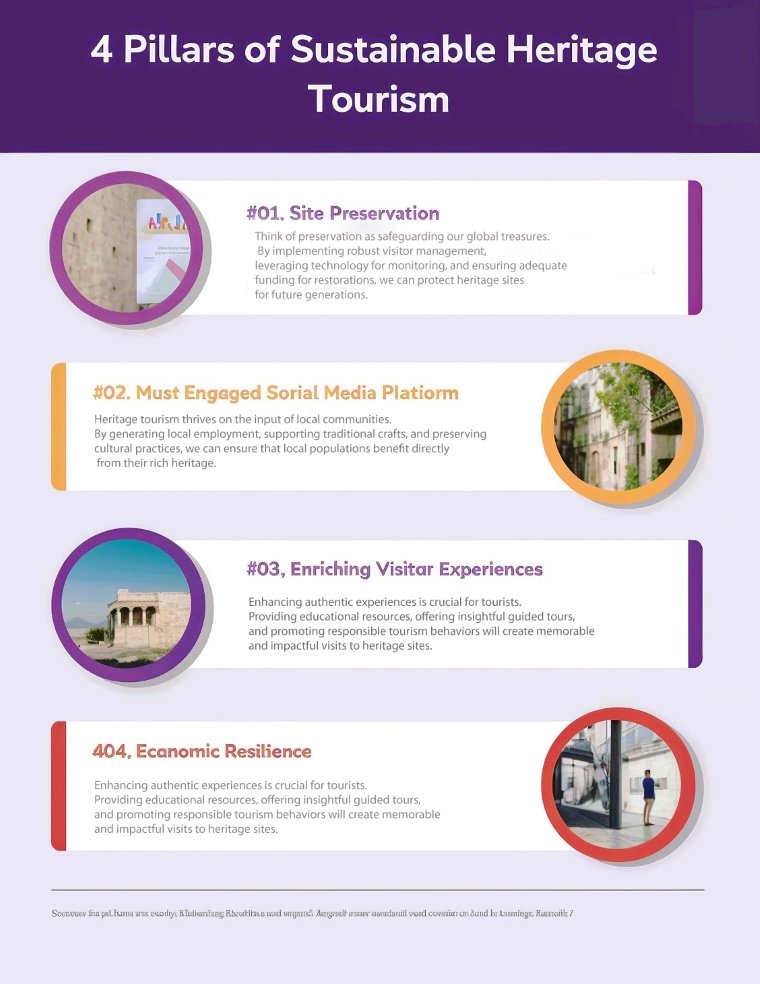
2. The Intersection of Heritage and Sustainability
At the heart of sustainable heritage tourism lies a delicate balance between cultural preservation and sustainable development. This intersection creates unique challenges and opportunities:
Cultural Preservation
Heritage sites around the world face numerous threats, including:
- Physical degradation due to increased visitor numbers
- Climate change impacts, such as rising sea levels or extreme weather events
- Urbanization and development pressures
Sustainable heritage tourism seeks to address these challenges by implementing conservation strategies that protect the integrity of historical sites while allowing for responsible visitation. This might involve restoration projects, visitor management techniques, or the use of technology to enhance preservation efforts.
Environmental Consciousness
The environmental aspect of sustainable heritage tourism focuses on:
- Reducing the carbon footprint of tourism activities, including transportation and accommodation
- Implementing eco-friendly practices at heritage sites, such as energy-efficient lighting or water conservation measures
- Promoting sustainable transportation options for visitors, like public transit or bicycle rentals
By addressing these environmental concerns, sustainable heritage tourism aims to ensure that the act of visiting historical sites doesn’t contribute to their degradation or to broader environmental issues.
Economic Benefits for Local Communities
One of the key principles of sustainable heritage tourism is ensuring that local communities benefit from tourism activities. This includes:
- Creating jobs and developing skills in the local workforce
- Revitalizing traditional crafts and industries that may be at risk of disappearing
- Ensuring a fair distribution of tourism revenues within the community
By focusing on these economic benefits, sustainable heritage tourism can help create a positive cycle where local communities are incentivized to preserve their heritage for both cultural and economic reasons.
Social Sustainability
Beyond economic impacts, sustainable heritage tourism also considers social factors:
- Promoting cross-cultural understanding between visitors and local communities
- Empowering local communities to share their heritage on their own terms
- Preserving living traditions and intangible cultural heritage
This social aspect ensures that tourism doesn’t just treat heritage sites as static attractions but as living, evolving cultural spaces that continue to hold meaning for local communities.
3. Key Principles of Sustainable Heritage Tourism
Sustainable heritage tourism is guided by several core principles that balance preservation, environmental responsibility, economic benefits, and educational value:
Conservation of Historical Sites and Artifacts
The primary goal of heritage tourism is to allow people to experience historical and cultural sites. However, this must be done in a way that doesn’t compromise the integrity of these sites. Key aspects include:
- Restoration and maintenance techniques that preserve authenticity
- Use of non-invasive technologies for site monitoring and preservation
- Implementing visitor management strategies to prevent physical damage
A crucial challenge is balancing authenticity with accessibility. While it’s important to maintain the original character of a site, some modifications may be necessary to ensure visitor safety and access. The key is to make these changes as minimal and reversible as possible.
Minimizing Environmental Impact
Sustainable heritage tourism recognizes that preserving cultural heritage goes hand-in-hand with environmental conservation. Strategies include:
- Energy-efficient operations at heritage sites and associated facilities
- Waste reduction and recycling programs
- Promoting sustainable transportation options to and around heritage sites
- Using renewable energy sources where possible
These efforts not only reduce the environmental footprint of tourism activities but can also help protect heritage sites from environmental degradation.
Supporting Local Economies and Cultures
A key principle of sustainable heritage tourism is ensuring that tourism benefits local communities. This involves:
- Prioritizing local suppliers and workforce in tourism operations
- Ensuring fair distribution of tourism revenues within the community
- Preserving and promoting local traditions, crafts, and cultural practices
- Involving local communities in decision-making processes regarding tourism development
By empowering local communities, sustainable heritage tourism can help ensure the long-term preservation of both tangible and intangible cultural heritage.
Educational Value for Visitors
Sustainable heritage tourism isn’t just about passive observation; it’s about active learning and engagement. This principle focuses on:
- Providing interpretive programs that offer in-depth understanding of the site’s history and significance
- Creating interactive experiences that allow visitors to engage with the heritage in meaningful ways
- Raising awareness about cultural and environmental issues related to the site
By emphasizing education, sustainable heritage tourism can foster a deeper appreciation for cultural heritage and encourage more responsible tourism practices.
4. Case Studies
To better understand the practical application of sustainable heritage tourism principles, let’s examine some successful examples from around the world:
Machu Picchu, Peru: Visitor Management and Conservation Efforts
Machu Picchu, one of the world’s most iconic archaeological sites, faced significant challenges due to overtourism. In response, Peruvian authorities implemented several sustainable measures:
- Strict daily visitor limits and timed entry systems
- Mandatory guided tours to ensure visitors follow designated paths
- Investment in local infrastructure to benefit nearby communities
- Conservation projects to stabilize and restore ancient structures
These efforts have helped balance tourism demand with site preservation, demonstrating that even the most popular heritage sites can adopt sustainable practices.
Økomuseum Samsø, Denmark: Community-led Sustainable Tourism
The Danish island of Samsø offers a unique model of community-driven sustainable tourism:
- Local residents manage the “eco-museum,” which encompasses the entire island
- Emphasis on renewable energy, with the island producing more energy than it consumes
- Preservation of traditional farming and fishing practices as living heritage
- Visitor experiences centered around sustainable living and Danish culture
Samsø’s approach shows how sustainable heritage tourism can be integrated into the fabric of daily life, benefiting both residents and visitors.
Jurassic Coast, UK: Balancing Geological Preservation with Tourism
England’s Jurassic Coast, a UNESCO World Heritage Site, has successfully implemented sustainable tourism practices:
- Careful management of fossil collecting to preserve the geological record
- Educational programs that raise awareness about coastal erosion and climate change
- Promotion of sustainable transportation options along the coast
- Collaboration with local businesses to create a sustainable tourism economy
This case demonstrates how natural heritage can be protected while still allowing for meaningful visitor experiences.
Lessons Learned and Best Practices
From these case studies, we can extract several key lessons:
- Stakeholder engagement is crucial: Involving local communities, businesses, and conservation experts leads to more effective and widely accepted strategies.
- Adaptive management is necessary: Sustainable heritage tourism requires ongoing monitoring and adjustment of practices to address changing conditions.
- Innovative funding models can support conservation: From visitor fees to public-private partnerships, diverse funding sources can help sustain preservation efforts.
- Education is a powerful tool: Informing visitors about the importance of heritage sites and sustainable practices can lead to more responsible tourism behaviors.
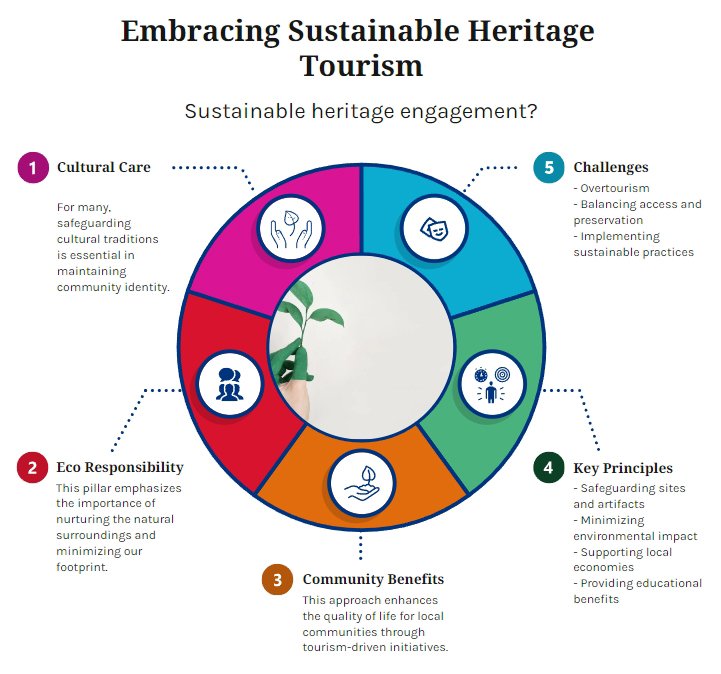
5. Challenges and Solutions
While sustainable heritage tourism offers many benefits, it also faces significant challenges. Here are some key issues and potential solutions:
Balancing Tourism Demand with Preservation
Challenge: Popular heritage sites often struggle with overcrowding, which can damage fragile structures and environments.
Solutions:
- Implement carrying capacity limits based on scientific assessments
- Use timed entry systems to distribute visitors throughout the day
- Develop visitor dispersal strategies to promote less-visited areas or times
Addressing Overtourism
Challenge: Some destinations become victims of their own success, with tourism negatively impacting local quality of life and the visitor experience.
Solutions:
- Promote alternative and lesser-known sites to reduce pressure on popular destinations
- Implement seasonal pricing strategies to encourage visitation during off-peak times
- Engage in responsible marketing that highlights sustainable practices and manages visitor expectations
Implementing Sustainable Practices
Challenge: Resistance to change and lack of resources can hinder the adoption of sustainable practices.
Solutions:
- Provide incentives for sustainable operations, such as tax breaks or promotional support
- Offer training and capacity building programs for local communities and businesses
- Develop partnerships between heritage sites, tourism operators, and sustainability experts to share knowledge and resources
6. The Future of Sustainable Heritage Tourism
As we look ahead, several trends and developments are shaping the future of sustainable heritage tourism:
Emerging Technologies
- Virtual and Augmented Reality (VR/AR): These technologies can offer immersive experiences that complement or even substitute physical visits, reducing pressure on fragile sites.
- Blockchain: This technology could ensure transparent and ethical tourism supply chains, from booking to local product sourcing.
- AI-powered Visitor Management: Artificial intelligence can help optimize visitor flows and provide personalized experiences while minimizing impacts.
Growth Potential
Sustainable heritage tourism is poised for significant growth:
- Expansion into new markets and destinations, particularly in developing countries with rich cultural heritage
- Integration with other forms of sustainable tourism, such as ecotourism or voluntourism
- Increased demand from conscious travelers seeking authentic and responsible experiences
Policy and International Cooperation
The future of sustainable heritage tourism will be shaped by policy decisions and global cooperation:
- UNESCO’s sustainable tourism initiatives are setting standards and providing guidance for World Heritage Sites
- National and regional governments are developing sustainable tourism strategies that prioritize heritage preservation
- International partnerships are facilitating knowledge sharing and resource pooling for sustainable heritage management
7. Conclusion
Sustainable heritage tourism represents a vital approach to preserving our global cultural heritage while meeting the demands of modern travelers. By balancing conservation, environmental responsibility, economic benefits, and educational value, this form of tourism offers a path forward that honors the past while sustaining the future.
For travelers, embracing sustainable heritage tourism means:
- Choosing responsible tour operators and accommodations
- Respecting local cultures and environments
- Supporting local economies by purchasing local products and services
- Being mindful of their impact and following site guidelines
For industry stakeholders, the call to action includes:
- Investing in sustainable infrastructure and practices
- Collaborating closely with local communities and conservation experts
- Continuously monitoring and improving sustainability efforts
As we face global challenges like climate change and cultural homogenization, sustainable heritage tourism offers a way to preserve the diverse tapestry of human history and culture. By traveling responsibly and supporting sustainable practices, we can ensure that future generations will have the opportunity to experience and learn from our shared heritage.