Aruba may be best known for its pristine beaches and sunny weather, but did you know it’s also home to some truly fascinating caves? Tucked away in the island’s rugged landscapes, these caves offer a peek into Aruba’s geological past, as well as its rich cultural heritage. Whether you’re a history buff, a nature lover, or simply looking for an offbeat adventure, exploring the caves of Aruba is an experience like no other. Get ready to step into a different world, filled with ancient rock formations, petroglyphs, and even a few bat colonies!
Aruba’s caves are a hidden treasure, often overlooked in favor of the island’s more famous tourist attractions. Yet, these caves tell a story that goes back thousands of years. Formed through natural processes like erosion and coral reef uplift, the caves were once used by the indigenous Arawak people for shelter, rituals, and even as places to leave behind petroglyphs, which can still be seen today.
The island’s caves are scattered mostly along the eastern and southern coasts, where the wind-swept landscape contrasts sharply with the calm, resort-laden beaches of the west. Visiting these caves offers a chance to escape the crowds and immerse yourself in the wilder, more rugged side of Aruba. As you venture inside, you’ll find unique limestone formations, stalactites, stalagmites, and a rich atmosphere steeped in mystery and history.
The Caves:
Here’s a quick guide to some of the must-see caves in Aruba:
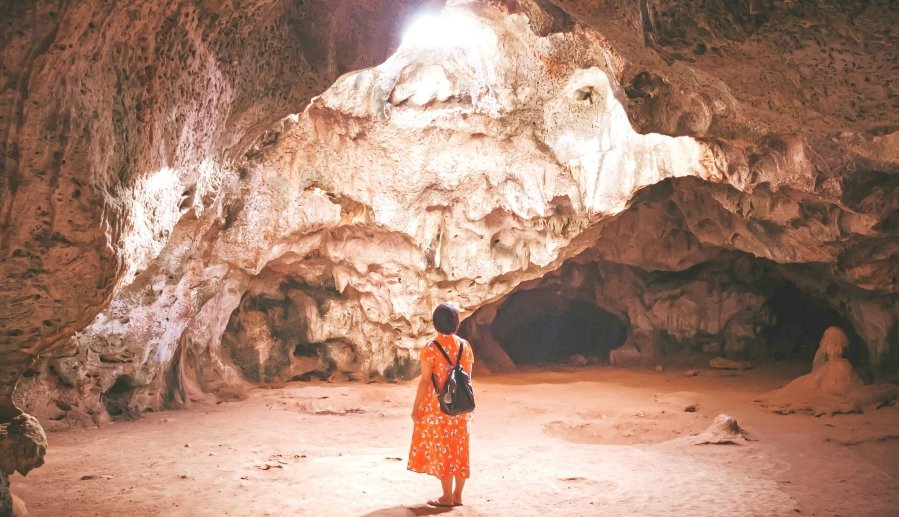
- Guadirikiri Cave: Perhaps the most famous of Aruba’s caves, Guadirikiri is known for its two large chambers, both illuminated by natural sunlight streaming in through holes in the ceiling. The cave extends for about 100 feet and is home to a colony of harmless bats. The light that filters in creates a magical, almost ethereal glow, making it a favorite for photographers and nature lovers alike. Legend has it that the cave was once used to imprison lovers who defied tribal customs.
- Fontein Cave: Fontein Cave is renowned for its ancient Arawak petroglyphs that decorate the cave walls. These red drawings, dating back hundreds of years, offer a glimpse into the lives and spiritual practices of Aruba’s early inhabitants. The cave also boasts beautiful limestone formations and is relatively easy to explore, making it a great option for families and casual adventurers.
- Huliba Cave (The Tunnel of Love): This heart-shaped entrance has earned Huliba Cave its romantic nickname, “The Tunnel of Love.” Once inside, you’ll find a winding tunnel system that can get quite dark, so it’s recommended to bring a flashlight. The cave is filled with intriguing formations and narrow passages that make it feel like you’re exploring a hidden world beneath the island.
- Baranca Sunu Cave: One of the lesser-known caves, Baranca Sunu is perfect for those who enjoy venturing off the beaten path. While it may not have the same level of fame as Guadirikiri or Fontein, it’s a hidden gem with striking limestone features and a more secluded atmosphere.
Off-the-Beaten-Path Recommendations:
If you’re up for a bit more adventure, here are some offbeat spots near Aruba’s caves that are well worth the visit:
- Quadiriki Ridge Hike: After exploring Guadirikiri Cave, consider hiking the Quadiriki Ridge nearby. This trail offers incredible views of the coastline and the rugged Arikok National Park. It’s not a well-trodden path, which means fewer crowds and more serenity.
- Indian Rock Garden: Located near Fontein Cave, this site features rock formations and petroglyphs that provide an open-air museum of sorts. The area is quiet and peaceful, allowing you to connect with the island’s ancient history in a unique way.
- Dos Playa Beach: Just a short distance from the caves, this secluded beach is the perfect place to unwind after your cave exploration. The beach is known for its strong waves, making it a popular spot for surfers, though swimming is not recommended due to the currents.
Travel Tips and Practical Information
- Best Time to Visit: Aruba’s caves are accessible year-round, but it’s best to go during the cooler morning hours, as the afternoon sun can make the trek to some of the caves quite hot.
- Getting There: The caves are located within Arikok National Park, which is about a 30-40 minute drive from Oranjestad. You can rent a car or take a guided tour for the best experience.
- What to Bring: A flashlight is essential, especially for Huliba Cave, where some sections are pitch black. Sturdy shoes are also recommended for walking on uneven surfaces.
- Entry Fees: Access to the caves is included with the entrance fee to Arikok National Park, which is around $11 for adults. Be sure to check the park’s opening hours before you go, as some caves may have restricted access at certain times.
Nearby Points of Interest & Landmarks
- Arikok National Park: The caves are located within this stunning national park, which is a destination in itself. The park covers about 20% of Aruba and offers everything from hiking trails to historic gold mines and stunning coastal views.
- Natural Pool (Conchi): Located within Arikok National Park, the Natural Pool is a secluded swimming hole surrounded by volcanic rock. It’s a perfect spot to cool off after exploring the caves.
- Boca Prins: Just a short drive from the caves, Boca Prins is a dramatic stretch of coastline with towering sand dunes and crashing waves. It’s a great spot for photography and taking in Aruba’s natural beauty.
Final Thoughts
Exploring the caves of Aruba offers a completely different side of the island—one that’s steeped in mystery, history, and natural beauty. Whether you’re admiring ancient petroglyphs at Fontein Cave, standing in awe of the sunlit chambers of Guadirikiri Cave, or navigating the dark tunnels of Huliba Cave, each site offers something unique. Add these caves to your Aruba itinerary for an adventure that goes beyond the typical beach vacation.