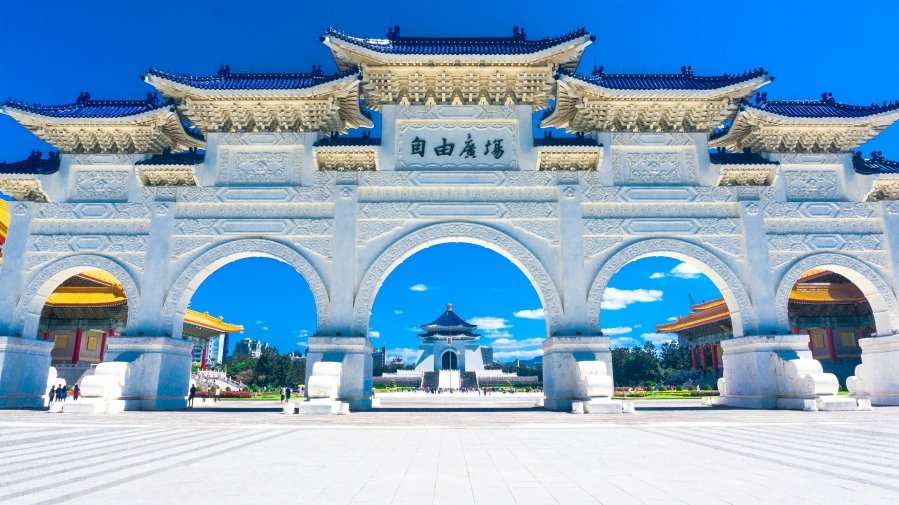
Located in the heart of Taipei, the Chiang Kai-shek Memorial Hall stands as a symbol of Taiwan’s modern history and a tribute to one of the most influential figures in Chinese history. This grand, white-marble structure is not only a popular tourist attraction but also a significant cultural and political landmark. Surrounded by beautiful gardens, and flanked by the National Theater and Concert Hall, the memorial is a peaceful yet majestic place that invites visitors to learn about Taiwan’s past while offering stunning architecture and serene landscapes. Whether you’re a history buff or just looking to explore Taipei’s cultural landmarks, this is one spot you won’t want to miss.
History
The Chiang Kai-shek Memorial Hall was constructed to honor Chiang Kai-shek, the former President of the Republic of China (ROC) and leader of the Kuomintang (KMT). After leading China during World War II and fighting against the Japanese occupation, Chiang became a prominent figure in the Chinese Civil War, which saw his nationalist forces in conflict with the Communist Party of China. When the Communist Party, led by Mao Zedong, took control of mainland China in 1949, Chiang and the ROC government retreated to Taiwan, where they established Taipei as the temporary capital. He ruled Taiwan under martial law for decades, shaping its development into a modern, industrialized society.
Following Chiang’s death in 1975, the idea for a memorial hall was proposed to commemorate his life and leadership. Construction of the memorial began in 1976 and was completed in 1980. The hall was built as a national symbol to honor Chiang’s contributions to Taiwan’s transformation and to reinforce the importance of the ROC as a government-in-exile, separate from Communist China. However, the memorial is also a reminder of the complicated history of authoritarian rule during Chiang’s time in power, a period marked by strict governance, censorship, and the suppression of dissent.
The architecture of the hall blends both traditional Chinese elements and modern design, reflecting the balance between the old and the new that characterized Chiang’s leadership. Over the years, the site has also become a place of reflection on Taiwan’s own identity, democracy, and the legacies of its leaders. In 2007, the government renamed the surrounding area “Liberty Square” to symbolize Taiwan’s transition to democracy after decades of authoritarian rule. Despite its origins, the Chiang Kai-shek Memorial Hall remains a key historical and cultural site that provides insight into Taiwan’s journey through the 20th century.
Building Details
The Chiang Kai-shek Memorial Hall is an imposing structure, featuring a large white-marble edifice with a blue-tiled octagonal roof—a nod to traditional Chinese architecture, with the blue and white symbolizing freedom and equality. The octagonal design is symbolic in Chinese culture, representing the number eight, which is associated with prosperity and good fortune.
The hall is located within a sprawling 62-acre park, which includes manicured gardens, koi ponds, and walking paths. The memorial itself stands at the far end of Liberty Square, facing the National Theater and the National Concert Hall, creating a grand cultural plaza.
At the top of a 89-step staircase, which symbolizes Chiang Kai-shek’s age at the time of his death, lies the main entrance to the hall. Inside, visitors are greeted by a massive statue of Chiang Kai-shek, sitting in a throne-like chair, reminiscent of monuments dedicated to Abraham Lincoln in the U.S. The statue is flanked by military honor guards who perform an impressive hourly changing of the guard ceremony, which has become a popular attraction for visitors.
Key Features
- The Statue of Chiang Kai-shek: The main hall contains a large bronze statue of Chiang, symbolizing his leadership and legacy. His serene, larger-than-life depiction represents wisdom and strength. The guards standing at attention add a solemn and ceremonial atmosphere to the room.
- Changing of the Guard Ceremony: One of the most popular highlights for visitors is the hourly changing of the guard. The precision and formality of this ritual have made it a must-see for tourists, offering a glimpse into Taiwan’s military traditions and respect for historical figures.
- Exhibition Halls: Below the main hall, there are several exhibition rooms dedicated to Chiang Kai-shek’s life, Taiwan’s history, and artifacts from Chiang’s presidency, including his personal vehicles and uniforms. It provides an in-depth look into his leadership, as well as Taiwan’s political development.
- Liberty Square: The grand square in front of the hall is a large public space that hosts cultural and political events, concerts, and festivals. With the National Theater and Concert Hall on either side, Liberty Square has become a center for public gatherings and cultural exchange.
- Gardens and Ponds: The surrounding park area is beautifully landscaped with gardens, trees, and ponds. It’s a peaceful place to relax, take a stroll, and enjoy the natural scenery, away from the bustling city streets of Taipei.
Getting There
The Chiang Kai-shek Memorial Hall is easily accessible by public transportation. The MRT (Mass Rapid Transit) system is the most convenient option, with the Chiang Kai-shek Memorial Hall Station on both the Red and Green lines. From the station, it’s just a short walk to the main entrance.
- By MRT: Take either the Red or Green Line to the Chiang Kai-shek Memorial Hall Station. Exit at either Exit 5 or 6, and you will be right at Liberty Square, with the memorial hall in front of you.
- By Bus: Several city bus routes also stop near the memorial hall. Check local bus schedules for routes that pass through the Zhongzheng District, where the hall is located.
- By Taxi: Taxis are widely available in Taipei and can take you directly to the memorial hall from any location in the city. It’s also a central landmark, so most drivers are familiar with it.
Final Thoughts
The Chiang Kai-shek Memorial Hall is more than just a tribute to one of Taiwan’s historical figures—it’s a place that encapsulates the complex history of Taiwan and its journey toward democracy. Whether you’re visiting to learn about the country’s past, admire its architecture, or simply enjoy the peaceful surroundings, the memorial hall is an essential stop in Taipei. With its blend of history, culture, and striking design, this iconic site offers something for everyone, providing a deeper understanding of Taiwan’s rich and multifaceted heritage.