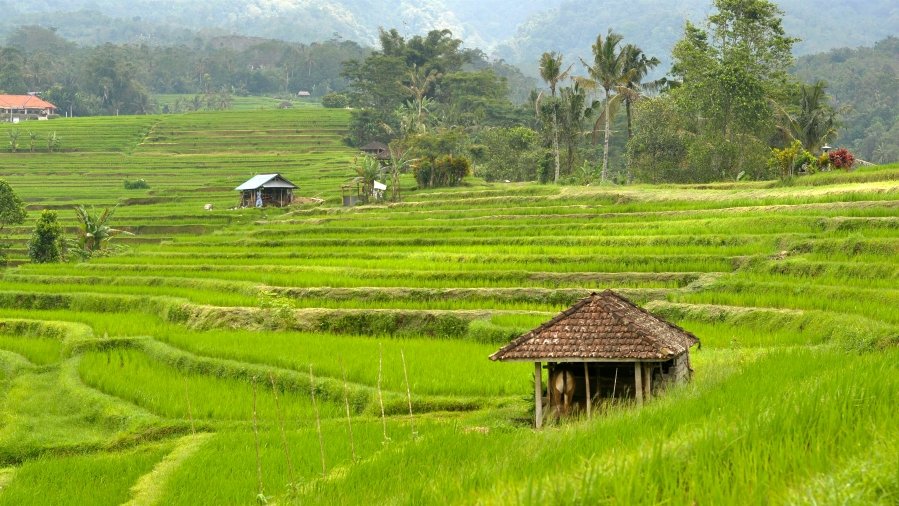
Located in the highlands of Bali, the Jatiluwih Rice Terraces offer a stunning escape into a world of greenery, tranquility, and natural beauty. These vast, meticulously sculpted rice fields stretch as far as the eye can see, nestled against a backdrop of towering mountains. A UNESCO World Heritage site, Jatiluwih showcases Bali’s ancient agricultural traditions and offers a peaceful retreat away from the island’s busier tourist areas. Whether you’re an avid photographer, hiker, or just looking to experience a quieter side of Bali, Jatiluwih is a must-visit destination that truly feels like stepping back in time.
The Jatiluwih Rice Terraces are located in the Tabanan Regency of Bali, approximately 40 kilometers northwest of Ubud. The word “Jatiluwih” itself translates to “truly wonderful,” and the name couldn’t be more fitting. The terraces are a remarkable example of Bali’s subak irrigation system, a community-managed method that has been passed down through generations for over 1,000 years. This unique irrigation system reflects not just Bali’s agricultural ingenuity but also its spiritual connection to the land, as the subak system is based on the principles of harmony between humans, nature, and the gods.
The rice terraces span more than 600 hectares of hillside, showcasing the area’s fertile landscape and local farmers’ dedication to their craft. Unlike some of the more touristy rice terraces on the island, Jatiluwih retains its authenticity, with local farmers still actively working the fields today. Visitors to Jatiluwih are treated to some of the most pristine natural beauty on the island, with panoramic views of rice paddies, the distant Gunung Batukaru mountain, and dense jungles beyond.
Main Attractions:
- Panoramic Views: The biggest draw of Jatiluwih is its spectacular view. As you walk along the terraces, you’ll be surrounded by lush green rice fields that cascade down the slopes like stairways into the horizon. The landscape is dotted with local farmers tending to their crops, giving you a glimpse into traditional Balinese farming life. For photographers, the sweeping vistas make for jaw-dropping shots, especially during sunrise or sunset when the light dances off the terraces.
- Trekking Trails: Jatiluwih offers a network of walking paths that snake through the rice fields, allowing you to get up close and personal with the terraces. There are trails suitable for all fitness levels, from short loops to longer treks that take you deeper into the surrounding countryside. Along the way, you’ll encounter farmers, small villages, and plenty of opportunities to learn about the subak system firsthand.
- Cultural Experience: If you visit during the rice planting or harvesting seasons, you’ll witness the traditional farming methods that have been used here for centuries. Some local guides offer tours that explain the history of the terraces and the significance of the subak system, making it a rich cultural experience beyond just sightseeing.
Off-the-Beaten-Path Recommendations:
- Cycling Through the Terraces: For those looking to explore Jatiluwih with a bit more adventure, consider renting a bike and cycling through the terraces. Several guided tours offer cycling routes that take you along the peaceful paths, through small villages, and past temples. It’s a unique way to immerse yourself in the landscape.
- Explore Local Villages: While many visitors stick to the main walking trails, a deeper exploration of the nearby villages can be just as rewarding. You can discover rural Balinese life, interact with the local community, and even visit traditional family compounds where locals live much as they have for generations.
- Visit Batukaru Temple: For a more spiritual experience, a visit to Pura Luhur Batukaru, one of Bali’s most sacred temples, is a must. This hidden gem is located near Jatiluwih and offers a serene and less-touristy temple experience amidst the tropical rainforest.
Local Food and Drink:
- Balinese Cuisine with a View: Several small warungs (local eateries) and cafes around the terraces offer traditional Balinese food with stunning views of the rice fields. After a trek, sit down and enjoy a plate of nasi campur (mixed rice with vegetables, meats, and peanuts) or bebek betutu (spiced duck). Many restaurants use fresh, local ingredients, so the food is both delicious and authentic.
- Fresh Coconut Water and Local Produce: Along the trails, you’ll often find local vendors selling fresh coconut water or freshly harvested fruits. It’s the perfect way to cool down after a long walk through the terraces while supporting local farmers.
Travel Tips and Practical Information:
- Best Time to Visit: Jatiluwih is at its greenest during the rainy season, from October to April, when the rice terraces are at their most lush. However, the dry season from May to September offers more predictable weather for trekking and exploring. Early mornings or late afternoons are ideal for visiting, as the light is softer, and temperatures are cooler.
- What to Wear: The trails can get muddy, so comfortable, sturdy shoes are a must. Pack sun protection like a hat and sunscreen, and bring water for the trek. If you plan on visiting during the rainy season, a light rain jacket could be handy.
- Entrance Fee: There is a small entrance fee of around IDR 40,000 (approximately $2.50 USD) per person. This fee helps with the upkeep of the area and supports the local farmers.
- Guided Tours: If you want to gain a deeper understanding of the area’s history and culture, consider hiring a local guide. Many guides come from nearby villages and can provide fascinating insights into the rice cultivation process and the subak irrigation system.
Nearby Points of Interest & Landmarks:
- Batukaru Temple: Located just a short drive from Jatiluwih, Batukaru Temple is one of Bali’s holiest sites. Nestled in the jungle at the foot of Mount Batukaru, this temple is quiet and serene, offering a perfect complement to a day exploring the terraces.
- Ulun Danu Beratan Temple: This iconic water temple, located on Lake Beratan, is about an hour’s drive from Jatiluwih. The temple appears to float on the lake, making it one of Bali’s most photographed landmarks.
- Angseri Hot Springs: After a day of trekking, relax in the Angseri Hot Springs, located nearby. These natural hot springs are surrounded by lush tropical vegetation and offer a peaceful escape.
Final Thoughts:
The Jatiluwih Rice Terraces are much more than just a beautiful landscape; they are a living testament to Bali’s rich cultural heritage and deep connection with nature. Whether you’re walking through the terraces, learning about traditional farming, or simply soaking in the breathtaking views, Jatiluwih offers an unforgettable experience. For those looking to explore the quieter, more authentic side of Bali, Jatiluwih is a hidden gem that promises serenity, culture, and the island’s most awe-inspiring vistas.