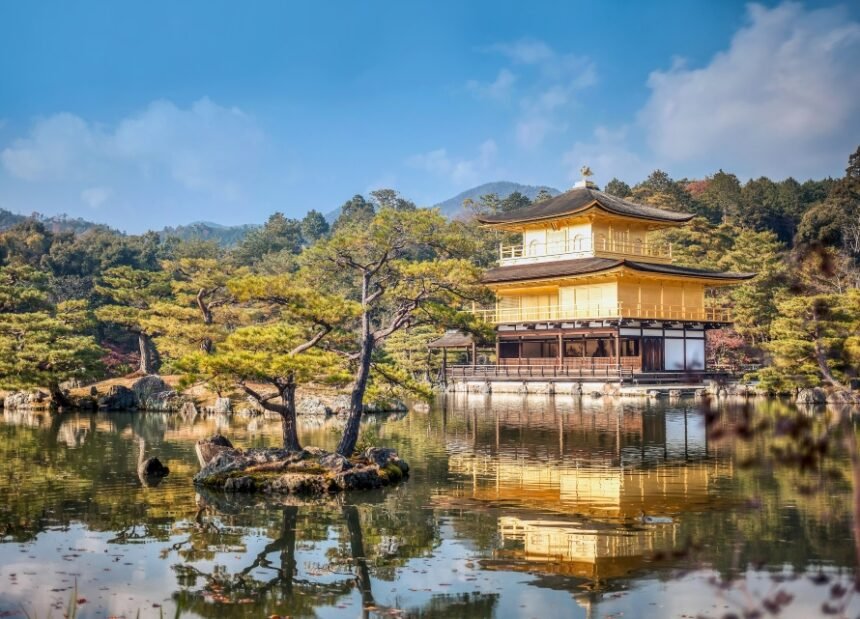
Located in the picturesque gardens of Kyoto, Japan, stands Kinkaku-ji, also known as the Golden Pavilion—a shining icon of Japanese beauty, culture, and tranquility. This stunning Zen Buddhist temple, wrapped in layers of gold leaf and reflected perfectly in the surrounding mirror pond, captivates visitors from all over the world. Originally built as a retirement villa for a shogun, Kinkaku-ji has a rich history that reflects the elegance of ancient Japanese design and the spiritual essence of Zen Buddhism. In this guide, we’ll explore Kinkaku-ji’s history, unique architecture, and everything you need to know for a memorable visit to this remarkable landmark.
History of Kinkaku-ji
Kinkaku-ji’s story dates back to the late 14th century, during Japan’s Muromachi period. It was initially constructed in 1397 as a luxurious villa for Ashikaga Yoshimitsu, the third shogun of the Ashikaga shogunate. Yoshimitsu had a fascination with opulence and sought to create a retreat that captured the beauty and peace of nature. He named it “Kitayama-dono,” or the Kitayama Palace, to distinguish it from other residences in Kyoto. Yoshimitsu’s vision was to create a space that blended architectural beauty with the natural landscape, embodying the principles of Zen Buddhism while also serving as a display of his wealth and power.
Upon Yoshimitsu’s death in 1408, he willed the villa to become a Zen temple according to his wishes. The complex was entrusted to the Rinzai sect of Zen Buddhism and renamed Rokuon-ji, which translates to “Deer Garden Temple,” though it is more commonly known as Kinkaku-ji (Golden Pavilion) due to its iconic gilded upper floors. Since then, Kinkaku-ji has played an essential role in Kyoto’s cultural and religious life, attracting pilgrims and visitors alike.
The pavilion, however, has had a turbulent history. Over the centuries, it suffered damage from fires multiple times and was even the target of an arson incident in 1950 when a young monk set it ablaze. The building was almost entirely destroyed in the fire, but thanks to detailed records and photographs, it was meticulously reconstructed in 1955. This reconstruction preserved Yoshimitsu’s original design and added additional layers of gold leaf, ensuring that Kinkaku-ji continues to shine brilliantly. The resilience of Kinkaku-ji is a testament to Kyoto’s commitment to preserving its heritage, and today, it stands as a UNESCO World Heritage site, symbolizing the elegance and spiritual depth of Japan’s past.
Building Details
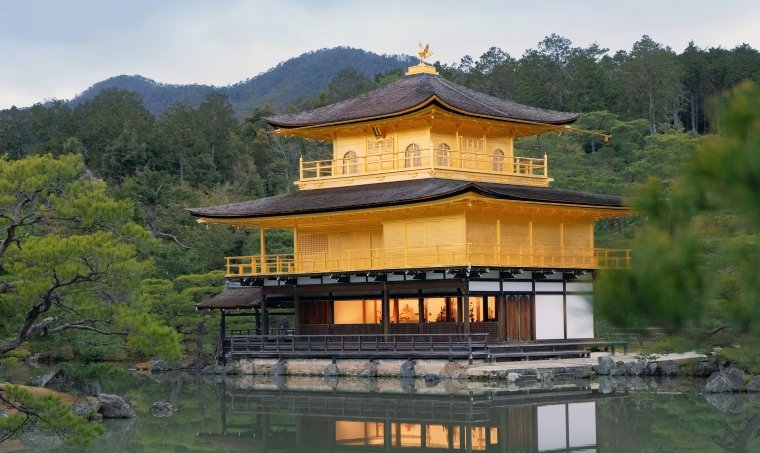
Kinkaku-ji is a three-story structure, with each floor designed in a unique architectural style representing different periods and styles of Japanese architecture. The first floor, known as The Chamber of Dharma Waters, is built in the Shinden style, which was popular during the Heian period and typically associated with palatial buildings. This floor has open wooden paneling and a veranda overlooking the pond, creating a sense of harmony with the surrounding nature. The floor is left unpainted, allowing the natural wood to contrast with the gold above.
The second floor, called The Tower of Sound Waves, is built in the Bukke style, typically associated with samurai residences. It is entirely covered in gold leaf and features enclosed walls, giving it a more private, almost meditative atmosphere. Inside, this floor houses a statue of Kannon, the Buddhist goddess of mercy, reflecting the Zen Buddhist spiritual focus of the temple.
The third floor, or The Cupola of the Ultimate, is built in the style of a Chinese Zen Hall and features intricate, gilded detail. This floor is also covered in gold leaf and topped with a phoenix statue on the roof, symbolizing rebirth, protection, and enlightenment. The brilliance of this gold reflects in the surrounding Mirror Pond, creating a shimmering, almost surreal scene that changes with the seasons.
Surrounding the pavilion is a meticulously landscaped Japanese strolling garden, complete with carefully placed rocks, pine trees, and small islets in the pond. The garden layout follows the principles of shakkei, or “borrowed scenery,” integrating views of the surrounding mountains to make the entire site feel expansive and harmonious with the natural landscape.
Key Features
- Golden Pavilion (Kinkaku): The iconic three-story pavilion is coated in gold leaf on the second and third floors, creating a radiant reflection in the Mirror Pond and symbolizing purity and enlightenment.
- Mirror Pond (Kyōko-chi): The pond in front of Kinkaku-ji is dotted with small islands and reflects the pavilion, adding to the serene beauty of the landscape. Each rock and islet is placed to enhance the harmony of the garden.
- Phoenix Statue: Atop the pavilion is a phoenix statue that symbolizes rebirth, resilience, and the Zen Buddhist aspiration for enlightenment.
- Japanese Gardens: Surrounding the pavilion is a beautiful strolling garden with ancient trees, stone lanterns, and small temples, designed to integrate with the natural scenery and provide a tranquil, meditative space.
- Anmintaku Pond: Another pond on the temple grounds, Anmintaku is said never to dry up and holds its own legends, adding a mystical element to the gardens.
Myths and Legends
Kinkaku-ji is surrounded by several legends that add to its allure. One of the most famous legends involves a belief that the phoenix atop the pavilion protects the temple from misfortune. Even though the pavilion has faced fires and destruction over the centuries, this symbol of rebirth and resilience remains intact, offering hope and strength to the visitors who believe in its power.
Another story linked to Kinkaku-ji is that of Yoshimitsu himself, who was rumored to have sought immortality and enlightenment. Some legends suggest he built the pavilion to serve as a gateway to the afterlife, intending to ascend to a divine realm with the beauty of Kinkaku-ji as his final resting place.
Getting There
Getting to Kinkaku-ji is straightforward, and the temple is easily accessible from Kyoto’s city center. From Kyoto Station, take the city bus No. 101 or 205, which will take you directly to the Kinkaku-ji-michi bus stop in about 40 minutes. Kinkaku-ji is also reachable by subway and a short walk. The temple has a small entry fee, and visiting hours are generally from 9:00 AM to 5:00 PM.
If you prefer a scenic approach, consider renting a bicycle and taking a leisurely ride through Kyoto’s historic districts on your way to Kinkaku-ji. The temple can get crowded, especially during cherry blossom season and autumn foliage, so early mornings and weekdays offer a more serene experience.
Nearby Points of Interest & Landmarks
- Ryoan-ji Temple: Just a short walk from Kinkaku-ji, Ryoan-ji is famous for its rock garden, a masterpiece of Zen landscaping that invites meditation and contemplation.
- Ninna-ji Temple: Known for its beautiful cherry blossom trees and traditional architecture, Ninna-ji is another UNESCO World Heritage site that offers insight into Japan’s rich Buddhist history.
- Kyoto Imperial Palace: Located a short bus or taxi ride away, the Kyoto Imperial Palace is a former residence of the imperial family and boasts elegant gardens and historical significance.
- Ginkaku-ji (Silver Pavilion): Often considered the “sister” temple to Kinkaku-ji, Ginkaku-ji represents another side of Zen aesthetics, with its understated design and famous sand garden.
- Philosopher’s Path: A scenic walkway that follows a canal lined with cherry trees, the Philosopher’s Path is ideal for a reflective stroll after visiting Kinkaku-ji and its nearby temples.
Final Thoughts
A visit to Kinkaku-ji Temple is an unforgettable journey into Japan’s past, offering a glimpse of the country’s cultural and spiritual legacy. The golden pavilion, glistening in the sunlight, encapsulates the ideals of Zen beauty, harmony with nature, and the search for enlightenment. Beyond its stunning architecture, Kinkaku-ji’s gardens, ponds, and sacred symbolism create a setting that invites reflection and calm, making it an essential stop for anyone exploring Kyoto. Whether you’re drawn to the temple for its aesthetics, its legends, or simply the tranquil atmosphere, Kinkaku-ji promises an experience of peace, beauty, and timeless Japanese tradition.