




Located on the verdant hills of Wakayama Prefecture, Japan, Seiganto-ji Temple stands as a timeless blend of natural beauty and spiritual heritage. Also known as the “Temple of Crossing the Blue Shore,” this ancient sanctuary dates back over a thousand years and offers breathtaking views of Nachi Falls, Japan’s tallest waterfall. The unique fusion of Buddhist and Shinto traditions at Seiganto-ji, paired with its spectacular setting, makes it a must-visit for those seeking both spiritual insight and natural splendor. This guide delves into the history, architecture, and legends that make Seiganto-ji one of Japan’s most cherished temples.
History of Seiganto-ji
Seiganto-ji’s story begins in the early 5th century, making it one of the oldest temples in Japan. According to legend, the temple was founded by an Indian monk named Ragyō Shōnin, who traveled to Japan and was captivated by the power of Nachi Falls. Drawn to the area’s beauty and spiritual energy, he meditated near the waterfall, where he eventually established the first structures of what would become Seiganto-ji. The temple’s name, “Seiganto-ji,” means “Temple of Crossing the Blue Shore,” symbolizing the Buddhist journey from the cycle of rebirth (the “red shore”) to enlightenment (the “blue shore”).
Over the centuries, Seiganto-ji became a central hub for Shugendō, an ascetic tradition blending Shinto and Buddhist practices, focused on revering the natural world. The temple and surrounding area attracted numerous followers and practitioners who saw the powerful Nachi Falls as sacred, representing the life force of nature. During the Heian period (794-1185 AD), Seiganto-ji flourished under imperial patronage, and more structures were added to the temple complex. Its natural setting and sacred waterfall made it a pilgrimage destination, drawing worshippers from all over Japan.
In 1868, however, the Meiji Restoration brought sweeping changes to Japan, including a policy separating Shinto and Buddhist practices. Many temples and shrines were destroyed, and Seiganto-ji was at risk of the same fate. Despite these pressures, the local community rallied to protect the temple. It was preserved and eventually merged with the Nachi Taisha Shrine, a nearby Shinto shrine. The temple’s status was restored in the 20th century, and today it stands as a UNESCO World Heritage site, part of the “Sacred Sites and Pilgrimage Routes in the Kii Mountain Range.” Seiganto-ji remains a place where Buddhist and Shinto traditions peacefully coexist, reflecting Japan’s complex religious history.
Building Details
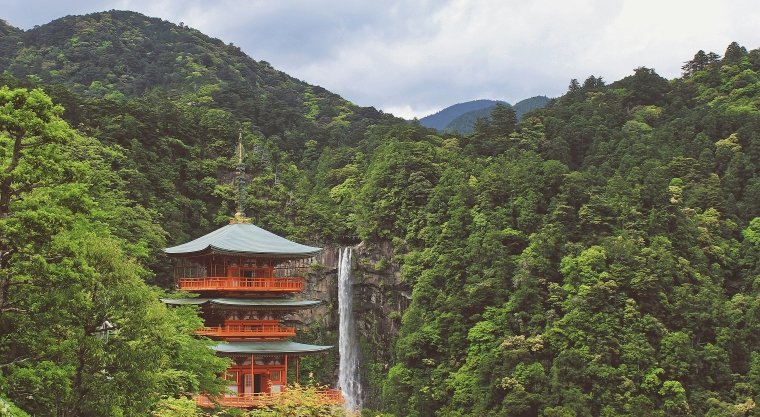
Seiganto-ji’s architectural design is a captivating blend of traditional Buddhist and Shinto elements, designed to harmonize with the natural surroundings. The temple’s most iconic structure is the three-story pagoda, which offers sweeping views of Nachi Falls in the background, creating one of Japan’s most picturesque and photographed scenes. The pagoda, painted in vivid vermillion, contrasts beautifully against the lush green hills and cascading waterfall. It is not only an architectural masterpiece but also a symbol of resilience, having been rebuilt multiple times after fires and earthquakes.
The main hall, called the Hondō, is another highlight of Seiganto-ji. It houses the temple’s principal deity, Nyoirin Kannon, a compassionate form of Kannon, the Buddhist bodhisattva of mercy. Pilgrims come to Seiganto-ji to pray to Nyoirin Kannon for good fortune, health, and guidance on their spiritual journey. The Hondō’s design reflects classical Japanese Buddhist architecture, with a simple yet elegant structure that invites quiet reflection. Inside, the peaceful atmosphere and subtle incense fragrance create a sense of serenity.
Throughout the temple grounds, visitors will also find smaller shrines, each with its own purpose, as well as stone lanterns, sacred trees, and pathways leading to lookout points. The careful placement of each structure within the landscape reinforces Seiganto-ji’s spiritual connection with nature, making every corner of the temple an invitation to pause and appreciate the beauty around.
Key Features
- Three-Story Pagoda: The vermillion pagoda is a defining feature of Seiganto-ji, positioned perfectly to frame Nachi Falls in the background. It’s an iconic sight that has come to represent the harmony between nature and spirituality in Japan.
- Nachi Falls: At 133 meters (436 feet), Nachi Falls is Japan’s tallest waterfall and a symbol of life’s force in Japanese culture. The falls are considered sacred and are central to the temple’s spiritual significance.
- Hondō (Main Hall): The Hondō is home to the deity Nyoirin Kannon, known for offering blessings of mercy and compassion. Pilgrims frequently visit this hall to pray and leave offerings.
- Kumano Kodo Pilgrimage Trail: Seiganto-ji is part of the historic Kumano Kodo pilgrimage route, which has been traveled by Japanese emperors and monks for centuries. The trail links several sacred sites in the Kii Mountain Range.
- Sacred Trees: The temple grounds are filled with towering ancient trees, revered as sacred in Shinto practice. They add to the serene atmosphere and enhance the natural beauty of Seiganto-ji.
Myths and Legends
Seiganto-ji is steeped in legends that add to its mystique. One of the most famous legends involves Ragyō Shōnin, the Indian monk who founded the temple. According to the story, he was guided to Nachi Falls by a white turtle, which symbolized purity and enlightenment. The turtle led him to the base of the waterfall, where he felt a profound connection with nature and decided to establish a temple.
Another legend ties the temple’s founding to the deity Kannon, who is believed to have appeared at Nachi Falls in the form of a radiant goddess. Pilgrims still visit Seiganto-ji today in hopes of experiencing spiritual visions or receiving blessings from Kannon. Additionally, it is said that the falls have healing powers, and some worshippers come to drink the water or offer prayers for physical and emotional well-being.
Getting There
Seiganto-ji Temple is located in Nachikatsuura, Wakayama Prefecture, and is accessible from various parts of Japan. The nearest major city is Osaka, which is about three hours away by train. From Osaka, visitors can take the JR Kuroshio Limited Express to Kii-Katsuura Station. From there, it’s a short bus ride to Nachi, where the temple is located.
For those looking to enjoy the scenic route, the Kumano Kodo pilgrimage trail leads to Seiganto-ji. The route is challenging but rewarding, with beautiful landscapes and other sacred sites along the way. Once you arrive, a series of stone steps leads up to the temple, adding to the sense of pilgrimage and reverence.
Nearby Points of Interest & Landmarks
- Nachi Taisha Shrine: Located adjacent to Seiganto-ji, this Shinto shrine is part of the Kumano Sanzan, the three grand shrines of the Kumano region. The shrine is dedicated to the gods of Kumano and is a significant site in both Shinto and Buddhist traditions.
- Hirou Shrine: A small shrine at the base of Nachi Falls, Hirou Shrine offers close-up views of the waterfall. It is a great spot for taking photos and is considered a sacred place for Shinto purification rituals.
- Kumano Kodo Pilgrimage Routes: This network of ancient pilgrimage trails crisscrosses the Kii Peninsula, connecting sacred sites like Seiganto-ji, Nachi Taisha, and other shrines. The trails are recognized as a UNESCO World Heritage site and offer an incredible journey through Japan’s spiritual landscape.
- Fudarakusan-ji Temple: Just a short distance away, Fudarakusan-ji Temple is known for its connection to the unique Buddhist practice of sending monks out to sea on small boats as a spiritual pilgrimage to the mythical land of Fudaraku, believed to be Kannon’s pure land.
- Daimonzaka Slope: A picturesque cobblestone path lined with ancient cedar trees, Daimonzaka leads up to Nachi Taisha and Seiganto-ji. This serene pathway is part of the Kumano Kodo route and is especially beautiful in spring and autumn.
Final Thoughts
Seiganto-ji Temple, with its breathtaking views, serene atmosphere, and powerful spiritual energy, is a treasure of Japan’s cultural heritage. The temple’s harmonious coexistence with Nachi Falls and the surrounding forest makes it a place where history, nature, and spirituality intersect in a way that feels timeless. Whether you’re seeking spiritual insight, marveling at ancient architecture, or simply enjoying the natural beauty, Seiganto-ji offers an experience that stays with you long after your visit. For travelers exploring Wakayama Prefecture or walking the historic Kumano Kodo, this “Temple of Crossing the Blue Shore” is an essential stop that embodies the very essence of Japan’s sacred landscape.