Rising above the rugged landscapes of southeastern Turkey, Mount Nemrut is an archaeological wonder that combines jaw-dropping views with a deep sense of history. Known for its massive stone statues and royal tombs, this UNESCO World Heritage Site is a must-visit for history buffs, adventurers, and anyone captivated by ancient mysteries.
At over 2,100 meters high, the summit of Mount Nemrut offers a surreal experience. Whether you’re watching the sun rise over its colossal statues or learning about the fascinating culture that built them, a trip to Mount Nemrut promises unforgettable moments.
Mount Nemrut is part of the Taurus Mountain Range in Turkey’s Adıyaman Province. The site was commissioned in the 1st century BCE by King Antiochus I Theos of Commagene, who wanted to leave a legacy blending Greek and Persian traditions.
Antiochus constructed a massive tumulus (artificial burial mound) on the mountain’s summit, surrounded by giant stone statues of gods, mythical figures, and himself. These statues symbolized the fusion of cultures in the region and the king’s claim to divine ancestry. Despite centuries of erosion, earthquakes, and shifting politics, Mount Nemrut remains a powerful testament to the ingenuity and ambition of the ancient Commagene Kingdom.
Main Attraction: The Colossal Statues
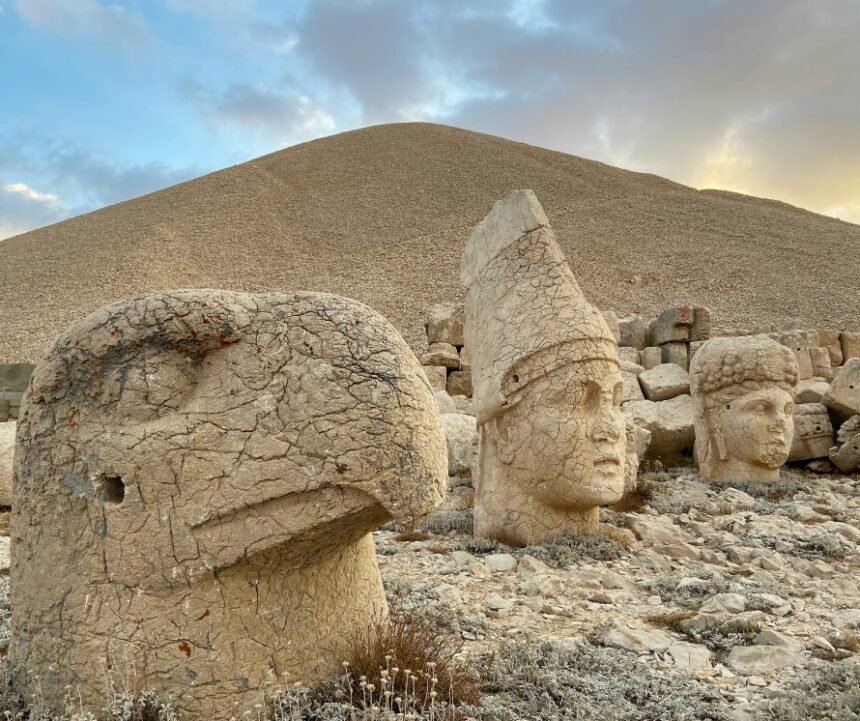
The highlight of Mount Nemrut is undoubtedly its collection of gigantic statues, each standing about 8-10 meters tall. They are arranged in two terraces, eastern and western, flanking the central tumulus:
- Eastern Terrace: Features the best-preserved statues, including depictions of Greek and Persian gods like Zeus, Apollo, Hercules, and Fortuna. A seated figure of Antiochus himself is also prominently displayed.
- Western Terrace: Mirrors the eastern side but is more eroded. It’s the perfect spot for watching the sunset, as the light casts dramatic shadows on the statues.
- Tumulus: The burial mound, made of crushed limestone, is believed to house the tomb of King Antiochus, although it has never been excavated.
The intricate carvings, including inscriptions in Greek, offer insights into Antiochus’s beliefs and aspirations.

Interesting Facts / Key Points / Events
- A Unique Blend of Cultures: The site reflects a mix of Hellenistic and Persian influences, highlighting the region’s role as a crossroads of civilizations.
- Unresolved Mysteries: Despite its grandeur, the tomb of Antiochus remains undiscovered, adding an air of intrigue to the site.
- Engineering Marvel: Constructing the site atop a remote mountain was a monumental feat, requiring ingenuity and immense labor.
- Seasonal Access: The site is best visited in spring or summer, as snow makes it inaccessible during the winter months.
- UNESCO Recognition: Mount Nemrut was designated a UNESCO World Heritage Site in 1987 for its cultural and historical significance.
Travel Tips and Practical Information
Best Time to Visit:
- April to October: Clear skies and mild weather make this the best season for visiting. Sunrises and sunsets are particularly stunning.
Getting There:
- By Air: Fly into Adıyaman or Malatya airports, then take a car or bus to the site.
- By Car: Mount Nemrut is about a 2-hour drive from Adıyaman. Guided tours are also available.
- Hiking Options: If you’re feeling adventurous, hiking to the summit from nearby villages is a rewarding experience.
Entry Fees:
- Approximately 100 Turkish Lira (USD 5) for park admission. Guided tours may include additional costs.
What to Bring:
- Comfortable walking shoes for uneven terrain.
- Warm clothing if visiting for sunrise or sunset, as temperatures drop at the summit.
- A camera to capture the statues and breathtaking landscapes.
Nearby Points of Interest & Landmarks
- Cendere Bridge: An ancient Roman bridge over the Kahta River, showcasing stunning engineering.
- Arsameia on the Nymphaios: The ruins of the ancient Commagene capital with impressive rock reliefs and inscriptions.
- Karakuş Tumulus: A smaller burial mound built for the royal women of Commagene, featuring elegant columns.
- Atatürk Dam: One of the largest dams in the world, offering a fascinating contrast to the region’s ancient wonders.
Recap
Mount Nemrut is more than just an archaeological site—it’s a journey into a world of ancient ambition, cultural fusion, and breathtaking beauty. From its colossal statues to its mysterious royal tomb, the mountain offers a glimpse into the grandeur of a bygone era.
Whether you’re admiring the sunrise over the eastern terrace, delving into the history of King Antiochus’s reign, or exploring nearby landmarks, a visit to Mount Nemrut is a once-in-a-lifetime adventure. So pack your bags, lace up your boots, and let Mount Nemrut’s timeless allure captivate you!