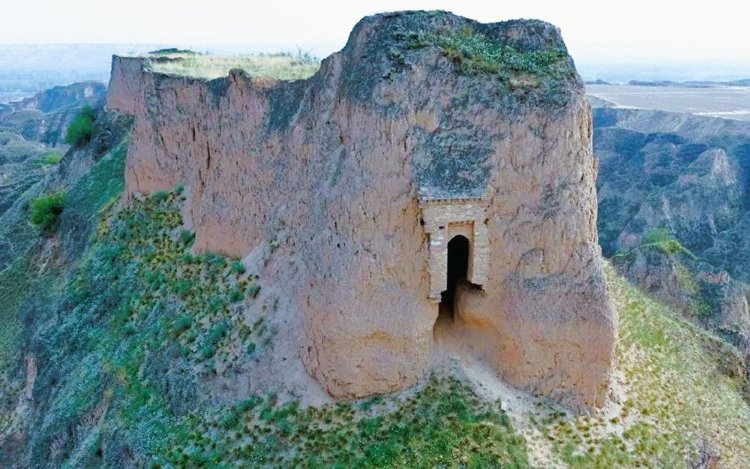
Hejin City Fortress, also referred to as Hejin Ancient City, is an impressive historical landmark nestled in Hejin City, Shanxi Province, China. This fortress features a well-preserved array of Ming Dynasty-era defensive structures, providing visitors with a window into China’s rich military and architectural heritage. Its enigmatic origins remain largely unknown, hidden amidst the rolling loess hills and deep gorges that shield its long-held secrets.
Little is known about the origins of Hejin City Fortress or its significance in the history of Hejin, a city situated along the Yellow River, China’s second-longest river. The strategic value of the river likely played a key role in the fortress’s history. Interestingly, the name Hejin means ‘river ford’, hinting at the city’s importance as a crossing point in the past.
While the exact age of the fortress remains unclear, its design and location suggest it dates back several centuries. Over time, the fortress’s role appears to have diminished, reflecting shifts in the region’s political and social landscape.
Structure and Design Perched on a high loess slope, the fortress blends seamlessly into the natural surroundings, making it difficult to spot from afar. A striking feature is a carved doorway in the cliffside, once connecting to the ground below but now eroded, giving it the appearance of a floating entrance.
The rock formation also includes carved-out shelters, with one still visible on the cliff face. These shelters were used for storing food and livestock, providing a safe haven for the local population during sieges or attacks, allowing them to survive for extended periods.
Strategic Importance The fortress’s design highlights its strategic value as a defensive stronghold. Its position created a natural barrier, further protected by a steep trench that was historically crossed by temporary wooden bridges. The layout suggests that the fortress served as a protective refuge, offering substantial defensive advantages in times of conflict.