In the annals of naval history, few expeditions have sparked as much intrigue and controversy as Operation Highjump. Launched in 1946, this massive undertaking by the United States Navy in Antarctica has become a subject of fascination for historians, conspiracy theorists, and adventure enthusiasts alike. This article delves into the facts and fictions surrounding this enigmatic mission, exploring its objectives, activities, and the lasting impact it has had on our understanding of the frozen continent.
Objectives
Operation Highjump, officially named The United States Navy Antarctic Developments Program, 1946-1947, was conceived with several ambitious goals in mind:
- Establish and maintain U.S. sovereignty over Antarctic territories
- Train personnel and test equipment in polar conditions
- Expand scientific knowledge of the Antarctic region
- Develop techniques for establishing, maintaining, and utilizing air bases on ice
- Amplify and consolidate results of previous Antarctic explorations
While these official objectives were clearly stated, the sheer scale of the operation – involving 4,700 men, 13 ships, and multiple aircraft – led many to speculate about hidden agendas. Some believed the true purpose was to search for secret Nazi bases or to investigate UFO activity in the region.

Activities
The expedition, led by Rear Admiral Richard E. Byrd, arrived in the Ross Sea on December 31, 1946. Over the next few months, the team engaged in a variety of activities:
- Aerial photography: Extensive mapping of Antarctica’s coastline and interior, covering an area of 1,500,000 square miles
- Scientific studies: Collection of meteorological data, magnetic field measurements, and geological samples
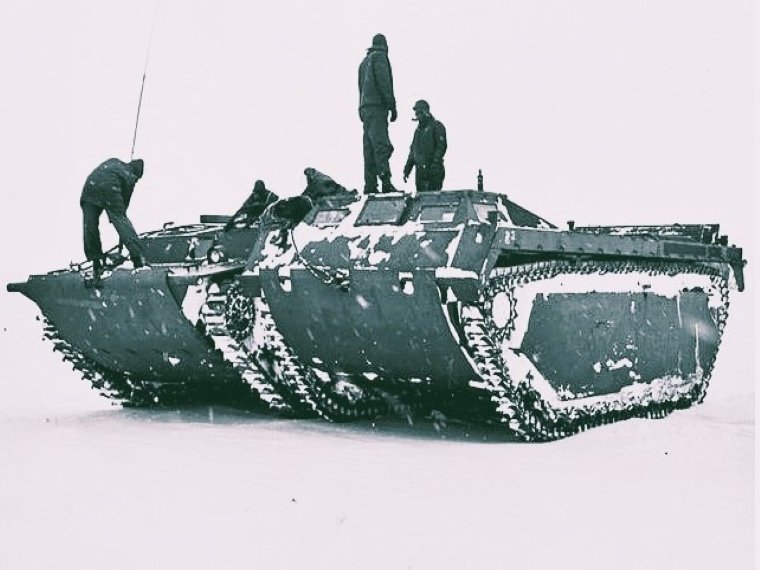
- Cold weather testing: Evaluation of clothing, equipment, and vehicles in extreme conditions
- Base construction: Establishment of Little America IV, a temporary settlement on the Ross Ice Shelf
One of the most significant achievements was the discovery of the American Highland, a previously unknown mountain range in the continent’s interior. This finding greatly contributed to our geographical understanding of Antarctica.
Participating Units
The operation involved a diverse array of naval and air units:
- Task Force 68, including:
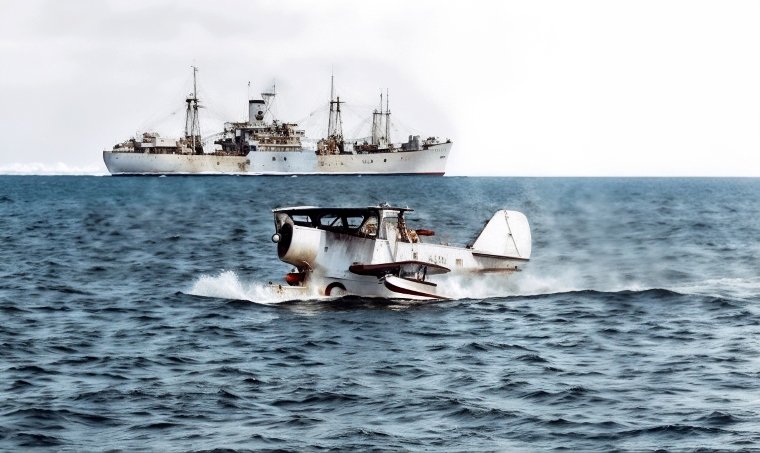
- Seaplane Tender USS Pine Island
- Submarine USS Sennet
- Two icebreakers: USS Burton Island and USCGC Northwind
- Two destroyers: USS Brownson and USS Henderson
- Two tankers: USS Canisteo and USS Cacapon
- Flagship USS Mount Olympus
- Eastern Group:
- Seaplane Tender USS Currituck
- Oiler USS Canisteo
- Destroyer USS Henderson
- Western Group:
- Seaplane Tender USS Pine Island
- Oiler USS Cacapon
- Destroyer USS Brownson
- Central Group:
- Communications and Command Ship USS Mount Olympus
- Icebreaker USS Burton Island
- Supply Ship USS Yancey
- Submarine USS Sennet
- Carrier Group:
- Aircraft Carrier USS Philippine Sea
This impressive assembly of naval power underscored the operation’s importance to the U.S. government and military leadership.
Significance
Operation Highjump marked a turning point in Antarctic exploration and scientific research:
- Technological advancements: The expedition showcased the potential of aerial photography and radar in mapping vast, inhospitable terrains.
- Scientific data: The wealth of information gathered during the operation laid the groundwork for future Antarctic research programs.
- Geopolitical implications: The mission asserted U.S. interests in Antarctica during the early stages of the Cold War.
- Environmental awareness: The expedition raised public consciousness about the importance of the Antarctic ecosystem.
- Military preparedness: Valuable lessons were learned about operating in extreme cold weather conditions.
The operation’s success paved the way for the establishment of permanent research stations in Antarctica and contributed to the signing of the Antarctic Treaty in 1959, which dedicated the continent to peaceful scientific research.
Controversies and Speculations
Despite its official narrative, Operation Highjump has been the subject of numerous conspiracy theories and alternative interpretations:
- Nazi connection: Some claim the mission was a covert operation to root out a secret Nazi base in Antarctica, where advanced technology and escaped war criminals were allegedly hidden.
- UFO encounters: Rumors persist about the expedition encountering extraterrestrial activity, fueled by misinterpretations of Admiral Byrd’s statements about “flying objects” (likely referring to experimental aircraft).
- Hollow Earth theory: Proponents of this fringe belief suggest that the operation discovered entrances to an inner Earth populated by advanced civilizations.
- Soviet tensions: Some historians argue that the true purpose was to prepare for potential conflict with the Soviet Union in polar regions.
- Resource exploration: Speculation exists that the U.S. was secretly prospecting for valuable mineral deposits or energy sources.
While these theories add an air of mystery to Operation Highjump, it’s important to note that there is little credible evidence to support them. The operation’s scale and secrecy, combined with the extreme and unfamiliar Antarctic environment, likely contributed to the growth of these speculations.
In Media
Operation Highjump has inspired various works of fiction and non-fiction:
- Books: “Against the Gods: The Remarkable Story of Risk” by Peter L. Bernstein mentions the operation in the context of risk management in extreme environments.
- Documentaries: “The Secret Land” (1948), a film about the expedition, won the Academy Award for Best Documentary Feature.
- Video games: The operation has been referenced in games like “Call of Duty: Black Ops” as part of fictional Cold War narratives.
- Conspiracy literature: Numerous books and websites propagate alternative theories about the operation’s true purpose.
- Scientific publications: Countless academic papers have been published using data collected during the expedition.
The operation’s blend of factual achievements and speculative elements has made it a rich source of inspiration for creative works across various media.
Conclusion
Operation Highjump stands as a testament to human curiosity, technological innovation, and the enduring mystery of Antarctica. While its official objectives were largely achieved, contributing significantly to our understanding of the southern continent, the expedition’s legacy extends far beyond its scientific accomplishments. The operation has become a cultural touchstone, inspiring generations of explorers, scientists, and storytellers.
As we continue to face global challenges like climate change and resource scarcity, the lessons learned from Operation Highjump remain relevant. The expedition demonstrated the importance of international cooperation in scientific endeavors and the need for responsible stewardship of Earth’s most remote and fragile environments.
Ultimately, Operation Highjump reminds us that even in the modern age, our world still holds mysteries waiting to be unraveled. It challenges us to separate fact from fiction, to pursue knowledge rigorously, and to approach the unknown with a spirit of adventure tempered by scientific skepticism. As Antarctica faces new threats and opportunities in the 21st century, the legacy of Operation Highjump continues to inform our understanding of this crucial part of our planet.