Nestled in Colorado’s Rocky Mountains, the Pikes Peak International Hill Climb (PPIHC) is one of the most thrilling motorsport events on the planet. Known as “The Race to the Clouds,” the event takes place each summer and attracts top drivers, motorcyclists, and teams from all over the globe, each determined to conquer this treacherous mountain course. With over 156 turns across a 12.42-mile track, Pikes Peak demands a mix of raw speed, technical precision, and sheer determination. But what makes this race truly special is the rapidly changing weather, the thin air, and the jaw-dropping vistas—all of which combine to make it a motorsport spectacle like no other.
- A Quick History of Pikes Peak International Hill Climb
- The Course: 12.42 Miles of Pure Adrenaline
- Racing Against the Clock (and the Mountain)
- The Highs (and Lows) of Racing at Altitude
- Breaking Down the Vehicle Classes
- Unpredictable Weather: A Constant Curveball
- Notable Records and Epic Battles
- The Thrill of Watching Pikes Peak (And How to Do It)
- Race Day Experience: A Spectator’s Guide
- Why Pikes Peak Remains Legendary
Here’s a deep dive into the world of Pikes Peak: the history, the track, the challenges, and why this legendary event continues to capture the imagination of drivers and fans alike.
A Quick History of Pikes Peak International Hill Climb
The PPIHC first kicked off in 1916, making it one of the oldest motorsport events in the United States. The race was initially organized to promote tourism and give the newly constructed road to the summit some high-profile exposure. Since then, it’s grown from a local competition into a world-renowned event that draws competitors and fans from across the globe.
In the early days, the track was dirt, and drivers had to grapple with loose surfaces, extreme weather, and the sheer drop-offs that line much of the course. In 2012, however, the entire road was paved, leading to higher speeds, new records, and fresh challenges for drivers and teams alike. Today, the race is run by a mix of amateur enthusiasts and professional drivers, all united by one goal: to conquer Pikes Peak’s daunting ascent.
The Course: 12.42 Miles of Pure Adrenaline
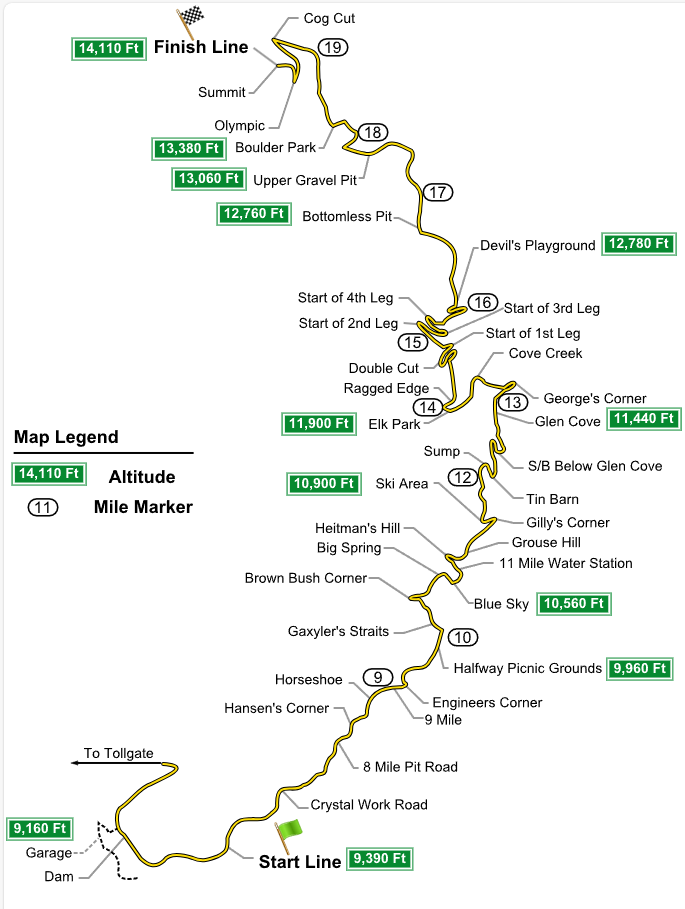
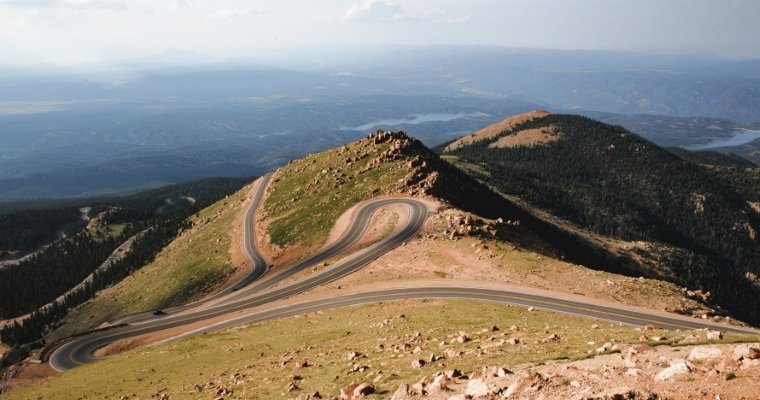
Unlike most racetracks, Pikes Peak offers no room for error. The 12.42-mile course starts at 9,390 feet and rises to the summit at 14,115 feet. Drivers face 156 hairpin turns, switchbacks, and rapid elevation changes, all while navigating narrow, guardrail-free roads that wind through a pristine wilderness. The steep drop-offs, with some plunging thousands of feet, offer an added level of danger, making a misstep here a costly affair.
And while the scenery is stunning, competitors can’t afford a second to take in the views. Their focus is laser-sharp, as even a minor mistake can mean the difference between victory and disaster. To put it in perspective, while some tracks like the Nürburgring are known for their challenging layout, Pikes Peak adds the twist of high altitude, unpredictable weather, and a high-risk, high-reward allure that no other track can match.
Racing Against the Clock (and the Mountain)
One of the unique aspects of Pikes Peak is that it’s a time-trial event. This means competitors race individually against the clock rather than in a group. Each driver gets a shot to tackle the course alone, pushing their machine and themselves to the absolute limit. The fastest overall time sets the winner, and each vehicle class competes for its own records.
In recent years, the fastest cars have completed the course in under eight minutes, an incredible feat considering the difficulty of the course and the dangers involved. For context, French driver Romain Dumas set an all-time course record in 2018, clocking in at an astonishing 7 minutes and 57 seconds in the Volkswagen I.D. R, an electric prototype designed specifically for the climb.
The Highs (and Lows) of Racing at Altitude
One of the unique challenges of Pikes Peak is altitude. As drivers climb higher, the air thins, which impacts both the human body and the performance of internal combustion engines. For the driver, thinner air means less oxygen, which can lead to fatigue, dizziness, and impaired reaction times. For engines, it results in reduced power output—often around a 30% loss by the time drivers reach the summit.
While traditional engines suffer, electric cars have an advantage here. Without the need for oxygen to fuel combustion, they maintain consistent power throughout the race, regardless of altitude. This advantage has led to a surge in EV participation in recent years, with electric cars setting new records and raising the bar for speed and performance at Pikes Peak.
Breaking Down the Vehicle Classes
To accommodate the variety of vehicles competing, Pikes Peak features multiple classes, each with its unique characteristics and challenges. Here’s a look at some of the most popular classes:
- Unlimited Class: This class is for those looking to set outright speed records. No restrictions on design mean these cars are often one-off prototypes with massive engines or cutting-edge electric drivetrains. The Unlimited Class is where you’ll find record-breakers like Romain Dumas and his Volkswagen I.D. R.
- Electric Vehicles (EV) Class: With electric powertrains becoming more popular, Pikes Peak now has a dedicated EV category. These cars benefit from consistent power at high altitudes and are usually among the top contenders for fastest times.
- Pikes Peak Open Class: This class is for modified street-legal cars. Here, you’ll find high-performance vehicles that have been heavily customized for the demands of the hill climb.
- Time Attack Class: This class attracts a mix of amateurs and professionals, featuring cars that might not fit neatly into other categories. It’s often a fan favorite for the variety of vehicles on display.
- Motorcycles and Quads: Pikes Peak also has a motorcycle category, where riders take on the mountain on two wheels. This is an extreme challenge given the narrow road, sharp turns, and exposed cliffs. Motorcycle racing at Pikes Peak was paused after a tragic accident in 2019, but before that, it was one of the race’s most electrifying elements.
Unpredictable Weather: A Constant Curveball
Weather at Pikes Peak can change dramatically within minutes. Drivers may start in sunshine and finish in blizzard-like conditions at the summit. And as if that’s not enough, temperatures can swing from the 70s at the start line to near freezing at the top. Rain, fog, hail, and even snow are not uncommon, adding an extra layer of complexity to an already grueling challenge.
This unpredictability makes tire choice, vehicle setup, and mental preparedness essential. Competitors have to be ready for anything and adapt on the fly, as the mountain often decides how the race will play out.
Notable Records and Epic Battles
The Pikes Peak International Hill Climb has seen its fair share of incredible records and rivalries. Among them, Romain Dumas’s 2018 record-breaking run in the Volkswagen I.D. R is perhaps the most iconic. Dumas completed the climb in under 8 minutes, smashing previous records and showcasing the potential of electric vehicles.
Another memorable moment was in 2013 when Sébastien Loeb, a nine-time World Rally Champion, set a then-record of 8 minutes and 13 seconds in a specially designed Peugeot 208 T16. Loeb’s record run pushed the limits of what was thought possible on Pikes Peak, cementing his place in hill climb history.
- Electric Modified: 7:57.148 (Romain Dumas, 2018)
- Unlimited Division: 8:13.878 (Sébastien Loeb, 2013)
- Time Attack 1: 9:05.672 (David Donner, 2022)
The Thrill of Watching Pikes Peak (And How to Do It)
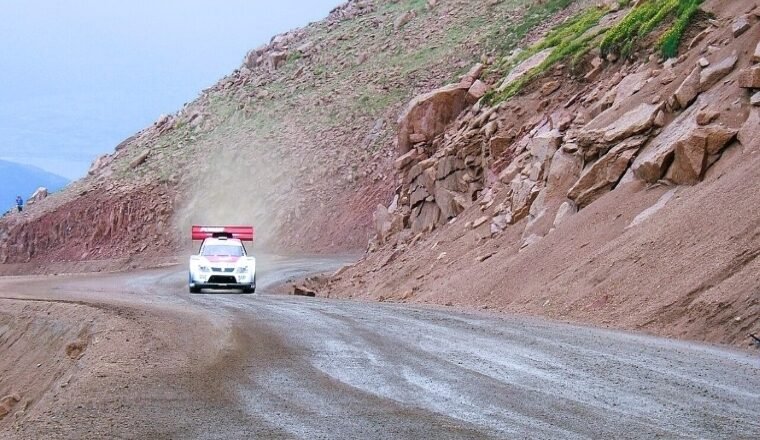
While attending Pikes Peak in person is a thrilling experience, it’s not without its challenges. Spectators need to arrive early—often before sunrise—and be prepared for long waits and changing weather. However, the chance to see cars and bikes fly past at speeds of over 100 mph, just inches from steep drop-offs, makes it all worth it.
For those who can’t make it to Colorado, Pikes Peak is widely covered online. Many fans tune in to watch video coverage, which often includes live-streams, drone shots, and replays of the best moments. With the growing popularity of motorsport streaming platforms, watching Pikes Peak from home has never been easier.
Race Day Experience: A Spectator’s Guide
Want to witness this incredible event in person? Here’s what you need to know:
Best Viewing Spots:
- Devil’s Playground (12,780 feet)
- Glen Cove (11,440 feet)
- Halfway Picnic Grounds
- Start Line Area
Pro Tips for Spectators:
- Arrive early (like, really early – 3 AM early!)
- Bring layers of clothing
- Pack plenty of water and snacks
- Don’t forget sun protection
- Bring a portable chair and binoculars
Why Pikes Peak Remains Legendary
The Pikes Peak International Hill Climb is more than just a race; it’s a test of character, endurance, and skill. Few events in the world put such a unique set of demands on both driver and machine, and fewer still do it in such an awe-inspiring setting. Pikes Peak’s challenges have spawned legendary performances, fostered rivalries, and seen incredible feats of engineering.
In recent years, the race has continued to evolve, with electric vehicles setting new benchmarks and attracting a new wave of fans. As motorsports shift towards greener technologies, Pikes Peak may well become a proving ground for the future of racing, showing the world what’s possible when humans and machines take on the elements—and the mountain.
The Pikes Peak International Hill Climb offers everything a motorsport fan could want: history, danger, record-breaking feats, and stunning scenery. Whether you’re a seasoned racing enthusiast or just discovering the world of motorsports, Pikes Peak is an event worth watching. As the drivers say, once you race the mountain, it never leaves you. /photo credit