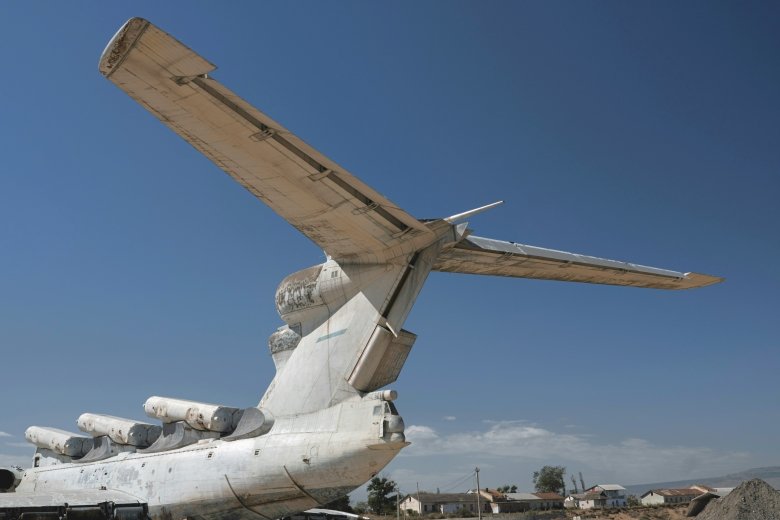
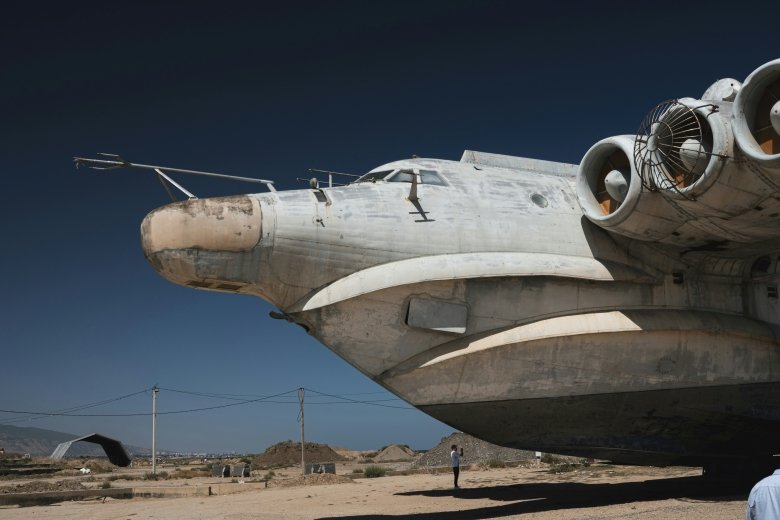
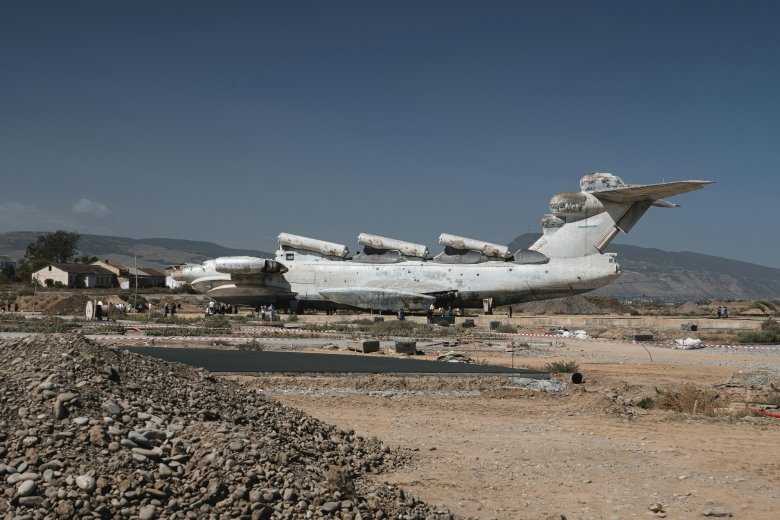

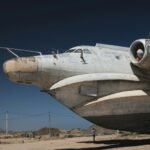
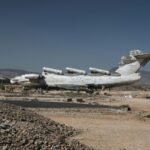
On the shores of the Caspian Sea in the Republic of Dagestan lies a relic of the Cold War era that has fascinated engineers, military enthusiasts, and tourists alike. This beached giant, known as the Lun-class ekranoplan, was once a top-secret Soviet project. With its unique blend of aircraft and ship design, it earned the nickname “Caspian Sea Monster.” But what exactly is this strange beast, and why does it now rest abandoned on the shores of the Caspian?
In this article, we’ll explore the history, design, and current state of the Lun-class ekranoplan, also known as the “Caspian Sea Monster,” and answer some of the most common questions about its fascinating story.
History of the Ekranoplan
The Lun-class ekranoplan was born out of Cold War-era innovation, during a time when the Soviet Union was pushing the boundaries of military technology. Developed in the 1960s by Rostislav Alexeyev, a visionary Soviet engineer, the ekranoplan wasn’t quite an aircraft or a ship—it was both. Officially classified as a ground-effect vehicle (GEV), it skimmed the surface of the water using aerodynamic lift, allowing it to fly just a few meters above the sea. This unique capability made it nearly invisible to radar, a huge advantage in military strategy.
The Lun-class was part of a larger series of Soviet ekranoplans, all designed with one goal in mind: to be a rapid, stealthy missile carrier capable of evading enemy detection. The ekranoplan could travel at impressive speeds compared to traditional ships, and with its missile-launching capabilities, it had the potential to become a deadly asset in naval warfare.
Design and Development
What made the Lun-class ekranoplan truly unique was its design. The massive craft, measuring over 73 meters (240 feet) in length, looked like a hybrid between an airplane and a ship. Its wings spanned 44 meters (144 feet), but unlike traditional planes, it couldn’t fly at high altitudes. Instead, it utilized the ground effect, a phenomenon that occurs when an aircraft flies close to a surface, creating a cushion of air beneath it. This cushion allowed the ekranoplan to glide effortlessly above the water at speeds of up to 550 km/h (342 mph).
Powered by eight massive turbojet engines mounted on the front, the ekranoplan could launch from the sea and cruise just meters above the waves. Its primary role was to carry and launch anti-ship missiles, and the Lun-class was armed with six P-270 Moskit missiles, making it a formidable weapon. However, despite its promise, only one Lun-class ekranoplan was ever completed.
Specifications
Here’s a closer look at some key specifications of the Lun-class ekranoplan:
- Length: 73.8 meters (242 ft)
- Wingspan: 44 meters (144 ft)
- Height: 19.2 meters (63 ft)
- Weight: 380 tons
- Max Speed: 550 km/h (342 mph)
- Range: 2,000 kilometers (1,242 miles)
- Crew: 15
Though it was technologically advanced for its time, the ekranoplan was ultimately too ahead of its time. By the late 1980s and early 1990s, the Soviet Union had collapsed, and the military lost interest in further developing the ekranoplan program. The lone Lun-class ekranoplan was left without a future.
Where Is the Caspian Sea Monster Now?
Today, the once-mighty Caspian Sea Monster sits abandoned on the shores of the Caspian Sea near the city of Derbent in the Republic of Dagestan. It was towed to this location in 2020, where it remains stranded in a semi-derelict state, far from its former glory. Though there were early plans to turn the ekranoplan into a museum, those plans have stalled, and for now, it remains a colossal relic of Soviet engineering on the beach.
The sight of the giant craft beached on the shore is surreal, drawing photographers, explorers, and tourists alike. Its sheer size and unusual shape make it look like something out of a sci-fi movie, a stark contrast to the calm waters of the Caspian Sea it once skimmed across.
Where Did the Caspian Sea Monster Sink?
Interestingly, the Caspian Sea Monster never actually “sank” in the traditional sense. While earlier Soviet ekranoplans did have accidents and crashes, the Lun-class ekranoplan wasn’t lost at sea. Instead, it was simply decommissioned and left to decay after the fall of the Soviet Union. The collapse of the USSR and the lack of military funding meant that no further ekranoplans were built, and the already existing ones were left without support or purpose.
Can You Visit the Caspian Sea Monster?
Yes! You can visit the Caspian Sea Monster where it now rests near Derbent. While the site isn’t officially managed as a tourist destination, and the ekranoplan itself is not in the best condition, visitors can still approach it. Seeing the massive craft up close is an awe-inspiring experience, especially when considering its military history and innovative design.
There have been rumors of potential plans to restore the ekranoplan or turn it into a museum piece, but as of now, it remains in its beached state, slowly succumbing to the elements. If you’re a fan of military history or unique vehicles, it’s definitely worth a visit—just be prepared for a little adventure, as the area isn’t heavily commercialized for tourism.
Conclusion
The Lun-class ekranoplan, once hailed as a futuristic weapon of war, now lies beached on the shores of Dagestan, a shadow of its former self. Its story, however, remains one of incredible innovation and ambition, a testament to the Soviet Union’s drive to push the boundaries of what was possible. While it never saw full-scale production or widespread use, the ekranoplan’s legacy lives on, attracting visitors and inspiring awe.
Whether you’re an aviation buff, a history enthusiast, or simply curious, the Caspian Sea Monster is a fascinating piece of history that’s well worth exploring. As it sits on the beach, it serves as a reminder of a bygone era and the ambitions of a superpower that once sought to dominate the seas.
Visiting the Caspian Sea Monster offers a rare glimpse into Cold War history and the cutting-edge technology of its time. If you’re looking for an off-the-beaten-path adventure, this is a destination that combines intrigue, history, and a little bit of mystery.