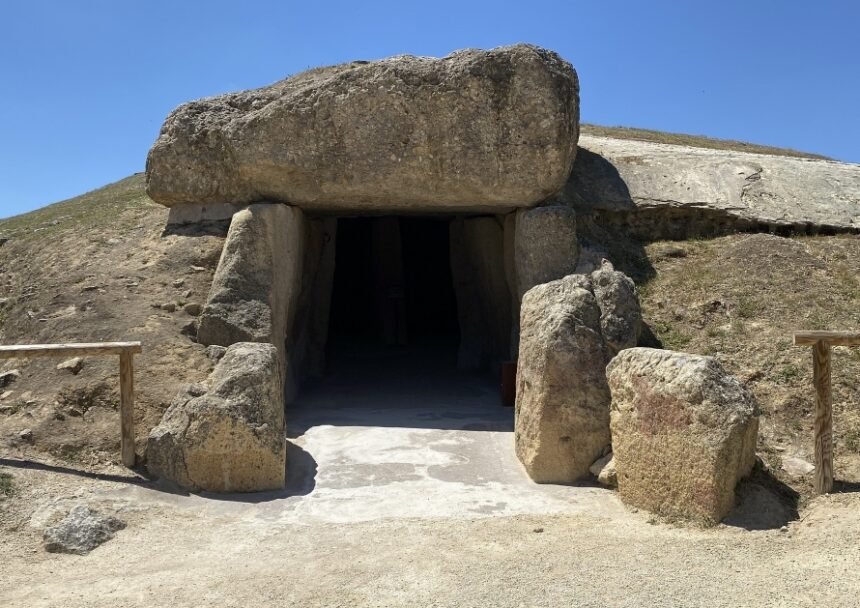
Deep in the heart of Andalusia, in the city of Antequera, lies one of Spain’s most remarkable and mysterious archaeological sites: the Dolmen of Menga. This ancient stone monument, dating back to prehistoric times, stands as a testament to the engineering skills and cultural sophistication of early civilizations in Iberia. Often compared to Stonehenge for its cultural importance, the Dolmen of Menga is part of a UNESCO World Heritage Site that attracts history enthusiasts, archaeologists, and curious travelers from around the globe.
The Dolmen of Menga is not just a collection of stones, it’s a window into the lives, beliefs, and rituals of people who lived nearly 5,000 years ago. Its massive stones were quarried and transported with immense effort, and the dolmen’s orientation and design hint at a deeper spiritual purpose. This article will guide you through the history, structure, and mysteries of the Dolmen of Menga, as well as the nearby monuments in Antequera, shedding light on why this ancient site continues to fascinate visitors to this day.
History of the Dolmen of Menga
The Dolmen of Menga dates back to the Copper Age, around 3,700 BCE, making it one of the oldest and best-preserved dolmens in Europe. Its construction involved moving and positioning enormous stone slabs, some weighing over 180 tons, a feat that continues to baffle modern engineers and archaeologists. Built by prehistoric people who lived in the region, the dolmen served as a monumental tomb, though recent discoveries suggest it might have also held a spiritual or ceremonial function.
The dolmen is part of the Antequera Dolmens Site, which also includes the Dolmen of Viera and Tholos of El Romeral. Together, these three megalithic structures reflect the beliefs and practices of an ancient community deeply connected to the land and its natural features. The orientation of the Dolmen of Menga, in particular, is unique, as it faces La Peña de los Enamorados, a nearby mountain with a distinctive profile that resembles a human face. Scholars speculate that the dolmen’s alignment with this mountain was intentional, possibly indicating that it was revered as a sacred or symbolic landmark.
Description of the Site
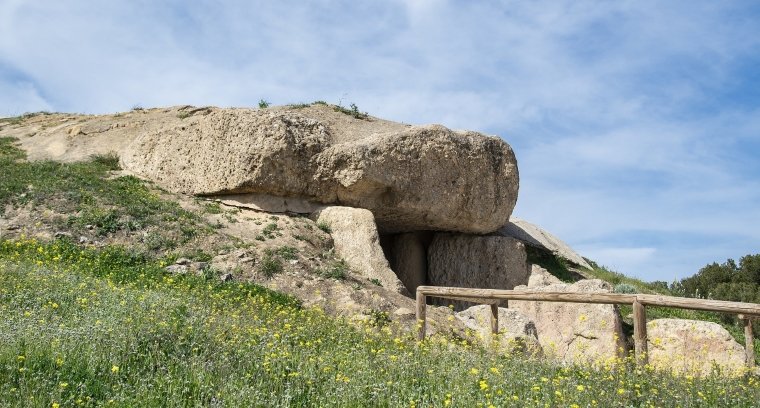
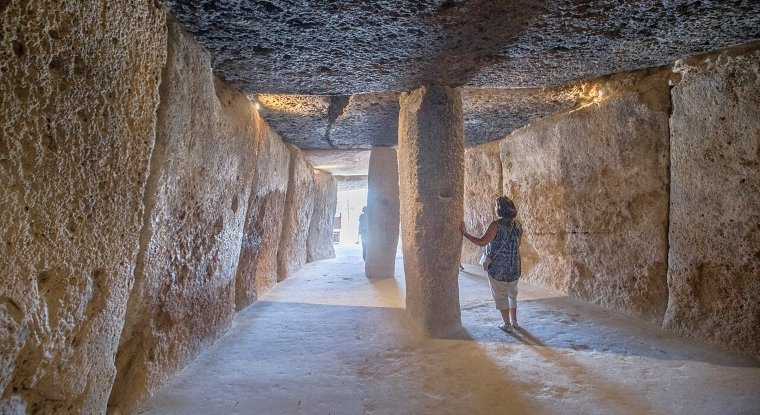
The Dolmen of Menga is a large, covered passage grave with an impressive interior chamber. It consists of a corridor leading to a spacious circular room, with walls made from massive stone slabs that support an equally massive capstone, creating a stable structure that has withstood the test of time. Measuring about 25 meters in length and 6 meters in width, the dolmen is large enough to accommodate multiple people inside, a feature that likely played a role in its function as a communal tomb.
One of the dolmen’s most striking features is its orientation toward La Peña de los Enamorados, adding a unique visual alignment to its architectural design. Unlike most European dolmens, which face the rising sun, the Dolmen of Menga was carefully aligned with this mountain, suggesting a symbolic or spiritual connection. Inside, the chamber has a mysterious central shaft, which may have served as a ritual well or an offering place. The combination of size, craftsmanship, and orientation makes the Dolmen of Menga a masterpiece of prehistoric architecture.
Usage of the Dolmen of Menga
While the exact usage of the Dolmen of Menga remains speculative, it’s widely believed to have been a burial site for a local community, possibly an elite group or clan. Archaeologists have found remains of bones and other artifacts that suggest it served as a tomb. However, given its size and the effort required to construct it, many researchers think the dolmen might have had a broader spiritual or ceremonial function beyond burial.
The dolmen’s alignment with La Peña de los Enamorados indicates that it could have been a site of worship or a place where rituals were performed to honor ancestors or deities associated with the natural world. The central shaft, or “well,” may have been used to make offerings or libations, linking the earthly realm with the divine. In recent years, scholars have proposed that the Dolmen of Menga functioned as a type of temple, where ancient people gathered to conduct ceremonies connected to life, death, and possibly even celestial events.
Interesting Facts about the Dolmen of Menga
- One of the Largest in Europe: The Dolmen of Menga is among the largest dolmens in Europe, with individual stones weighing up to 180 tons, showcasing an impressive feat of prehistoric engineering.
- Unusual Orientation: Unlike most dolmens, the Dolmen of Menga is oriented toward La Peña de los Enamorados, not the sunrise, suggesting a unique cultural or spiritual connection with the mountain.
- Mystery of the Central Shaft: The dolmen contains a mysterious shaft in the main chamber, the purpose of which remains unclear. Some researchers speculate it may have been used for offerings or as a symbolic link to the underworld.
- UNESCO World Heritage Site: Along with the Dolmen of Viera and Tholos of El Romeral, the Dolmen of Menga was designated a UNESCO World Heritage Site in 2016 for its cultural significance.
- Associated with Local Legends: La Peña de los Enamorados, the mountain facing the dolmen, is steeped in legend, including a tragic love story similar to “Romeo and Juliet,” adding a romantic dimension to the dolmen’s mystique.
Activities to Enjoy at the Dolmen of Menga
The Dolmen of Menga is a fantastic place to explore and experience, offering a range of activities for visitors of all ages:
- Explore the Dolmen: Walk through the dolmen’s entrance corridor into the main chamber and marvel at the sheer size of the stones and the architecture.
- Photography: Capture the stunning alignment of the dolmen with La Peña de los Enamorados, as well as the structure’s ancient stonework, which provides a unique backdrop for photos.
- Visit the Interpretation Center: Learn more about the history and significance of the Antequera dolmens at the nearby Interpretation Center, which offers exhibits, models, and educational resources.
- Discover Nearby Dolmens: Take the time to visit the Dolmen of Viera and the Tholos of El Romeral, each with its own unique features and purpose, for a complete understanding of the dolmen complex.
- Hiking and Nature Walks: Enjoy the surrounding area, including trails with views of La Peña de los Enamorados, where you can soak in the beauty of the Andalusian landscape.
- Guided Tours: Join a guided tour to learn more about the construction, history, and mysteries of the dolmen from local experts and historians.
Getting There: How to Visit the Dolmen of Menga
Located in Antequera, Málaga, the Dolmen of Menga is easy to reach from major cities in Andalusia. Here are some options:
- From Málaga: Drive about 50 km north from Málaga to Antequera, approximately a 45-minute journey by car.
- By Train: Take a train from Málaga to Antequera. From there, local buses or taxis can take you to the dolmen site.
- Public Transport: Local buses run from nearby cities to Antequera. Once in town, you can walk or take a taxi to the dolmen.
- Guided Day Trips: Several tour operators offer day trips to Antequera from Málaga, Granada, and Seville, including visits to the dolmen complex.
Final Thoughts
The Dolmen of Menga is a marvel of prehistoric architecture, brimming with history, mystery, and cultural significance. Whether you’re drawn to its ancient origins, the engineering feat it represents, or the spiritual connection it holds with La Peña de los Enamorados, the dolmen offers a unique window into the beliefs and practices of the ancient people who inhabited Iberia. A visit to the Dolmen of Menga isn’t just a trip back in time—it’s an opportunity to connect with the past and reflect on the timeless human quest for meaning, spirituality, and legacy. If you’re traveling through Andalusia, be sure to add this captivating site to your itinerary.