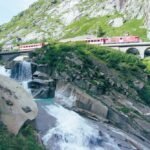





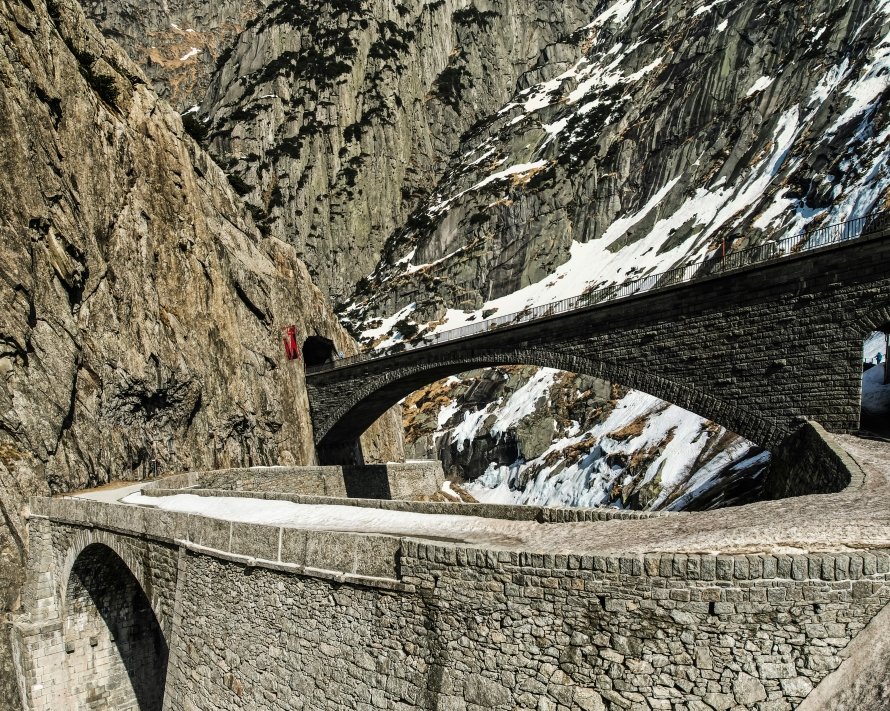
The Devil’s Bridge (Teufelsbrücke) in Switzerland’s Schöllenen Gorge is one of those rare places where nature and myth collide. Carved deep into the heart of the canton of Uri, the bridge has inspired awe and fascination for centuries. Known for its treacherous cliffs, swift-flowing Reuss River, and the engineering genius that made crossing possible, the Devil’s Bridge is a testament to human resilience. Its eerie name and legendary tale add a mysterious charm to this historical site, making it a popular spot for travelers, photographers, and history enthusiasts alike. Curious about the legend, engineering, and beauty of this iconic bridge? Here’s everything you need to know.
Schöllenen Gorge has always presented an extreme natural challenge, a nearly impassable barrier in the high Swiss Alps. Before the bridge was constructed, the gorge isolated communities and made any form of passage treacherous. In the Middle Ages, the route through the Gotthard Pass became critical as a trade route between northern and southern Europe, making a reliable crossing essential. But engineering a bridge over such a formidable landscape was no easy task, and the project was almost abandoned multiple times due to its dangers and difficulties.
The solution came in the 13th century with the construction of the first Devil’s Bridge—a name derived from the famous Swiss legend of a pact with the devil. The gorge has since held a special place in Swiss cultural history and remains one of the most iconic symbols of determination against the odds. Today, the gorge and the Devil’s Bridge attract visitors for their unique combination of natural beauty, mythology, and history.
History of the Devil’s Bridge
The first iteration of the Devil’s Bridge was completed in the 1230s, a simple stone bridge built with considerable difficulty by local villagers. However, this initial structure was often damaged by floods and avalanches, which led to its frequent reconstruction over the years. The Devil’s Bridge we see today is actually the third version, completed in the 19th century.
The second bridge, built in 1595, was stronger and designed to withstand the elements more effectively. But during the Napoleonic Wars in the late 18th century, the bridge became the site of intense battles as French and Russian forces clashed in the gorge. Damaged in the fighting, the bridge was subsequently rebuilt, incorporating improved engineering techniques of the era.
In the early 19th century, Swiss engineers undertook a new project to create a bridge that would better meet the demands of increased trade and travel. This final version stands today as a masterpiece of Alpine engineering, blending naturally with the surrounding landscape while overcoming the challenges posed by the rugged terrain and wild waters of the Reuss River.
The Devil’s Bridge Legend
According to legend, building the bridge was so difficult that the locals turned to the devil for help. The devil agreed to build the bridge in exchange for the soul of the first person to cross it. However, once the bridge was completed, the clever villagers sent a goat across instead, tricking the devil and preserving their souls. In a rage, the devil tried to destroy the bridge by hurling a massive boulder at it. But before he could finish the job, a local woman tricked him once more, scaring him away for good.
Today, a large boulder known as the Devil’s Stone still lies nearby, adding a tangible element to the legend.
Engineering Marvel
The Devil’s Bridge is not only a feat of medieval engineering but also an example of how human ingenuity can overcome nature’s obstacles. The steep cliffs, swift waters, and shifting rocks made construction almost impossible by 13th-century standards. The third bridge was built with modern techniques and materials, creating a more stable and durable structure. Its curved design and robust stonework allow it to withstand the Reuss River’s current and the region’s extreme weather conditions.
This architectural achievement symbolizes the resilience and engineering prowess of the Swiss people, who have long been known for their mastery of construction in challenging environments.
Schöllenenbahn Railway
The Schöllenenbahn railway, built in 1917, runs through the Schöllenen Gorge and passes by the Devil’s Bridge. This rail route added a new layer of accessibility, connecting the Gotthard rail line with Andermatt. The railway required additional engineering feats, including tunnels carved through solid rock. This development further opened up the gorge to trade, travel, and tourism, allowing easier access for visitors looking to explore the bridge and the surrounding landscapes.
The Devil’s Bridge in Popular Culture
The mystique of the Devil’s Bridge has inspired various mentions in literature, art, and popular culture. Its legend has been retold in Swiss folklore, often as a story of human cleverness overcoming adversity. The bridge and gorge have appeared in travel documentaries, art installations, and photography books as well. It’s even a favorite subject for Swiss tourism campaigns, symbolizing the country’s natural beauty and resilience.
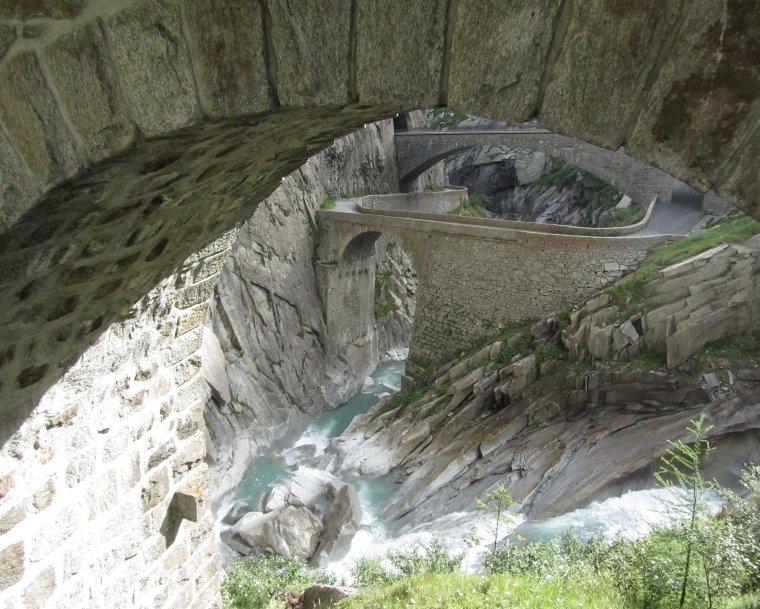
Activities at the Devil’s Bridge
- Hiking: The Devil’s Bridge hiking trail offers scenic views of the gorge and is popular among both casual walkers and seasoned hikers.
- Photography: The natural beauty and historical aura of the bridge make it a favorite for photographers.
- Guided Tours: Guided tours offer insight into the legend and engineering history of the bridge.
- Schöllenen Gorge Museum Visit: The museum provides background on the history of the gorge and the challenges of building the bridge.
- Picnicking: Take advantage of picnic spots nearby to enjoy the alpine air and dramatic views.
Off-the-Beaten-Path Recommendations
For a unique experience, explore the quieter trails along the gorge that offer secluded viewpoints, ideal for photography and quiet contemplation. Early morning or late afternoon visits provide the best light and fewer crowds. Nearby Andermatt also has hidden spots worth exploring, like lesser-known trails that reveal stunning vistas of the valley and mountains.
Travel Tips and Practical Information
- Getting There: The Devil’s Bridge is easily accessible by train or car. Andermatt is the closest town and has several transportation links.
- Best Time to Visit: Summer and early fall provide the best weather, though the bridge is accessible year-round.
- Safety: The gorge’s pathways can be steep and slippery. Wear sturdy shoes and stay mindful of the river’s edge.
- Amenities: Basic facilities, including rest areas and parking, are available near the bridge. Andermatt offers a range of accommodations from rustic inns to luxurious hotels.
Nearby Points of Interest & Landmarks
- Andermatt: A charming Swiss village with plenty of alpine character.
- Gotthard Pass: A historic mountain pass with panoramic views.
- Suvarov Monument: Dedicated to the Russian soldiers who fought in the Napoleonic Wars.
- Urseren Valley: A scenic valley with classic Swiss landscapes and charming villages.
- St. Gotthard Museum: Offers insights into the Gotthard region’s history and cultural importance.
Final Thoughts
The Devil’s Bridge in Schöllenen Gorge is a place where history, nature, and myth come together in an unforgettable setting. From its stunning architecture to its legendary origins, the bridge is as captivating as it is beautiful. A visit to this remarkable place is sure to leave you with a sense of awe at both human and natural forces. Whether you’re interested in hiking, history, or just soaking in the stunning views, the Devil’s Bridge offers an experience like no other.