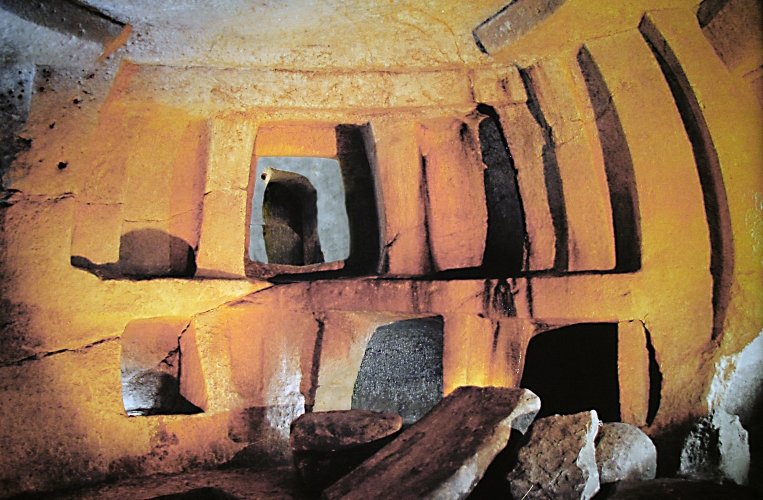
The Ħal Saflieni Hypogeum is one of the most extraordinary archaeological sites in the world, located in Paola, Malta. This prehistoric subterranean structure is believed to date back to 4000 BCE and is recognized as a UNESCO World Heritage Site. The Hypogeum offers an unparalleled glimpse into Malta’s ancient past and remains one of the most captivating examples of underground architecture and burial practices in the ancient world.
Discovery of the Ħal Saflieni Hypogeum
The Hypogeum was discovered by accident in 1902 when construction workers, excavating for a new housing development, stumbled upon its entrance. What they uncovered was an ancient necropolis spread over three levels, each intricately carved into the limestone. It is believed that the Hypogeum served as both a sanctuary and a burial ground for thousands of people.
The site is composed of interconnected chambers, halls, and corridors. Some of the rooms are small and intimate, while others are larger, showcasing impressive architectural precision. Notably, the chambers were carved entirely with tools made from stone, bone, and antler. The layout of the structure suggests that it was carefully planned, with the uppermost levels perhaps used for rituals, while the lower levels were dedicated to burials.
Description of the Ħal Saflieni Hypogeum
The Structure: A Labyrinthine Masterpiece
The Hypogeum is divided into three distinct levels, each serving different purposes and displaying varying degrees of architectural complexity.
- Upper Level: This is the oldest and most basic level of the Hypogeum. It is believed to have been used initially as a natural cave before being expanded and refined into a more complex structure. The upper level contains rock-cut tombs, thought to have been the initial burial grounds.
- Middle Level: The middle level is where the most significant ritual activity took place. This section houses the Oracle Room, renowned for its remarkable acoustics. Carvings and paintings in red ochre can be found on the walls, adding a layer of artistic expression. The Main Chamber in the middle level is one of the largest, and its carefully carved walls suggest that it was used for communal ceremonies or rituals. Another notable feature is the Decorated Room, with intricate spirals and patterns painted on its walls.
- Lower Level: The lowest level is the deepest and likely the final resting place of the deceased. No carvings or decorations are found here, and the space is entirely dedicated to burials. This level showcases Malta’s earliest known approach to mortuary practices, with over 7,000 bodies having been interred here over several centuries.
Each level is interconnected through a series of narrow passageways and stairs, which were carefully designed to navigate the rock without compromising the structural integrity of the complex.
The Ħal Saflieni Hypogeum Museum
To complement the site itself, the Ħal Saflieni Hypogeum experience includes a museum and interpretation center nearby, providing visitors with crucial context for understanding the significance of the Hypogeum.
- Exhibits: The museum displays artifacts found within the Hypogeum, including the Sleeping Lady figurine, pottery shards, tools, and human remains. The exhibits are arranged to walk visitors through the various periods of occupation at the Hypogeum, starting from its early use as a cave sanctuary to its later function as a massive burial ground.
- Virtual Experience: Since the physical access to the Hypogeum is limited, the museum offers a state-of-the-art virtual tour of the underground chambers. Visitors can experience the entire site in high-resolution detail, allowing them to explore rooms that are otherwise restricted due to preservation efforts.
- Interactive Displays: The museum also features interactive displays that highlight the Hypogeum’s unique acoustics, offering visitors a chance to experience the Oracle Room’s echo phenomena. These displays explain how sound behaves within the space, hinting at the significance it may have had for ritual chanting or communication with the spiritual realm.
- Conservation Insights: Another important aspect of the museum is its focus on the conservation efforts. Visitors learn about the delicate nature of the Hypogeum and the challenges involved in preserving such a fragile and ancient site. The museum plays a vital role in raising awareness about the ongoing work to protect this unique site from environmental threats.
Ritual Significance and Archaeological Findings
The Hypogeum is thought to have held a deep religious significance for Malta’s ancient inhabitants. Archaeologists have uncovered over 7,000 human remains within its chambers, leading many to believe that it was a place of ancestor worship. The most remarkable find was the famous Sleeping Lady, a small figurine of a woman in a reclining position, discovered within the Hypogeum. This artifact is considered a masterpiece of prehistoric art and reflects the sophisticated spiritual life of the early Maltese civilization.
In addition to human remains, the site has yielded pottery, stone tools, and intricate carvings on the walls, indicating that the Hypogeum was not just a burial site but also a place of ceremonial importance.

Unique Acoustic Properties
One of the most intriguing aspects of the Hypogeum is its remarkable acoustic qualities. Certain chambers, particularly the Oracle Room, are designed in such a way that a voice speaking at a specific frequency resonates throughout the complex. This discovery has led researchers to believe that the Hypogeum may have been used for ritual chanting or communication with the deceased. The resonance of the voice could have been perceived as a connection to the spiritual realm, enhancing the sacred nature of the site.
Conservation and Public Access
Given its fragility, the Hypogeum has been carefully preserved to prevent damage from environmental factors such as humidity and light. As a result, access to the site is limited to small groups, and visitors are required to book their tours months in advance. The preservation efforts ensure that the site can be enjoyed by future generations while protecting its invaluable historical significance.
Importance and Global Recognition
The Hypogeum is not only a key site for understanding Malta’s prehistoric era but also a monumental testament to early human ingenuity. Its designation as a UNESCO World Heritage Site highlights its cultural and historical significance on a global scale. The combination of its architectural, artistic, and spiritual elements makes the Hypogeum a place of wonder and intrigue for archaeologists, historians, and travelers alike.
Why Visit Ħal Saflieni Hypogeum?
- Unique Experience: There are very few prehistoric underground temples in the world, and the Hypogeum stands out as an architectural marvel.
- Archaeological Importance: It provides a rare opportunity to see how ancient civilizations lived, worshipped, and buried their dead.
- Limited Access: Its restricted access makes it a rare and coveted experience for visitors.
- Cultural Significance: The Hypogeum sheds light on the rich spiritual and cultural practices of Malta’s Neolithic inhabitants.
How to Visit
Due to its fragility, visits to the Ħal Saflieni Hypogeum are highly regulated. Tickets are available through Heritage Malta’s official website, and it’s strongly recommended to book well in advance, as only a few visitors are allowed each day.