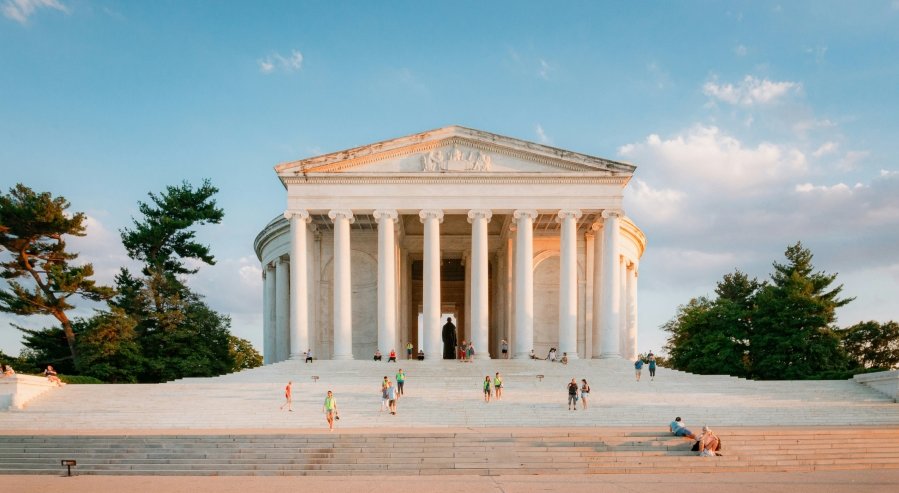
Located along the serene Tidal Basin, the Jefferson Memorial stands as a beautiful tribute to one of America’s founding fathers, Thomas Jefferson. This iconic site is more than just a picturesque landmark—it’s a window into the life of a visionary leader whose ideas shaped the nation. Whether you’re a history buff, a casual traveler, or simply looking for a peaceful spot to enjoy the cherry blossoms, the Jefferson Memorial offers something for everyone. Let’s take a walk through its fascinating history and uncover some fun facts you might not know!
History:
The story of the Jefferson Memorial begins in the early 20th century, as part of a broader effort to commemorate America’s great leaders. In 1934, President Franklin D. Roosevelt, an admirer of Thomas Jefferson, championed the idea of building a memorial dedicated to the third U.S. president. Jefferson, after all, was a towering figure in American history, having authored the Declaration of Independence and played a key role in shaping the young nation’s democratic ideals.
Architect John Russell Pope was tasked with designing the memorial. Pope envisioned a neoclassical structure, heavily inspired by Jefferson’s love for Roman architecture—specifically the Pantheon in Rome. This influence is clear in the memorial’s grand, open-air rotunda and the majestic dome that sits atop it. Construction began in 1939, with workers laboring through the early years of World War II, and it was officially completed in 1943. Ironically, by the time of its dedication, Pope had passed away, and the project was completed under the guidance of other architects who remained faithful to his original vision.
The Jefferson Memorial reflects the ideals of the man it honors. Inside the domed structure, a bronze statue of Jefferson stands 19 feet tall, gazing out toward the White House. On the surrounding walls, excerpts from some of Jefferson’s most important writings are etched in stone, including the Declaration of Independence and his thoughts on religious freedom and the rights of man. These inscriptions highlight Jefferson’s lasting influence on American political thought.
However, the memorial hasn’t been without controversy. Jefferson’s ownership of enslaved people has led to ongoing discussions about how we honor historical figures with complex legacies. In recent years, the National Park Service has added educational materials to provide visitors with a fuller understanding of Jefferson’s life, both his achievements and the contradictions that defined him.
Despite these debates, the Jefferson Memorial remains one of Washington, D.C.’s most beloved landmarks. Its striking architecture and tranquil setting make it a popular destination, especially during the National Cherry Blossom Festival each spring, when thousands of visitors flock to the Tidal Basin to witness the trees in bloom, creating an unforgettable backdrop for the memorial.
Interesting Facts:
- It wasn’t always loved! When the memorial was first built, it was criticized for being too simple and out of sync with the other grand monuments in D.C. Over time, though, it has become one of the city’s most cherished sites.
- Jefferson’s Statue Isn’t Original: The bronze statue of Jefferson was added in 1947. Due to wartime metal shortages, a plaster version painted to look like bronze was installed when the memorial opened in 1943.
- Cherry Blossom Haven: The memorial’s location along the Tidal Basin places it in the middle of the National Cherry Blossom Festival, offering visitors one of the most scenic views in the entire city.
- It Aligns with Other Landmarks: The memorial was designed to be part of a larger plan for the National Mall, and it lines up perfectly with the White House and the Washington Monument.
Getting There:
Visiting the Jefferson Memorial is easy, no matter how you choose to travel. If you’re staying in the downtown D.C. area, it’s about a 30-minute walk from the National Mall. Prefer public transport? The closest Metro station is Smithsonian (Blue, Orange, and Silver lines), about a 20-minute walk. You can also catch one of the many buses that serve the area. If you’re driving, there’s some limited street parking available, but your best bet is to park a bit farther away and walk, especially during the busy tourist season.
Final Thoughts:
The Jefferson Memorial is more than just a tribute to a historical figure—it’s a place where the past and present meet in perfect harmony. Whether you’re here for a history lesson or simply to take in the beautiful surroundings, it offers a peaceful escape from the bustling city. So, the next time you find yourself in Washington, D.C., make sure to stop by and experience the timeless charm of this memorial for yourself!