Introduction
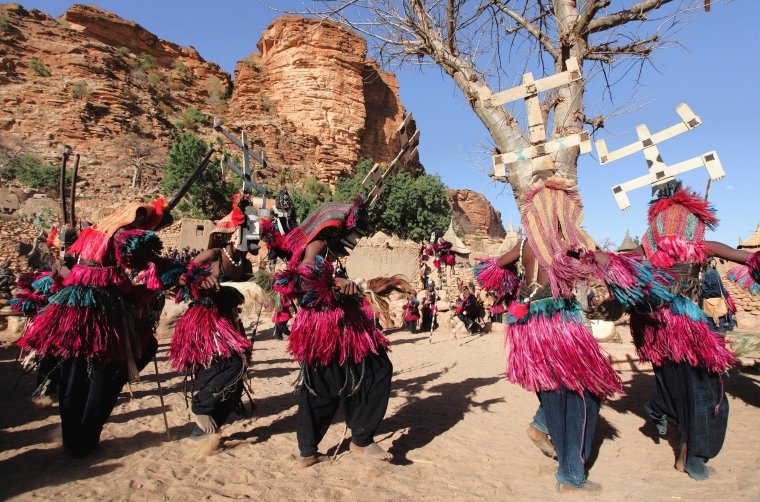
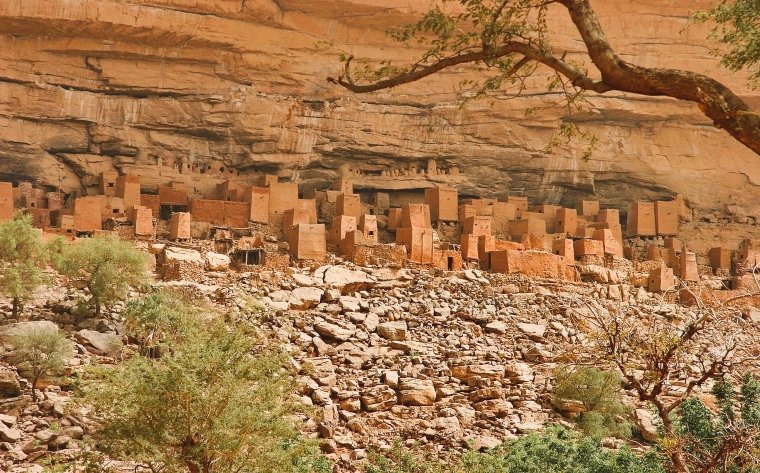
Nestled in the heart of Mali, West Africa ,Dogon people are known for their fascinating culture, rich traditions, and distinctive way of life. Living in isolated villages along the Bandiagara Escarpment, the Dogon have preserved their customs, art, and spirituality for centuries. Visitors are drawn to their unique architecture, vibrant festivals, and intricate cosmology. Despite modern influences, the Dogon people maintain a deep connection to their ancestral beliefs, making their culture one of the most unique and well-preserved in Africa.
History of the Dogon people
The Dogon people’s history is both complex and steeped in mystery. It is believed that they migrated to the Bandiagara Escarpment between the 13th and 15th centuries, seeking refuge from neighboring kingdoms and invaders. Over time, they built their villages high up on the cliffs, making them less vulnerable to attack.
The Dogon are known for their rich oral traditions, which preserve the stories of their origins, their ancient connection to astronomy, and their relationship with nature. According to legend, the Dogon possess knowledge of the Sirius star system, which some believe is evidence of early astronomical understanding. This connection to the stars has fascinated scholars and anthropologists for decades.
Despite external pressures from Islam and colonization, the Dogon have held onto their animist beliefs, honoring their ancestors and deities through rituals and festivals. French colonization in the early 20th century introduced changes, but the Dogon people managed to preserve much of their cultural identity.
Dogon Culture
The Dogon people are deeply spiritual, and their worldview is shaped by a complex cosmology. They believe in the existence of an all-powerful creator god, Amma, and their mythology describes the origins of the universe, humanity, and the role of the ancestors. Central to Dogon belief is the worship of the Nommo, ancestral spirits who are said to have descended from the sky.
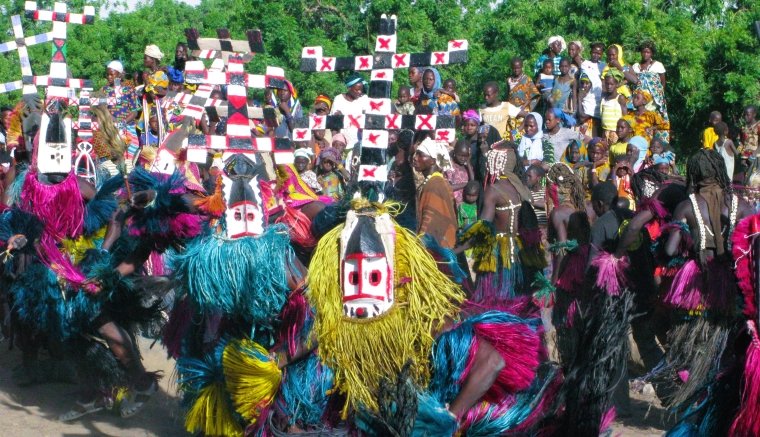
Dogon art plays a significant role in their rituals and everyday life. Their famous wooden masks, used in ceremonial dances, are recognized worldwide. These masks are not just decorative; they hold profound symbolic meaning, representing animals, ancestral spirits, and elements of Dogon mythology. The most famous of these is the Kanaga mask, which is worn during the Dama ceremony—a ritual to guide the souls of the dead into the afterlife.
Food and Drink
The Dogon people are primarily agrarian, with millet being their staple crop. Millet is ground into flour to make to, a type of porridge or thick dough served with various sauces made from vegetables or peanuts. They also grow sorghum, maize, onions, and beans. Meat is not a large part of the Dogon diet, but they do raise chickens, goats, and occasionally cattle.
During festivals or special occasions, local beverages like dolo, a millet beer, are consumed. Dolo is brewed in many Dogon villages and shared during communal gatherings and celebrations, fostering a sense of unity among the people.
Festivals
The Dogon people celebrate several important festivals, each rich in tradition and symbolic meaning:
- Dama: The most famous festival, held every several years, is a rite of passage to honor the dead and ensure their safe transition to the afterlife. It involves elaborate mask dances and ceremonies.
- Sigui: Held every 60 years, this is the most significant Dogon festival, marking the cycle of the Sirius star and symbolizing the regeneration of life.
- Bulu: This festival marks the end of the harvest season and is a time of feasting, dancing, and celebration, giving thanks for the year’s crops.
Clothing
Traditional Dogon clothing is simple yet symbolic. The men typically wear boubous—loose-fitting, flowing robes made of locally woven cotton, while women wear wraps known as pagnes. Clothing is often dyed using the indigo dyeing technique, a craft that is passed down through generations.
During ceremonies, elaborate costumes are worn, including intricately designed masks, skirts made from fibers, and brightly colored garments that reflect the spiritual importance of the occasion. These ceremonial outfits are often adorned with cowrie shells, feathers, and beads.
Off-the-Beaten-Path Recommendations
For those seeking a deeper connection with Dogon culture, venturing off the beaten path is a rewarding experience:
- Trekking the Bandiagara Escarpment: Explore the stunning cliffside villages and discover ancient rock art and hidden shrines.
- Visit the Village of Youga Dogorou: This remote settlement offers an authentic experience of Dogon life, far from the usual tourist routes.
- Participate in a Dama Ceremony: If you’re lucky enough to time your visit with one of these rare festivals, witnessing the Dama dances is a once-in-a-lifetime experience.
- Hike to the village of Teli. It’s perched right on the Bandiagara cliffs and offers some jaw-dropping views. Plus, you might catch sight of the cliff-dwelling Tellem people’s ancient granaries.
- Visit a local diviner. These spiritual experts use fox prints in the sand to tell fortunes. It’s like tarot cards, but way more desert-chic.
- Check out the Sangha Toy Museum. Yes, you read that right. It’s a collection of traditional Dogon toys that’ll make you wish you were a kid again.
- Take a night hike to spot the Pale Fox. This nocturnal creature plays a big role in Dogon mythology. Spotting one is said to bring good luck!
- Join a communal fishing expedition. Once a year, the Dogon gather to fish in sacred pools. It’s part ceremony, part feast, and all awesome.
Important Dogon People Settlements
- Bandiagara – The main town of Dogon Country
- Songo – Famous for its stunning cliff dwellings
- Sangha – A large Dogon settlement with great views
- Tireli – Home to the annual mask festival
- Endé – Known for its unique circular houses
- Kani Bonzon – One of the oldest Dogon villages
- Youga Dogorou – Features ancient Tellem caves
- Pelou – A remote village with well-preserved traditional architecture
- Ireli – Nestled at the base of the Bandiagara Escarpment
- Nombori – Home to the famous “House on the Rock”
Final Thoughts
The Dogon people of Mali are more than just a group of talented artisans or an ancient civilization—they are the guardians of a rich cultural legacy. Visiting the Dogon settlements and learning about their traditions, rituals, and art offers a glimpse into a world where history, mythology, and everyday life are intricately intertwined. Whether you’re drawn to their spiritual practices, intricate art, or stunning cliffside villages, the Dogon people leave a lasting impression on all who venture into their world.