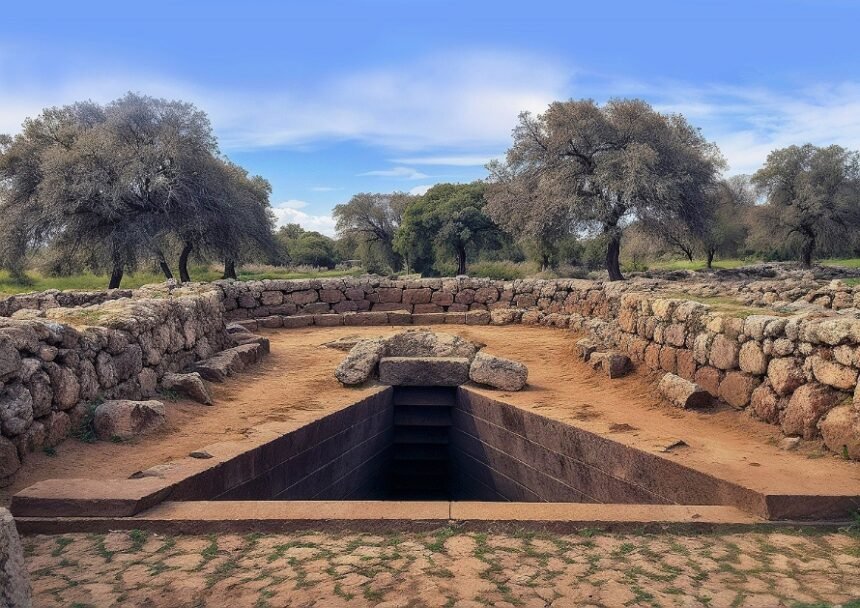
Located in the rugged heart of Sardinia, the Sacred Well of Santa Cristina isn’t just a historical site, it’s a portal to a world of mystery and wonder. This ancient Nuragic sanctuary, dating back to 1000 BCE, was a center of worship, aligned with the stars, and a testament to Sardinia’s rich prehistory. Whether you’re a history buff, a curious traveler, or a stargazing dreamer, the Sacred Well promises an unforgettable journey. Let’s dive into what makes this mystical site so captivating.
The Sacred Well of Santa Cristina lies in the province of Oristano in central-western Sardinia, surrounded by pastoral landscapes and dotted with olive groves. It is part of the Nuragic civilization’s legacy, which thrived on the island from around 1800 BCE to 200 BCE. This ancient culture is renowned for its advanced engineering, evidenced by thousands of Nuraghi (stone towers) across Sardinia.
The Sacred Well is not just any archaeological site. It’s a feat of ancient architecture, designed with a precision that aligns with celestial events like the solstices and the lunar cycle. Its purpose? Likely a sacred space for water worship, rituals, and possibly even a proto-observatory. This well was central to the spiritual life of the Nuragic people and remains a focal point of Sardinian cultural pride today.
The Architecture: A Masterpiece of Ancient Engineering
The Sacred Well consists of three main sections: a trapezoidal vestibule, a flight of 25 descending steps, and the well chamber itself. Each stone, meticulously placed without mortar, testifies to the Nuragic people’s mastery over megalithic construction. The chamber, shaped like an inverted cone, houses a pool of water believed to be fed by a natural spring.
Interestingly, the well’s construction follows a perfect isosceles triangle, and during solstices, sunlight or moonlight penetrates the structure, illuminating the water below. This astronomical alignment highlights the importance of celestial phenomena in Nuragic culture.

A Place of Worship and Wonder
Water was a symbol of life and divinity, and the well’s location near a Nuragic village suggests it played a pivotal role in daily life and sacred rituals. Pilgrims may have gathered here for purification ceremonies or to seek blessings during times of drought.
Spiritual Connections to the Cosmos
What makes the well even more intriguing is its alignment with lunar standstills, which occur every 18.6 years. These connections hint that the Nuragic people were keen astronomers, integrating their spiritual practices with cosmic events.
Interesting Facts, Myths, and Legends
- Starry Alignments: The Sacred Well’s design aligns perfectly with the moon during its major standstill, an astronomical event that ancient civilizations rarely achieved with such precision.
- Healing Waters? The well’s water was believed to have mystical properties, attracting pilgrims seeking cures for ailments.
- A Gateway to the Underworld? According to local legends, the well served as a portal for communication with ancestral spirits, reinforcing its mystical aura.
- Myth of Santa Cristina: While the site predates Christianity, it was later associated with Santa Cristina, a Christian martyr. Some say her spirit guards the well.
Activities
- Guided Tours: Join a knowledgeable guide to uncover the secrets of Nuragic engineering and culture.
- Stargazing Nights: With minimal light pollution, the site offers spectacular celestial views—especially magical during solstices.
- Photography: The play of light and shadow in the well creates stunning visuals, making it a paradise for photographers.
- Cultural Events: Occasionally, local festivals and reenactments breathe life into this ancient site.
Off-the-Beaten-Path Recommendations
- Visit at Dawn or Dusk: The soft light enhances the site’s ethereal atmosphere and offers the best conditions for photography.
- Meditative Moments: Bring a journal or sketchpad to channel the peaceful surroundings into creativity or self-reflection.
- Explore Nearby Nuraghi: There are several Nuragic ruins in the vicinity, offering deeper insight into this enigmatic civilization.
- Picnic in the Grove: Pack a lunch and enjoy a serene meal under the olive trees surrounding the site.
Travel Tips and Practical Information
- Getting There: The well is easily accessible by car from Oristano (about 30 minutes). Look for signs pointing to “Pozzo Sacro di Santa Cristina.”
- Entry Fees: Tickets cost around €5, with discounts for groups and children. Guided tours are often included.
- Best Time to Visit: Spring and autumn offer mild weather and fewer crowds. Aim for early morning visits to avoid the midday heat.
- What to Bring: Comfortable shoes, water, and sunscreen are must-haves for your visit.
Nearby Points of Interest & Landmarks
- Nuraghe Losa: One of Sardinia’s most impressive Nuragic towers, located a short drive from the well.
- Santa Cristina Church: A small but charming 12th-century church near the archaeological site.
- Tharros Ruins: Explore this ancient Phoenician-Roman city on Sardinia’s western coast.
- Mount Arci: Perfect for hiking enthusiasts, this volcanic massif offers panoramic views and archaeological treasures.
Final Thoughts
The Sacred Well of Santa Cristina isn’t just a historical relic; it’s a journey into a time when humans harmonized with nature and the cosmos. Its serene beauty, profound history, and celestial connections make it a must-visit destination in Sardinia. Whether you’re seeking cultural enrichment, spiritual solace, or just an awe-inspiring day trip, the well delivers on all fronts. So, pack your curiosity and head to this ancient marvel—you might just leave with a newfound appreciation for the mysteries of the past.