World War II was a global conflict that saw incredible advancements in military aviation technology. Amidst the chaos and devastation, a handful of fighter aircraft emerged as true icons – planes that defined the aerial battles and captured the public’s imagination. From sleek, agile interceptors to rugged workhorses, these warbirds etched their place in history through their performance, design, and the courageous pilots who flew them.
In this article, we’ll countdown the top 10 most iconic WWII fighter aircraft, ranking them based on a combination of their combat effectiveness, technological innovation, and lasting cultural impact. Get ready to take a thrilling journey through the golden age of aerial warfare!
#10 – Mitsubishi A6M “Zero”
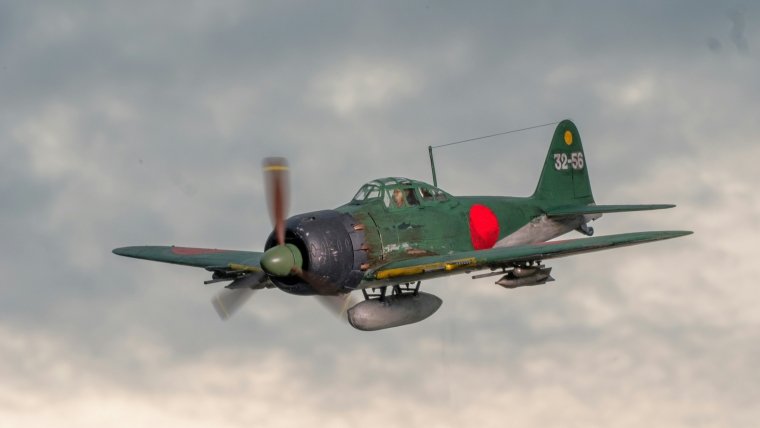
The A6M “Zero” fighter was Japan’s premier carrier-based fighter during the early years of the Pacific War. Renowned for its incredible maneuverability, long range, and deadly firepower, the Zero was a formidable foe that dominated the skies over the Pacific. In the hands of skilled Imperial Japanese Navy pilots, this agile aircraft was nearly unstoppable, racking up impressive kill counts against American and Allied forces.
However, as the war progressed, the Zero’s weaknesses – namely poor armor and armament – became increasingly apparent. Newer Allied fighters like the Grumman F4F Wildcat and Vought F4U Corsair were able to outgun and outmaneuver the once-dominant Zero. Still, the A6M’s graceful, iconic silhouette and legendary status as the scourge of the early Pacific campaigns cement its place among the most famous WWII fighter planes.
#9 – Focke-Wulf Fw 190
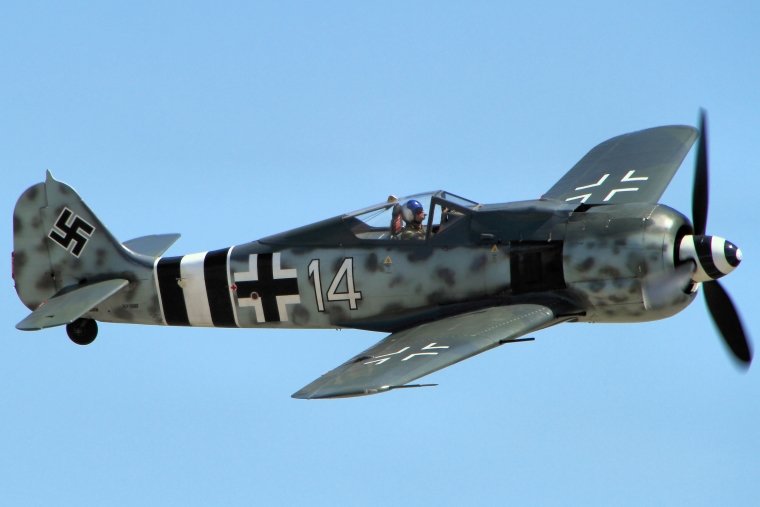
Joining the Luftwaffe’s fighter force in 1941, the Focke-Wulf Fw 190 quickly proved itself to be a highly capable and versatile aircraft. Powered by a potent radial engine, the Fw 190 boasted impressive speed, firepower, and diving capabilities that allowed it to hold its own against the legendary Supermarine Spitfire.
In the hands of skilled German pilots, the Fw 190 was a formidable interceptor, excelling at both air-to-air combat and ground attack roles. Its rugged construction and powerful armament made it a fearsome opponent, leading many Allied pilots to dread encountering the “Butcher Bird” in the skies. While it may lack the iconic silhouette of some other WWII fighters, the Fw 190’s combat record and technological innovations cement its place among the war’s most significant aircraft.
#8 – Curtiss P-40 Warhawk
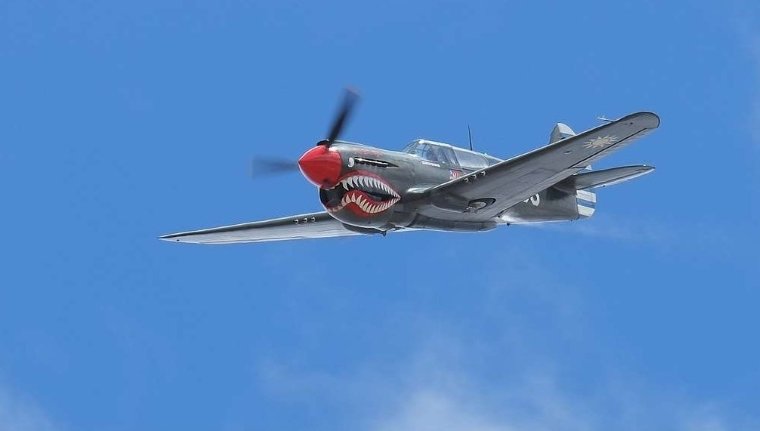
The Curtiss P-40 Warhawk may not have been the most advanced or glamorous fighter of WWII, but it played a crucial role in the early years of the conflict. With its distinctive shark-mouth nose art and rugged, dependable design, the P-40 saw action in every major theater of the war, from the sands of North Africa to the skies over China.
While it was outclassed by newer fighters like the Spitfire and Mustang, the P-40 remained an effective ground attack and air superiority aircraft, thanks to its reliable Allison engine, heavy armament, and sturdy construction. Piloted by legendary aces like the “Flying Tigers” in China, the P-40 Warhawk became an enduring symbol of aerial combat during WWII, cementing its status as an iconic warbird.
#7 – Republic P-47 Thunderbolt
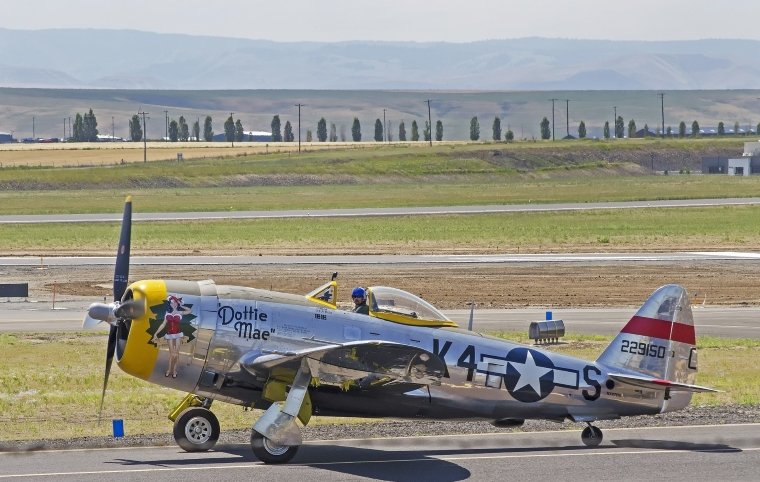
Nicknamed the “Jug” for its large, bulbous fuselage, the Republic P-47 Thunderbolt was one of the most powerful and versatile American fighter aircraft of WWII. Powered by a massive 2,000 horsepower Pratt & Whitney radial engine, the P-47 was capable of incredible speed and high-altitude performance, making it an excellent interceptor and escort fighter.
But the Thunderbolt’s true strength lay in its ruggedness and firepower. Equipped with eight .50 caliber machine guns, the P-47 could unleash a devastating hail of bullets on enemy aircraft and ground targets alike. Its armor and self-sealing fuel tanks also allowed pilots to survive damage that would have crippled other fighters. In the hands of skilled aces like Francis “Gabby” Gabreski and Robert Johnson, the P-47 proved to be a formidable air superiority weapon that helped secure Allied dominance in the skies.
#6 – Messerschmitt Bf 109
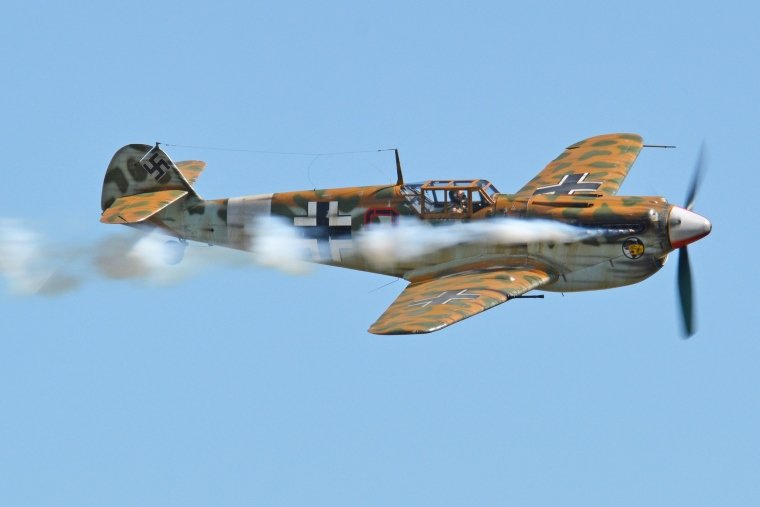
Few fighter aircraft are as synonymous with the Luftwaffe as the iconic Messerschmitt Bf 109. Designed in the 1930s, this sleek, nimble interceptor was the backbone of Germany’s air superiority force throughout much of WWII. Powered by a potent Daimler-Benz engine, the Bf 109 was capable of incredible speeds and impressive maneuverability, allowing it to outperform many of its contemporaries.
In the hands of elite German aces like Erich Hartmann and Josef Priller, the Bf 109 proved to be a deadly aerial predator, racking up thousands of kills against Allied aircraft. While it was gradually outclassed by newer fighters as the war progressed, the Bf 109’s combination of performance, firepower, and legendary status secure its place among the most iconic WWII warbirds. Its distinctive silhouette and fearsome reputation have cemented the Messerschmitt Bf 109’s legacy as one of the war’s most significant and recognizable fighter planes.
#5 – Grumman F4F Wildcat
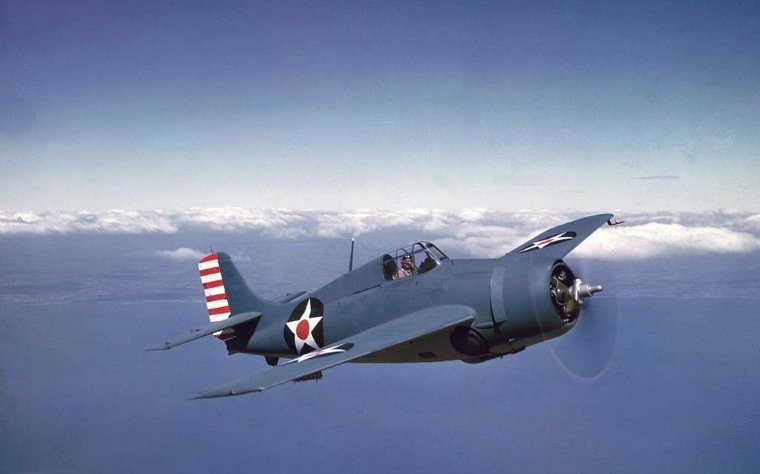
In the early years of the Pacific War, the Grumman F4F Wildcat was the United States Navy’s primary carrier-based fighter, and it played a crucial role in stemming the tide of Japanese aggression. While it may have lacked the speed and maneuverability of its Japanese counterparts, the Wildcat more than made up for it with rugged construction, heavy armament, and the skill of its pilots.
Flown by legendary aces like Alexander Vraciu and Gregory “Pappy” Boyington, the F4F Wildcat proved to be a tenacious and reliable fighter that could hold its own against the vaunted Mitsubishi A6M Zero. Its role in key battles like Coral Sea, Midway, and Guadalcanal helped turn the tide of the war in the Pacific, solidifying the Wildcat’s status as an iconic WWII warbird.
#4 – North American P-51 Mustang
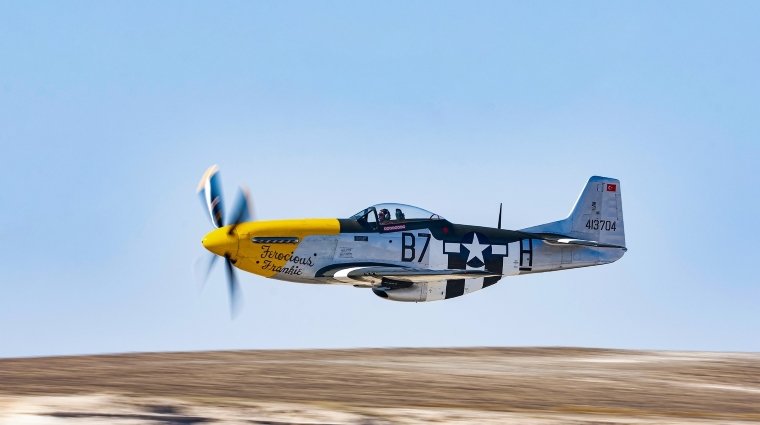
When it comes to WWII fighter aircraft, few are as revered as the North American P-51 Mustang. This sleek, high-performance fighter possessed a near-perfect blend of speed, range, firepower, and maneuverability that made it a formidable opponent in the skies. Powered by the mighty Rolls-Royce Merlin engine, the Mustang could escort bombers deep into enemy territory, providing much-needed air superiority cover.
In the hands of skilled pilots like the legendary “Red Tails” of the Tuskegee Airmen, the P-51 Mustang proved to be a war-winning weapon, helping to secure Allied air supremacy over Europe. Its iconic silhouette, impressive combat record, and enduring legacy have cemented the Mustang’s status as one of the most legendary fighter aircraft of all time. Whether engaging in dogfights or providing ground support, this American icon exemplified the very best of WWII aviation.
#3 – Supermarine Spitfire
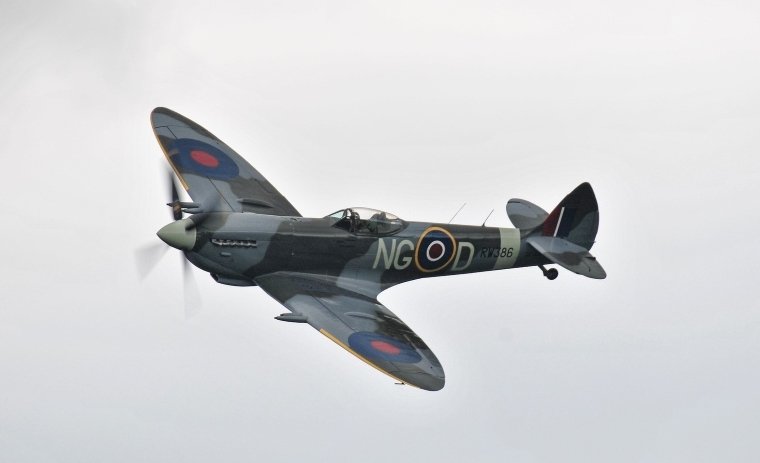
No list of iconic WWII fighter aircraft would be complete without the legendary Supermarine Spitfire. This sleek, agile interceptor became a symbol of British defiance during the Battle of Britain, as pilots of the Royal Air Force used its impressive maneuverability to fend off the Luftwaffe’s onslaught.
Beyond its role in the Battle of Britain, the Spitfire proved to be a versatile and adaptable fighter that could take on a variety of roles, from air superiority to ground attack. Its elliptical wing design, powerful Merlin engine, and steady handling made it a favorite among pilots, who reveled in the Spitfire’s graceful yet deadly performance. Even as newer, more powerful fighters emerged, the Spitfire remained a formidable presence throughout the war, cementing its place as one of the most iconic and beloved warbirds of WWII.
#2 – Lockheed P-38 Lightning
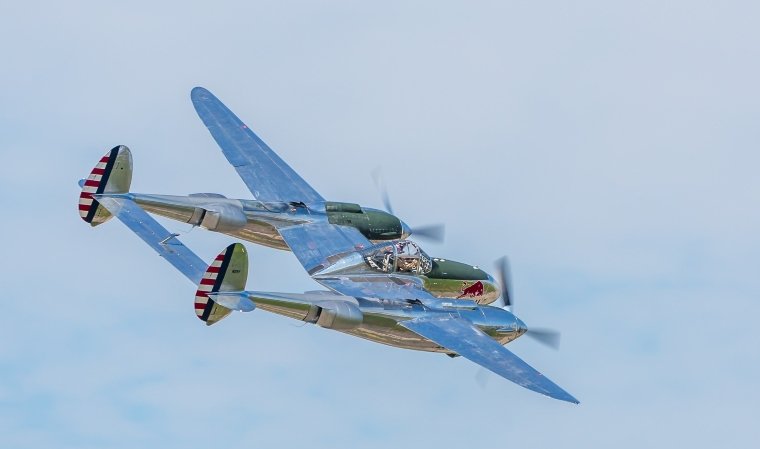
With its distinctive twin-boom design and potent firepower, the Lockheed P-38 Lightning stands out as one of the most recognizable and capable fighter aircraft of WWII. This versatile interceptor was capable of incredible speeds, high-altitude performance, and devastating firepower, thanks to its pair of Allison engines and array of .50 caliber machine guns and cannons.
In the hands of skilled pilots like the legendary Richard Bong, the P-38 Lightning proved to be a formidable air superiority and ground attack platform, racking up impressive kill counts against Axis aircraft. Its long range and high-altitude capabilities also made it an invaluable asset for reconnaissance and escort duties, helping to secure Allied dominance in the skies. While it may not have the same iconic silhouette as some of its contemporaries, the P-38 Lightning’s impressive performance and combat record solidify its place as one of the most significant and celebrated WWII fighter planes.
#1 – Hawker Hurricane
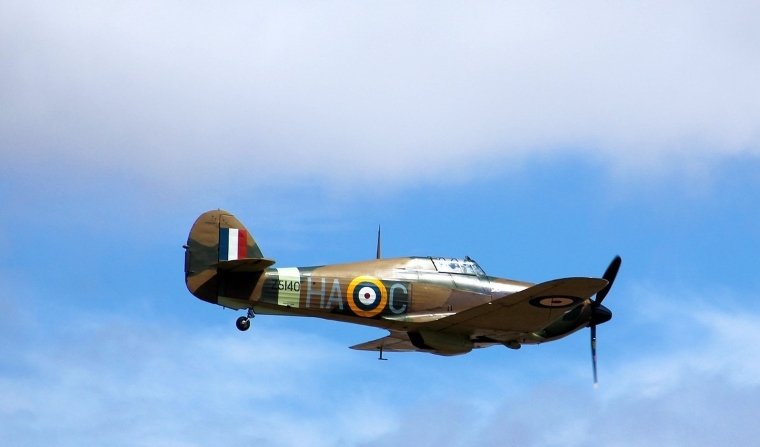
While the Supermarine Spitfire may have captured the limelight, the unsung hero of the Battle of Britain was the Hawker Hurricane. This rugged, dependable fighter may have lacked the grace and speed of the Spitfire, but it more than made up for it with its sheer firepower and reliability.
Flown by some of the RAF’s most skilled pilots, the Hurricane proved to be a tenacious and deadly adversary, accounting for the majority of the Luftwaffe’s losses during the critical battle for air supremacy over the English Channel. Its sturdy construction and potent arsenal of eight .303 caliber machine guns made it a formidable opponent, capable of inflicting devastating damage on enemy aircraft.
While it may not have the same level of fame as the Spitfire or Mustang, the Hawker Hurricane’s crucial role in the Battle of Britain and its enduring legacy as a workhorse of the Royal Air Force cement its status as the most iconic WWII fighter aircraft. This unsung champion of the skies exemplifies the courage, perseverance, and ingenuity that defined the Allied victory in the air.
Conclusion
From the sleek, agile Zeros of the Imperial Japanese Navy to the rugged, dependable Hurricanes of the RAF, the WWII era saw the birth of some of the most iconic and legendary fighter aircraft in history. Each of these warbirds played a crucial role in the aerial battles that determined the course of the war, and their legacies continue to captivate aviation enthusiasts and historians alike.
Whether it’s the Messerschmitt Bf 109’s fearsome reputation, the Spitfire’s graceful elegance, or the Mustang’s sheer power and performance, these WWII fighter planes have etched their place in the annals of military aviation. They are not just aircraft, but symbols of the courage, skill, and ingenuity that defined the pilots who flew them and the nations that built them.
As we reflect on the sacrifices and triumphs of that pivotal era, these iconic warbirds will continue to inspire awe and admiration, reminding us of the critical role that air power played in shaping the outcome of the war and the course of history.