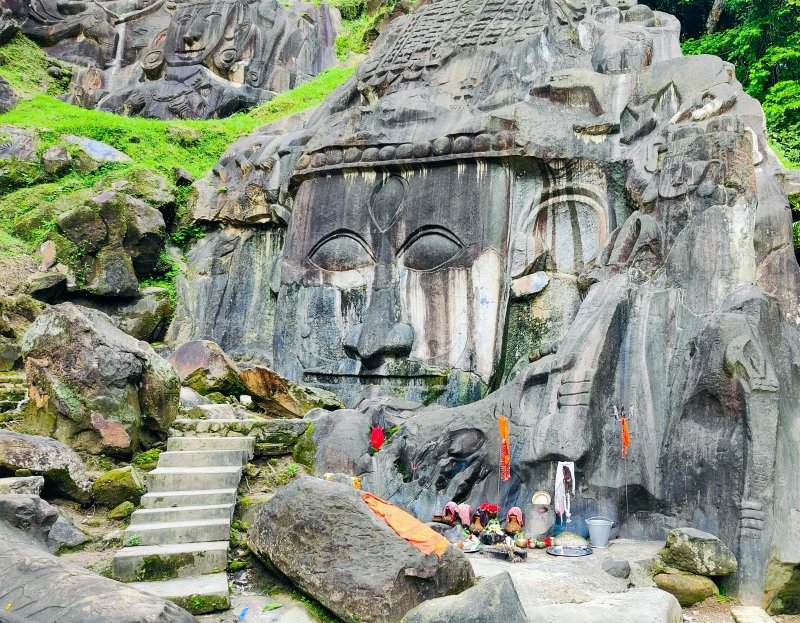
Hidden in the lush hills of Tripura lies an archaeological marvel that time nearly forgot – Unakoti, home to thousands of intricate rock-cut sculptures that have watched over this remote corner of India for over a millennium. This colossal open-air gallery of Shaivite art, whose name literally means “one less than a crore” in Sanskrit, houses some of the most spectacular religious rock carvings in South Asia. Yet somehow, this treasure trove of ancient artistry remains one of India’s best-kept secrets, waiting to be discovered by intrepid travelers seeking something truly extraordinary.
A Journey Through Time: The Story Behind Unakoti
The origins of Unakoti are shrouded in mystery and local legend. According to folklore, Lord Shiva once spent the night here while traveling to Kashi. He was accompanied by 99,99,999 deities who were all turned to stone when they failed to wake up at dawn – hence the name “Unakoti,” meaning one less than a crore (10 million). While archaeologists date most of the sculptures to between the 8th and 9th centuries CE, the site’s religious significance likely predates these carvings by centuries.
The massive rock-cut sculptures were carved into the Unakoti hills during the reign of the Pala dynasty, showcasing a unique blend of indigenous tribal art and classical Indian sculptural traditions. Some historians believe the site served as an important Buddhist center before being transformed into a Shaivite holy place, highlighting the complex religious history of ancient Northeast India.
Marvel at the Monumental Rock-Cut Wonders
The Colossal Unakotiswara Kal Bhairava
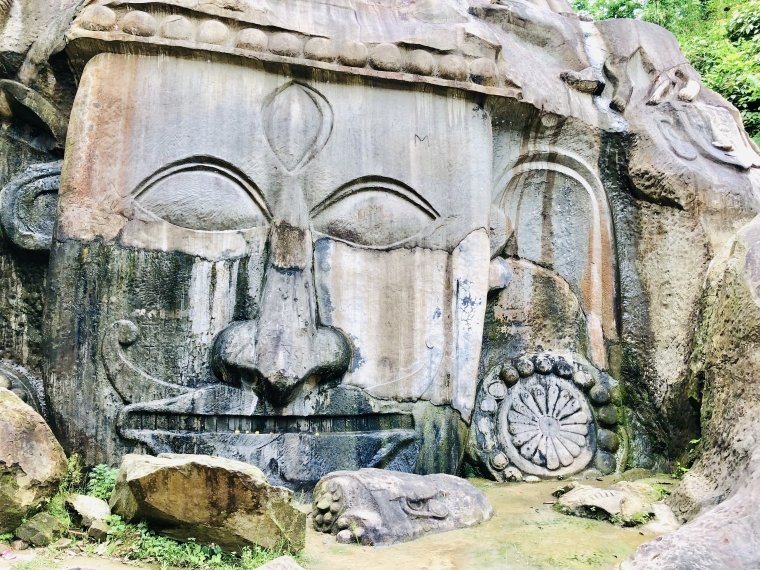
The centerpiece of Unakoti is the stunning 30-foot high carving of Lord Shiva’s head, known as Unakotiswara Kal Bhairava. This masterpiece of rock-cut art features elaborate headdress details and facial features that seem to change expression as the light shifts throughout the day. The sheer scale and artistry of this central figure leaves visitors awestruck.
The Magnificent Ganga Devi Panel
Adjacent to the Kal Bhairava is an equally impressive 23-foot high relief of Goddess Ganga. The carving shows exceptional detail in depicting jewelry, clothing, and facial features, demonstrating the remarkable skill of the ancient artisans who worked here.
The Three-Faced Shiva
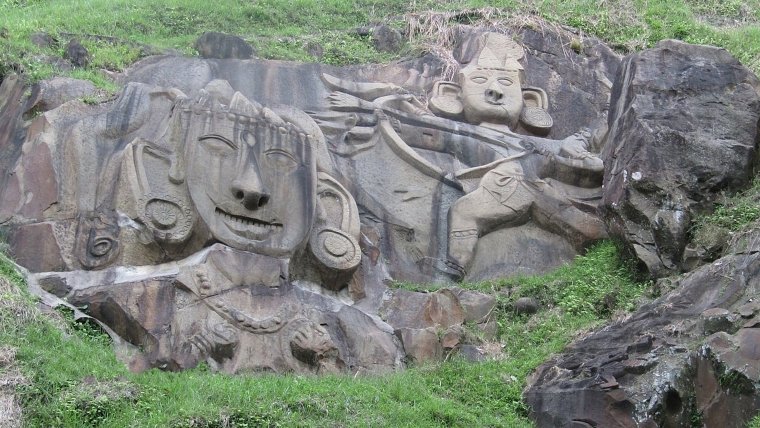
One of the site’s most unique attractions is a rare three-faced representation of Lord Shiva, combining aspects of Surya (the sun god) and Ganesh in a single striking composition. The sophisticated iconography speaks to the complex religious symbolism employed by the artists.
Fascinating Facts and Hidden Stories
- The Lost City Theory: Some archaeologists believe Unakoti may have been part of a lost city, with the current visible sculptures representing just a fraction of a much larger ancient settlement.
- Astronomical Alignments: Several carvings appear to have astronomical significance, with specific features aligned to solar and lunar events during equinoxes and solstices.
- Living Traditions: Despite its age, Unakoti remains an active religious site, with local communities continuing to perform rituals and celebrations during festivals like Ashokastami.
- Artistic Innovation: The sculptures show evidence of multiple artistic styles and techniques, suggesting the site was a center of artistic innovation where different sculptural traditions merged and evolved.
Essential Travel Tips for Visiting Unakoti
Best Time to Visit
The ideal time to explore Unakoti is between October and March when the weather is pleasant and dry. Avoid the monsoon season (June to September) as the rain can make the paths slippery and obscure the views of the sculptures.
How to Reach
- By Air: Nearest airport is Agartala Airport (80 km)
- By Rail: Kumarghat Railway Station (20 km)
- By Road: Regular buses and taxis available from Agartala and other major towns
Practical Information
- Entry Fee: Minimal charge for Indians; slightly higher for foreign tourists
- Photography: Allowed without additional fee
- Guides: Local guides available but book in advance
- Duration: Allow 3-4 hours for a thorough exploration
- Facilities: Basic restrooms and small shops available nearby
Notable Nearby Attractions
Jampui Hills
Just 48 km from Unakoti, these picturesque hills offer stunning views, orange orchards, and tribal villages. Perfect for combining with your Unakoti visit for a multi-day trip.
Kailashahar
The ancient capital of Tripura’s Manikya dynasty lies 12 km away, featuring historic temples and palace ruins that provide fascinating historical context to Unakoti’s sculptures.
Dharmanagar
The second-largest city in Tripura, 20 km from Unakoti, offers comfortable accommodation options and serves as a good base for exploring the region.
Unakoti: Where History Meets Mystery
Unakoti represents more than just an archaeological site – it’s a living testament to the artistic genius of ancient India and the enduring spiritual traditions of the Northeast. As you stand before these massive sculptures, you can’t help but feel connected to the countless generations who have marveled at these same stone faces over the centuries.
Whether you’re an history enthusiast, spiritual seeker, or simply someone who loves discovering hidden gems, Unakoti offers an experience that will leave you with lasting memories and a deeper appreciation for India’s rich cultural heritage. As tourism infrastructure continues to improve in this region, now is the perfect time to visit this remarkable site before it joins the ranks of India’s better-known attractions.
Plan your journey to this extraordinary place where art, history, and spirituality converge in the verdant hills of Tripura. Unakoti isn’t just a destination – it’s a journey through time that will leave you forever changed.