




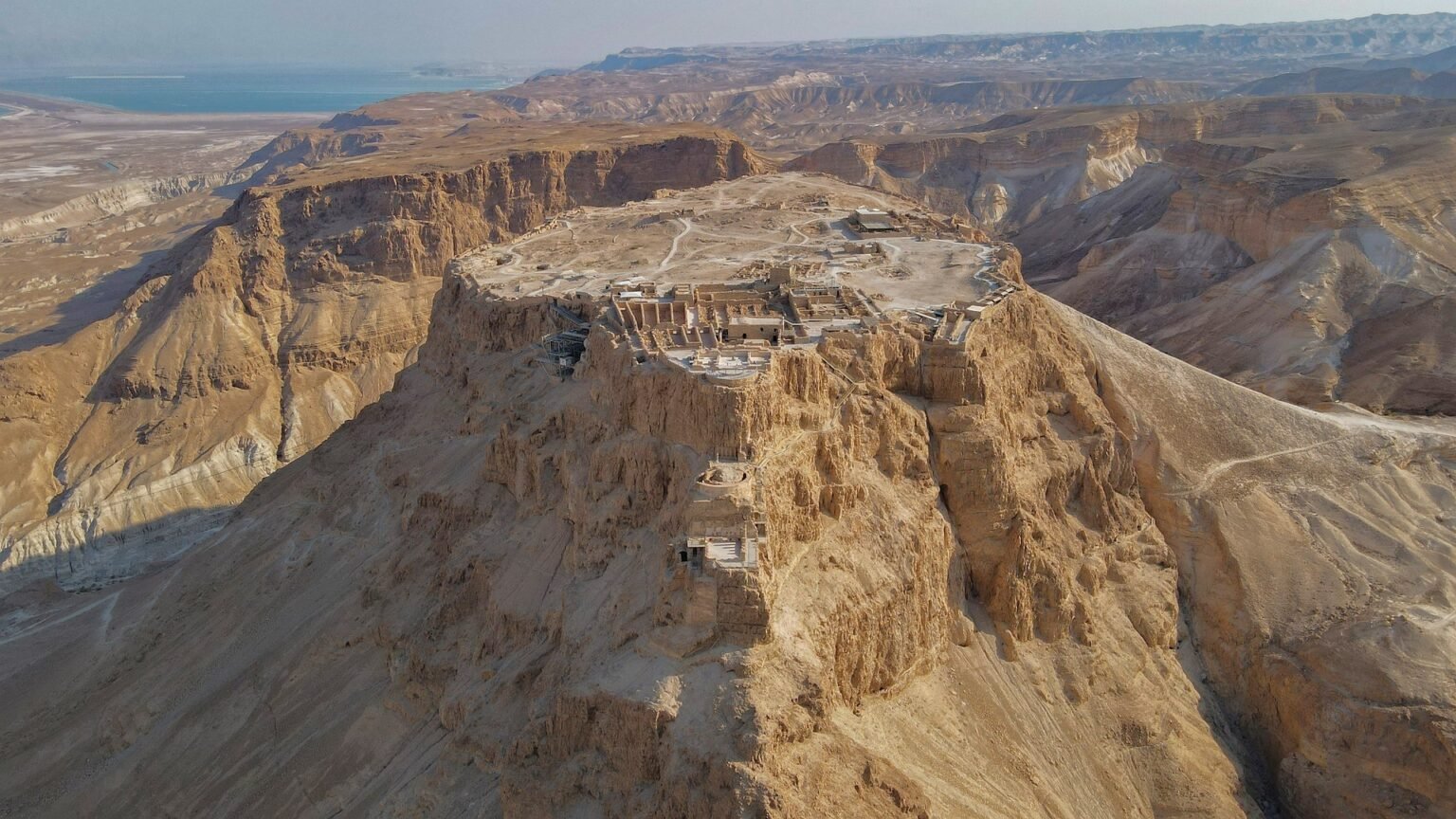
Perched on a plateau high above the Judean Desert, Masada is one of Israel’s most iconic and historically significant sites. This ancient fortress, once the last stronghold of Jewish rebels against Roman rule, offers visitors a breathtaking combination of dramatic scenery, rich history, and archaeological wonders. Whether you’re a history buff or just love stunning views, Masada is a must-see when visiting Israel. The sweeping views of the Dead Sea and surrounding desert, combined with the powerful story of Masada’s past, make for a visit that’s both beautiful and deeply moving.
Masada was originally built by King Herod the Great between 37 and 31 BCE as a lavish palace complex, complete with Roman-style bathhouses, storerooms, and fortifications. However, its most famous chapter came years later during the First Jewish-Roman War. In 73–74 CE, a group of Jewish Zealots, resisting Roman occupation, made Masada their final stronghold. The Roman army laid siege to the fortress, eventually breaching its walls. According to the ancient historian Josephus, the defenders of Masada, rather than be taken captive, chose a mass suicide—turning Masada into a symbol of Jewish resistance and freedom.
Today, Masada is a UNESCO World Heritage site and one of the most visited places in Israel, not just for its historical significance, but also for its spectacular desert landscapes and the stunning panoramic views from the top of the plateau.
Main Attractions:
- Herod’s Northern Palace: This is the most impressive structure on Masada, showcasing King Herod’s architectural genius. Built on three levels, the palace offered stunning views of the desert below and the Dead Sea in the distance. You can still see remnants of the luxurious bathhouses, storage rooms, and courtyards.
- Roman Siege Ramp: On the western side of Masada, you can find the remains of the Roman siege ramp, which the Roman army built to breach the fortress. Climbing this ramp gives you a sense of the massive military effort it took to conquer Masada.
- The Synagogue: One of the oldest synagogues in the world, the Masada synagogue is believed to date back to the time of the Zealots. Inside, you can still see benches where members of the community once sat and prayed.
- The Masada Museum: Located at the foot of the mountain, the museum offers a fascinating look at the site’s history through artifacts, interactive displays, and the story of the Jewish rebels’ last stand.
- Sunrise Hike: For those up for an adventure, the Snake Path is a challenging hike that rewards early risers with breathtaking views of the sun rising over the Dead Sea. It’s a magical experience as the golden light slowly illuminates the vast desert landscape.
Off-the-Beaten-Path Recommendations:
- Exploring the Cisterns: Masada’s ancient water system is a marvel of engineering. Herod built massive cisterns to collect and store rainwater, ensuring the fortress could withstand long sieges. While the more famous parts of Masada draw most visitors, taking the time to explore the intricate water system is a fascinating off-the-beaten-path activity.
- Roman Camps: Scattered around the base of Masada are the remains of Roman camps, used during the siege. These sites are often overlooked but are worth visiting to see the strategic positions of the Roman army and gain a fuller understanding of the siege’s scale.
- Western Path: While the Snake Path is the more popular route, the Western Path is a quieter, lesser-known trail. It’s shorter and easier to climb, offering a peaceful way to ascend Masada without the crowds.
Travel Tips and Practical Information:
- Best Time to Visit: The best time to visit Masada is early in the morning or late afternoon, especially if you’re planning to hike the Snake Path. The desert heat can be intense, especially during the summer months, so avoid midday visits. Winter (November to March) offers more moderate temperatures, making it ideal for outdoor activities.
- How to Get There: Masada is about a two-hour drive from Jerusalem and is accessible by car, bus, or guided tour. If you’re coming from the Dead Sea area, it’s only a short 30-45 minute drive.
- What to Bring: If you’re hiking, wear sturdy shoes, bring plenty of water, and don’t forget sunscreen and a hat. The desert sun can be harsh even in the cooler months. If you’re taking the cable car, the ride is quick but still exposed to sunlight, so sun protection is always a good idea.
- Cable Car vs. Hiking: Not everyone wants to hike in the heat, and that’s where the cable car comes in. It’s a quick and scenic ride that takes you straight to the top, making it accessible for all ages and fitness levels.
Nearby Points of Interest & Landmarks:
- Ein Gedi Nature Reserve: Just a short drive from Masada, this oasis in the desert offers beautiful hiking trails, waterfalls, and natural pools. It’s a great way to cool off after exploring Masada.
- Dead Sea: No visit to Masada is complete without a float in the Dead Sea. Its mineral-rich waters are famous for their healing properties, and it’s the perfect spot to relax after a long hike.
- Qumran Caves: Located near the northern part of the Dead Sea, the Qumran Caves are where the Dead Sea Scrolls were discovered. You can tour the caves and learn about one of the most significant archaeological finds in history.
- Mount Sodom: For those who love hiking and geology, Mount Sodom offers interesting trails and dramatic salt formations. It’s located close to the Dead Sea, making it a unique addition to your itinerary.
Final Thoughts:
A visit to Masada is like stepping back in time—where history, nature, and heroism come together in one incredible place. Whether you’re captivated by the story of the Jewish rebels, impressed by King Herod’s palace, or simply in awe of the stunning desert views, Masada offers an unforgettable experience. Don’t forget to explore the surrounding area, where the Dead Sea, lush nature reserves, and ancient sites make this region of Israel a true treasure for adventurers and history lovers alike.