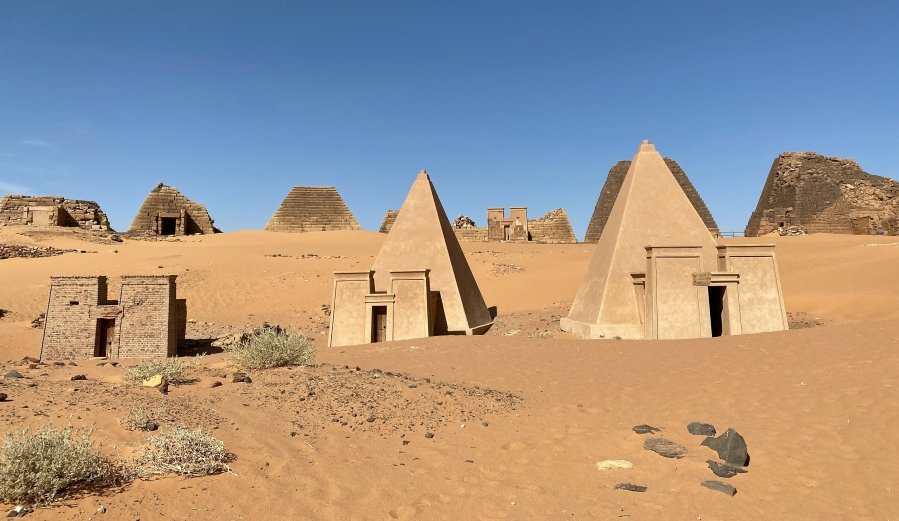
If you thought Egypt held the monopoly on pyramids, think again! Nestled in the golden sands of Sudan lies Meroë, an ancient kingdom home to nearly 200 pyramids, outnumbering its famous northern neighbor. Far from the crowded tourist circuits, the Pyramids of Meroë offer an intimate glimpse into a fascinating yet often overlooked chapter of African history. Standing tall against the blue skies, these pyramids were built by the Nubian kings and queens of the ancient Kingdom of Kush. Whether you’re a history buff, adventure seeker, or curious traveler, the Meroë pyramids promise a trip filled with wonder and intrigue—minus the hordes of tourists.
2. Background
Meroë was once the capital of the Kingdom of Kush, a powerful African empire that thrived from around 800 BCE to 350 CE. Located along the banks of the Nile, Meroë became a significant cultural and economic hub, bridging ancient Egypt and sub-Saharan Africa. The Kushites adopted several Egyptian customs, including pyramid-building, yet they added their unique twist, resulting in smaller but steeper pyramids than those in Giza.
The pyramids of Meroë are the burial sites of royal Kushite figures, filled with treasures and intricately carved inscriptions, although many were looted during colonial times. Despite this, Meroë remains a UNESCO World Heritage site, recognized for its cultural significance and architectural marvels. The pyramids, set against Sudan’s vast desert landscape, stand as a testament to a once-great civilization that rivaled ancient Egypt.
3. Pyramids
A. Main Feature:
The Splendor of the Pyramids of Meroë The most striking feature of Meroë is, without a doubt, its pyramids. With nearly 200 pyramids dotting the landscape, these ancient structures are smaller than their Egyptian counterparts but possess an unparalleled beauty. Built with local sandstone and featuring steep, narrow designs, the pyramids rise sharply from the desert floor, creating an impressive silhouette against the horizon.
The larger pyramids are the final resting places of Kushite kings, while smaller ones are dedicated to queens and other royals. Many of these tombs were once filled with treasures, including gold, pottery, and weapons. Though much of the treasure has been lost over time due to looting, some of the original carvings and hieroglyphs still remain, depicting royal life, religious practices, and connections with Egyptian gods.
But unlike Egypt, Meroë offers visitors a more intimate, peaceful experience. You can explore the pyramids at your own pace, with few tourists in sight. Imagine walking through an ancient royal necropolis where time seems to have stood still.
Let’s break down what makes these pyramids so special:
- Distinctive shape: Steeper and more narrow than Egyptian pyramids
- Decorative elements: Elaborate reliefs and inscriptions adorn many of the structures
- Kushite architecture: Unique blend of Egyptian and local Nubian styles
- Royal necropolis: Three main pyramid fields house the tombs of kings, queens, and elite members of society
- Historical significance: Represents the power and wealth of the Kingdom of Kush
- UNESCO World Heritage Site: Recognized for its outstanding universal value
B. Off-the-Beaten-Path Recommendations:
While the pyramids of Meroë are the main draw, there’s plenty more to explore in the surrounding area. Start with a visit to the Royal City of Meroë, located just east of the pyramids. This archaeological site includes the ruins of ancient palaces, temples, and homes, giving you a sense of how life might have been during the Kushite empire. Don’t miss the Temple of Amun, which was a major religious center in the city.
For those who love nature, the surrounding desert landscape offers excellent opportunities for a camel ride or a desert safari. You can camp under the stars, immersing yourself in the beauty and silence of the desert. And if you want to dig deeper into the region’s history, the nearby town of Shendi is home to small local museums where you can learn more about Nubian culture.
4. Map / Travel Tips and Practical Information
Getting to Meroë is half the adventure! The site is located about 200 kilometers northeast of Khartoum, Sudan’s capital. Most visitors opt for a guided tour or private transportation since public transit options are limited. Once you arrive, you’ll need to pay an entrance fee to explore the pyramids, but it’s well worth the modest cost.
The best time to visit is during Sudan’s cooler months, from November to February, when daytime temperatures are more manageable. Don’t forget to bring plenty of water, sunscreen, and a hat—the sun in the desert can be relentless. Meroë is relatively undeveloped compared to other tourist sites, so it’s best to prepare for basic amenities.
If you’re interested in diving deeper into the region’s history, consider hiring a local guide. They can share fascinating stories about the Kushite kingdom, its rulers, and its unique culture.
- Best time to visit: October to April, when temperatures are cooler
- Getting there: Meroë is about 230 km north of Khartoum. You can hire a driver or join a tour
- Accommodation: Limited options nearby; consider day trips from Khartoum or camping (with proper arrangements)
- Dress code: Respect local customs with modest clothing; don’t forget sun protection!
- Guides: Hiring a knowledgeable guide can greatly enhance your experience
- Photography: Bring extra batteries and memory cards; you’ll want to snap a ton of pics
- Safety: Check current travel advisories before planning your trip
5. Nearby Points of Interest & Landmarks
- The Temple of Musawwarat es-Sufra: Located about 30 kilometers from Meroë, this temple complex features vast courtyards and intricately carved stone reliefs.
- Naga: An ancient temple site, Naga offers a glimpse into the Kushite civilization’s religious practices, with temples dedicated to the lion god Apedemak.
- Khartoum: The bustling capital city offers a perfect blend of modern and historical attractions, including the National Museum, which houses artifacts from Meroë.
6. Final Thoughts
Meroë is one of the world’s most underrated ancient sites. It offers not only a fascinating peek into the rich history of the Kushite kingdom but also a peaceful and uncrowded travel experience. Whether you’re exploring the majestic pyramids, riding camels through the desert, or soaking in the serene surroundings, a trip to Meroë is sure to be a memorable adventure. If you’re looking for a destination off the beaten path, where history and natural beauty collide, Meroë should definitely top your list.