




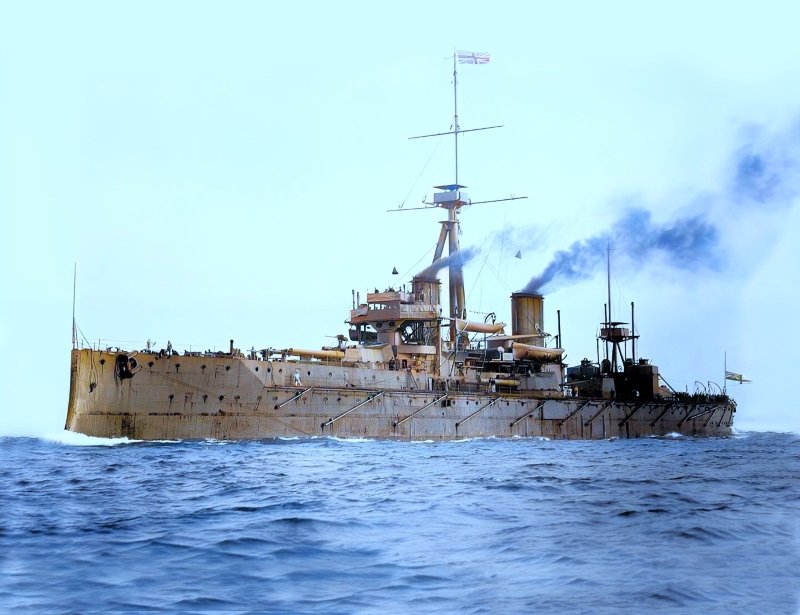
When it comes to revolutionary warships, HMS Dreadnought is the name that dominates the list. Launched in 1906, this British battleship didn’t just set a new standard; it rewrote the rulebook for naval warfare. Here’s a closer look at this legendary vessel, from its background to its groundbreaking design and lasting impact on naval history.
- The World in 1906: Setting the Global Stage
- Background: The Naval Arms Race
- Origins: From Idea to Reality
- Design and Technology: Big Guns, Big Dreams
- General Description
- Technical Innovation: The Engineering Revolution
- Detailed Technical Specifications
- Advanced Combat Systems
- Ship Dimensions and General Features
- Armament: Big Guns and Backup
- Protection: The Armour of Invincibility
- Propulsion and Fuel: Speed Meets Efficiency/Breaking Speed Records
- In Action: A Quiet Career
- Significance: A Game-Changer
- The Global Response: Naval Arms Race 2.0
- Social and Economic Impact
- The End of an Era
- Impact and Legacy
- Technical Legacy
- Conclusion
The World in 1906: Setting the Global Stage
Imagine a world in massive transition. The Victorian era had just ended, and the Edwardian period was in full swing. Europe was a powder keg of competing alliances, with Britain and Germany locked in an increasingly tense rivalry. The industrial revolution had transformed warfare, and new technologies were emerging at a dizzying pace.
Britain ruled a vast empire spanning a quarter of the globe, but this dominance was under threat. Kaiser Wilhelm II of Germany, Queen Victoria’s grandson, had embarked on an ambitious naval building program under Admiral Alfred von Tirpitz’s direction. Their goal? To challenge British naval supremacy with a fleet that could rival the Royal Navy.
Meanwhile, the recent Russo-Japanese War of 1904-1905 had demonstrated the effectiveness of long-range naval gunnery, particularly at the Battle of Tsushima. This conflict provided valuable lessons that would influence Dreadnought’s design.
Background: The Naval Arms Race
The late Victorian period had seen an explosion in naval technology. Steel had replaced iron, breech-loading guns had replaced muzzle-loaders, and steam turbines were beginning to challenge traditional reciprocating engines. Nations were building increasingly powerful battleships, leading to a costly arms race.
Before Dreadnought, battleships typically carried a mixed battery of heavy guns (usually 12-inch) and intermediate guns (typically 6-inch to 9.2-inch). This approach was based on the belief that most naval battles would occur at relatively close range, where rapid-firing intermediate guns would be crucial.
Origins: From Idea to Reality
Enter Admiral Sir John “Jackie” Fisher, appointed First Sea Lord in 1904. Fisher was a fascinating character – born in Ceylon (now Sri Lanka), he joined the Royal Navy at 13 and rose through the ranks with revolutionary ideas about naval warfare. He was known for his explosive temper, radical thinking, and ability to get things done.
Fisher had already modernized the Royal Navy by scrapping obsolete ships and consolidating the fleet in home waters. But his masterpiece would be Dreadnought. The ship’s design drew on several influences:
- Lessons from the Russo-Japanese War
- Italian naval architect Vittorio Cuniberti’s concept of an “all-big-gun” battleship
- American preliminary designs for what would become the South Carolina class
- British experience with HMS Lord Nelson and HMS Agamemnon
Design and Technology: Big Guns, Big Dreams
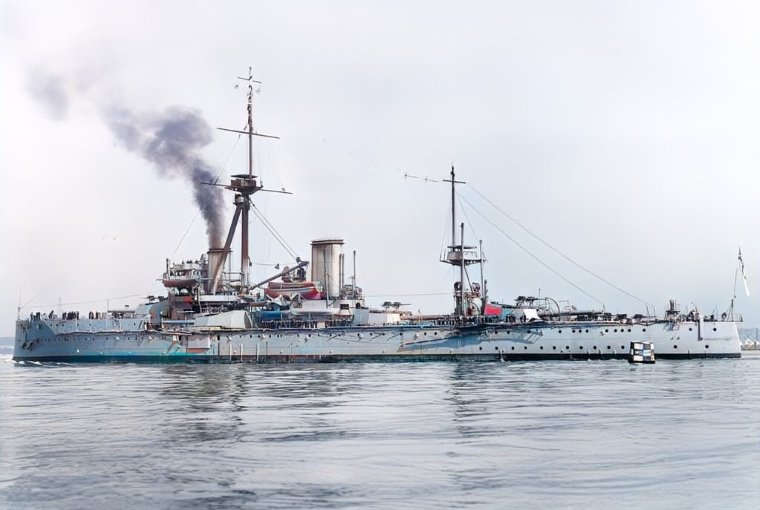
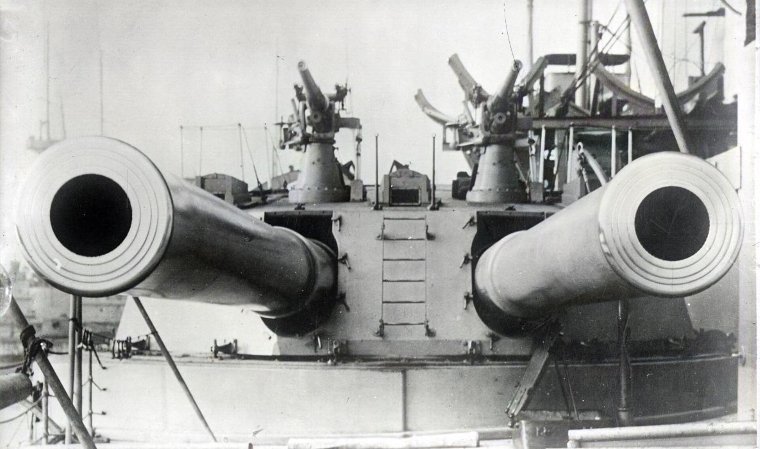
The “all-big-gun” concept was radical. Until then, battleships featured a mix of large-caliber guns for long-range combat and smaller guns for close-range engagements. HMS Dreadnought’s designers threw that playbook out the window. Instead, the ship was armed with ten 12-inch guns, giving it unparalleled firepower.
Another groundbreaking feature was its propulsion system. Dreadnought was the first battleship to use steam turbines, which made it faster than its predecessors. These technological leaps weren’t just impressive; they were transformative, setting the standard for battleships for decades.
General Description
HMS Dreadnought’s silhouette was as imposing as it was innovative. With a displacement of about 18,000 tons and a length of 527 feet, it was a behemoth. Its design featured:
- Heavily armed turrets: Arranged for maximum broadside capability.
- Minimal superstructure: To reduce weight and improve stability.
- Reinforced hull: To withstand hits from the largest shells of the era.
The ship’s design also incorporated lessons from the Russo-Japanese War (1904–1905), which demonstrated the value of long-range gunnery and heavily armored ships.
Technical Innovation: The Engineering Revolution
Before diving into Dreadnought’s specific features, let’s understand the revolutionary engineering advances it represented. The ship combined five major technical innovations:
- Steam Turbine Propulsion
- First use of Parsons turbines in a major warship
- Four sets of turbines, each driving one shaft
- Direct-drive arrangement (no reduction gearing)
- Steam provided by 18 Babcock & Wilcox water-tube boilers
- Working pressure of 250 psi (significantly higher than predecessors)
- All-Big-Gun Armament
- Ten 12-inch Mk X guns in five hydraulically-powered twin turrets
- Advanced continuous-loading system
- Improved shell hoists with mechanical safety interlocks
- Turret rotation speed of 1 degree per second
- Loading cycle of 30 seconds (twice as fast as previous designs)
- Fire Control System
- Barr & Stroud FQ-2 coincidence rangefinders (9-foot base length)
- Dumaresq mechanical computer for calculating target motion
- Vickers range clock for continuous range prediction
- Speaking tubes and electrical communications for coordinated fire
- Hull Design and Construction
- Longitudinal frame construction (rather than traditional transverse)
- Higher strength steel (yield strength 28.5 tons per square inch)
- Improved compartmentalization with watertight bulkheads
- Bilge keels for roll reduction
- Bulbous bow for reduced resistance
- Electrical Systems
- Four 200kW steam-driven generators
- Comprehensive electrical distribution system
- Electric shell hoists and turret drive backup systems
- Electric lighting throughout (revolutionary for 1906)
Detailed Technical Specifications
Hull and Structure
- Length overall: 527 feet (160.6 meters)
- Length between perpendiculars: 524 feet (159.7 meters)
- Beam: 82 feet (25 meters)
- Draft: 29 feet (8.8 meters)
- Metacentric height: 5.6 feet (1.7 meters)
- Number of decks: 8
- Structural weight: 7,120 tons
Protection Systems (Armor)
- Main belt: 11 inches Krupp cemented armor
- Belt thickness distribution:
- Upper belt: 8 inches
- Forward belt: 6 inches tapering to 4 inches
- Aft belt: 4 inches
- Bulkheads:
- Forward: 8 inches
- Aft: 6 inches
- Barbettes: 11 inches above belt, 8 inches below
- Gun turrets:
- Face: 11 inches
- Sides: 8 inches
- Roof: 3 inches
- Conning tower:
- Sides: 11 inches
- Roof: 3 inches
- Protective deck:
- Flat: 2.75 inches
- Slopes: 2.75 inches
Propulsion Details
- Turbine arrangement:
- HP ahead turbines on outer shafts
- LP ahead turbines on inner shafts
- Astern turbines on inner shafts only
- Shaft horsepower: 23,000 (design), 27,018 (achieved on trials)
- Steam conditions:
- Pressure: 250 psi
- Temperature: 420°F
- Boiler specifications:
- 18 Babcock & Wilcox water-tube boilers
- Heating surface: 66,500 sq ft
- Grate area: 1,442 sq ft
- Fuel capacity:
- Coal: 2,900 tons (normal)
- Oil: 1,120 gallons (for spraying)
[Previous historical sections continue, now interspersed with technical details]
Advanced Combat Systems
Main Battery Fire Control
- Primary control position in foretop
- Secondary position in armored conning tower
- Backup position on compass platform
- Transmission system:
- Mechanical data transmitters
- Electric repeaters
- Voice tubes
- Range and bearing determination:
- Two 9-foot coincidence rangefinders
- Multiple bearing indicators
- Dumaresq mechanical computer
- Vickers rate clock
Secondary Battery
- Twenty-seven 12-pounder 18 cwt QF guns
- Mount details:
- Weight: 813 pounds
- Elevation: -10 to +20 degrees
- Traverse: 360 degrees
- Rate of fire: 15 rounds per minute
- Ammunition storage:
- 200 rounds per gun
- Mix of HE and SAP shells
Ship Dimensions and General Features
- Length: 527 feet (160.3 meters)
- Beam: 82 feet (25 meters)
- Draft: 29 feet (8.8 meters)
- Displacement: 18,120 tons (normal load)
Dreadnought had a crew complement of around 800 men, including officers and enlisted personnel. Its layout was streamlined to optimize both combat efficiency and crew operations.
Armament: Big Guns and Backup
- Main Armament: Ten 12-inch (305 mm) guns, mounted in five twin turrets. These could fire 850-pound shells up to 20,000 yards, packing a devastating punch.
- Secondary Armament: Twenty-seven 12-pounder (76 mm) guns for defense against smaller ships and torpedo boats.
- Torpedo Tubes: Five 18-inch submerged torpedo tubes, adding another layer of offensive capability.
Protection: The Armour of Invincibility
HMS Dreadnought’s armor scheme was meticulously planned. Key features included:
- Belt Armour: 11 inches thick at its strongest point.
- Deck Armour: 2–3 inches to protect against plunging fire.
- Turret Armour: 11 inches to shield the main guns.
The ship’s citadel—housing vital areas like the engine rooms and magazines—was heavily fortified, making it extremely hard to incapacitate.
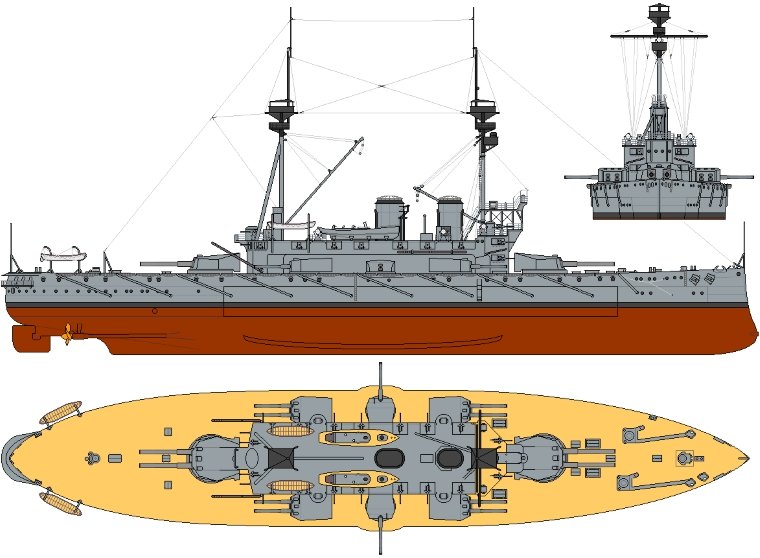
3-view drawing of HMS Dreadnought in 1911 / photo credit.
Propulsion and Fuel: Speed Meets Efficiency/Breaking Speed Records
Dreadnought’s steam turbines were a marvel of engineering. These engines gave the ship a top speed of 21 knots, making it faster than most contemporary battleships. This speed wasn’t just for show; it allowed the Dreadnought to outmaneuver enemies and set the pace for engagements. The ship used coal as its primary fuel, with oil sprayers to boost efficiency—a hybrid approach that bridged traditional and modern propulsion methods.
In Action: A Quiet Career
Surprisingly, HMS Dreadnought’s combat record was relatively uneventful. It’s most notable action was ramming and sinking the German submarine U-29 in 1915 during World War I. By the time the war reached its peak, newer battleships—inspired by Dreadnought’s design—had taken center stage. The ship’s role became more symbolic, a testament to British naval ingenuity.
Significance: A Game-Changer
Dreadnought’s impact was so massive that naval historians divide capital ships into “pre-dreadnoughts” and “dreadnoughts.” Within just a few years, every major navy was building dreadnought-style battleships. The term “dreadnought” became synonymous with modern battleships.
The Global Response: Naval Arms Race 2.0
Dreadnought’s launch triggered a new phase in the naval arms race. Nations scrambled to build their own dreadnoughts:
- Germany laid down Nassau, their first dreadnought, in 1907
- The United States began USS South Carolina and USS Michigan
- Japan ordered Satsuma and Aki
- Even smaller nations like Brazil and Argentina ordered dreadnoughts
This arms race had profound economic and political consequences:
- Strained national budgets
- Accelerated technological development
- Heightened international tensions
- Contributed to the naval rivalry between Britain and Germany
Social and Economic Impact
Dreadnought’s construction had significant social implications:
- Created thousands of jobs in British shipyards
- Sparked public debate about naval spending
- Influenced popular culture (appearing in books, newspapers, and even advertisements)
- Became a symbol of British technological prowess and national pride
[Previous sections continue as before through “Legacy: Echoes Through Time”]
The End of an Era
By the time Dreadnought was scrapped in 1923, the world had changed dramatically:
- World War I had transformed warfare
- Aircraft carriers were beginning to demonstrate their potential
- The Washington Naval Treaty of 1922 had put limits on battleship construction
- Britain’s economy was strained by war debts
Impact and Legacy
HMS Dreadnought’s legacy is undeniable. It:
- Redefined Naval Warfare: By emphasizing firepower, speed, and armor, it established a template for modern battleships.
- Spurred Innovation: Other nations, from Germany to the United States, raced to develop their own dreadnought-class ships.
- Symbolized British Dominance: For a time, the ship epitomized Britain’s naval superiority.
Decommissioned in 1920 and sold for scrap in 1923, HMS Dreadnought’s physical presence may be gone, but its impact endures in the annals of naval history.Even today, Dreadnought’s name lives on in the Royal Navy’s future nuclear submarine program, showing how this revolutionary ship continues to influence naval thinking more than a century later.
Technical Legacy
Dreadnought’s technical innovations influenced warship design for decades:
- Steam turbine propulsion became standard
- All-big-gun armament was universally adopted
- Fire control systems evolved along similar principles
- Armor scheme was widely copied
- Electrical systems became increasingly important
Conclusion
HMS Dreadnought wasn’t just a warship – it was a revolution in naval warfare that came to life in steel and steam. Its combination of speed, firepower, and protection made it the template for all future battleships until aircraft carriers took over as the kings of the seas. While it may not have fought in any great fleet actions, its real victory was in changing naval warfare forever.
The next time someone mentions battleships, you can tell them about the ship that started it all – HMS Dreadnought, the vessel that made every other capital ship obsolete the moment it launched. Now that’s what I call making a splash in naval history! / photo credit.