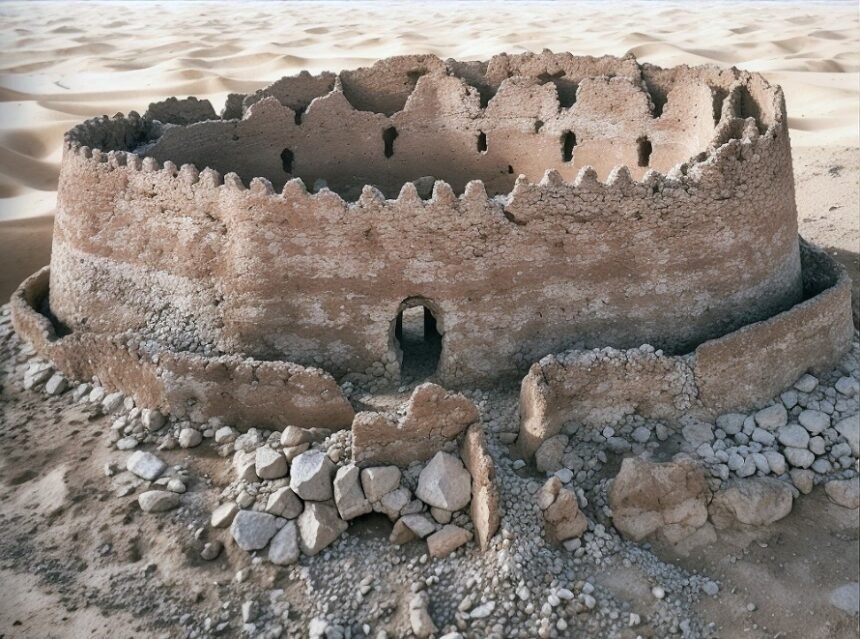
The mystery surrounding the Ksar Draa ruin in the heart of the Sahara is as intriguing as it is enigmatic. This ancient structure, located amidst endless dunes near Timimoun, Algeria, has sparked numerous theories, though little is definitively known about its origins. Some sources suggest it may have once housed Jews from the Timimoun region, but clear evidence supporting this claim is scarce, and much about its purpose remains speculative.
The structure is encircled by a roughly two-meter-high circular wall with an unusual double-layer design. The outer wall consists of stones bound with clay, while the inner wall is purely clay. Between these walls, a series of rooms spans three levels, but there are no visible staircases today, leading some to believe the stairs were originally internal. Additionally, the lack of outward-facing windows and communicating rooms adds to the building’s mysterious nature.
Despite its intriguing appearance, information about Ksar Draa is limited, and many travel websites merely recycle brief, often translated summaries. Measurements from satellite images show that the site spans approximately 100 by 70 feet (30×21 meters), lying in an isolated location some 50 kilometers from Timimoun. The name itself offers few clues; “Ksar” is a North African term for “fortress,” and “Draa” refers to this specific region of the desert.
One article, published in Maghreb Magazine, provides additional—though perhaps unverified—details. It claims the structure dates to the 14th century and is designed as a labyrinth of narrow alleys, winding staircases, and concealed courtyards. The use of adobe for interior walls and stone for the exterior is consistent with local building techniques, and its compact design likely helped to moderate temperatures within. The article also describes typical living spaces, including small houses, communal kitchens, and a central mosque—though photos suggest there is limited room for large structures, raising questions about these claims.
The site’s mystery is deepened by local lore, which speaks of treasures guarded by djinns, and the lack of thorough archaeological investigation leaves much to speculation. Without written records or substantial study, Ksar Draa remains an enigmatic fragment of the past, a reminder of the many ancient, nearly forgotten sites scattered across remote deserts.