Located in the serene landscape of northern Sweden, the Rödberget Fortress is more than just a historic structure—it’s a relic of military strategy, hidden in plain sight. Part of the larger Boden Fortress, Rödberget is one of five key forts that served to protect Sweden’s borders during a time when the country feared invasion from all directions. Today, it stands as a testament to Sweden’s military ingenuity, offering visitors a fascinating glimpse into the past. If you’re into history, adventure, or simply curious about Sweden’s hidden gems, Rödberget Fortress is a must-see on your travel itinerary.
Rödberget Fortress was built in the early 20th century, during a time of rising tensions in Europe. Sweden, though officially neutral, wanted to be prepared for potential threats from its neighboring countries. Boden Fortress, located in Norrbotten County, was part of this defense strategy. Rödberget, along with the other four forts (Södra Åberget, Gammelängsberget, Mjösjöberget, and Degerberget), formed a ring around the town of Boden, creating a defensive line that was intended to protect vital infrastructure from attack.
Construction began around 1900 and was completed by 1916, making Rödberget one of the most advanced fortresses of its time. Designed to withstand heavy artillery and equipped with underground tunnels, gun emplacements, and living quarters, it was a formidable obstacle for any potential invader. However, Rödberget Fortress, like its counterparts, was never directly involved in combat but remained an important military installation through both World Wars and the Cold War.
Forts: Description
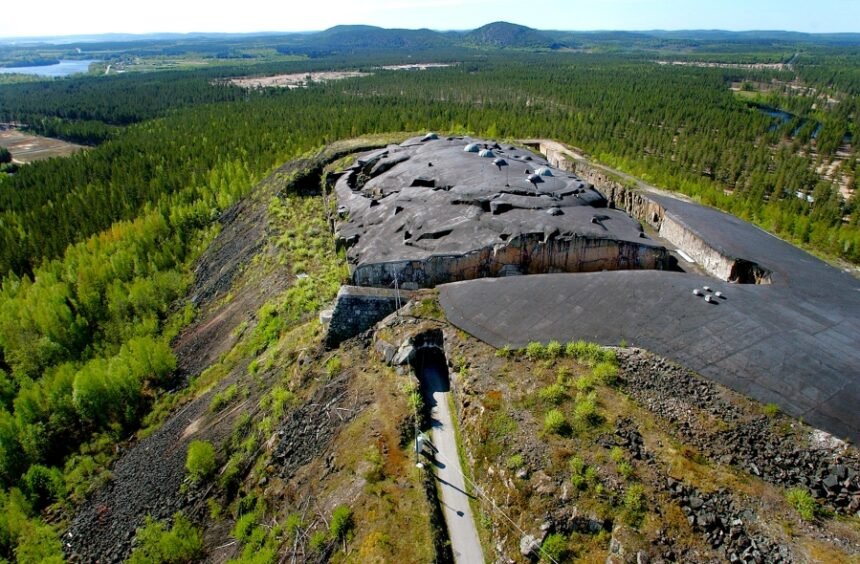
Rödberget Fortress is a marvel of military engineering, built into the side of a rocky hill to make it virtually invisible from above. This strategic placement wasn’t just for concealment—it also provided a natural defense against artillery and air attacks. The fort is a series of interconnected tunnels and bunkers, built deep into the granite, making it both resilient and hard to spot. From the outside, Rödberget appears more like a small hill than a fortress.
The structure was designed to house a garrison of soldiers, complete with living quarters, dining areas, and even a hospital. Its gun emplacements were positioned to cover large swaths of land, providing overlapping fields of fire with the other Boden forts. The main armament consisted of 12 cm howitzers mounted on disappearing carriages—massive cannons that could be retracted into the mountain when not in use, protecting them from enemy fire.
One of the most impressive features of Rödberget is its complex tunnel system, which was designed to allow soldiers to move throughout the fortress without ever being exposed to enemy fire. These tunnels connect everything from ammunition storage areas to lookout points and gun positions. The fort also had systems in place to provide fresh air and electricity, making it self-sufficient even during prolonged sieges.
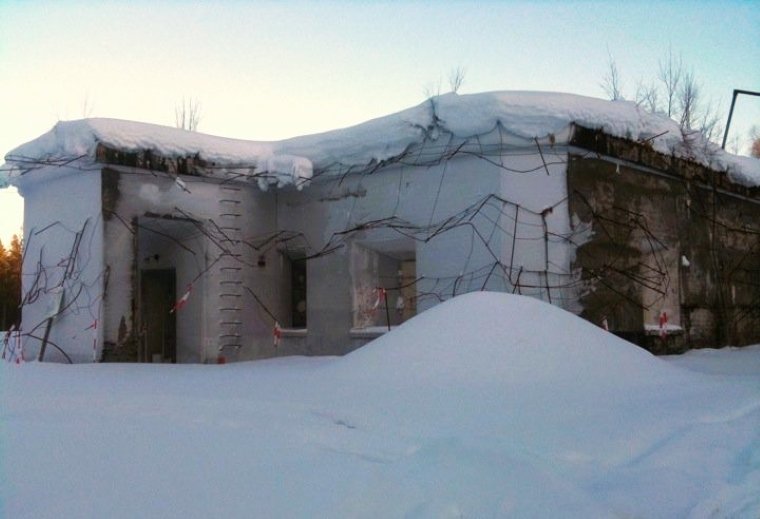
Over the years, Rödberget has undergone several upgrades, adapting to changes in warfare technology. For instance, during the Cold War, the fortress was outfitted with modern communication systems and anti-nuclear defenses. Even though it’s no longer in active military use, Rödberget remains well-preserved, allowing visitors to experience what life inside a 20th-century military fortress would have been like.
In Operation
While Rödberget was built for war, it never saw direct combat. However, it remained fully manned and operational throughout both World Wars, ready at a moment’s notice to defend Swedish territory. During World War II, with Europe engulfed in conflict, Rödberget and the other Boden forts were on high alert. Although Sweden managed to maintain its neutrality, the threat of invasion, particularly from Nazi Germany, loomed large, and the fortress played a key role in the country’s defense strategy.
Throughout the Cold War, Rödberget was once again on standby as tensions between NATO and the Soviet Union grew. Sweden, although officially neutral, was strategically positioned between the two superpowers, and Boden Fortress was one of the northernmost military installations capable of defending the region. Even though Rödberget never fired a shot in anger, its mere presence was a deterrent, and its strategic value remained high until the late 20th century.
Myths
Like any historic site, Rödberget Fortress has its share of myths and legends. One popular story suggests that there are hidden chambers deep within the fortress that were never documented on any official plans. Some even believe these chambers hold secret wartime documents or lost treasures. There are also rumors of hauntings, with visitors and former soldiers claiming to have seen ghostly apparitions wandering the tunnels.
Another myth that often comes up is the idea that Rödberget, and the other Boden forts, were designed with elaborate escape routes in case the fortress was overrun. While the tunnel system is indeed complex, there’s no official evidence to support the idea of secret exits, but the mystery certainly adds to the fortress’s allure.

In Popular Culture
Rödberget and the Boden Fortress have made appearances in Swedish popular culture, particularly in films and literature dealing with Sweden’s military history. The fortresses have often been depicted in historical dramas and documentaries about Sweden’s neutral stance during World War II. Their cold, imposing tunnels and hidden nature make them an excellent setting for thrillers and mystery stories, feeding into the public’s fascination with the country’s military secrets.
Travel Tips and Practical Information
If you’re planning a visit to Rödberget Fortress, it’s important to note that it’s only accessible via guided tours, as the interior is well-protected and requires some knowledge to navigate. Tours often run during the summer months, with additional special events throughout the year. Be sure to wear sturdy shoes, as the terrain can be rugged, and bring a jacket, as temperatures inside the fortress can be quite cool even in summer.
For those interested in the full Boden Fortress experience, it’s worth exploring the other forts in the area. Many visitors choose to stay in Boden, which offers a range of accommodation options from hotels to guesthouses. The town is well-connected by train, and it’s only a short drive from Luleå Airport.
Nearby Points of Interest & Landmarks
While you’re in the area, take the time to explore some of the other attractions near Boden.
- Luleå, a coastal city just 35 km away, offers a rich cultural experience with its beautiful archipelago, the UNESCO-listed Gammelstad Church Town, and vibrant dining scene.
- If you’re a nature enthusiast, the nearby forests and lakes provide excellent opportunities for hiking, fishing, and wildlife watching.
- Södra Åberget and Degerberget forts, which are part of the same defensive system as Rödberget.
- A short drive away, you’ll find the Swedish Lapland region, where you can experience the midnight sun in summer or chase the northern lights in winter.
Final Thoughts
Rödberget Fortress is a hidden gem in Sweden’s military history, a place where past meets present in the most dramatic of settings. Whether you’re a history buff, an adventurer, or simply looking for something off the beaten path, a visit to Rödberget promises to be a memorable experience. The stories it holds, both real and imagined, make it an intriguing destination that offers a unique window into Sweden’s defensive past./ photo credit