Located on a small island in Brittany’s Gulf of Morbihan, Gavrinis is one of France’s most enchanting yet lesser-known historical sites. The tomb on this tiny island is part of a Neolithic structure known as a passage grave, built around 3500 BCE—making it older than the pyramids of Egypt! Gavrinis captivates visitors with its intricate stone carvings, breathtaking coastal views, and layers of mystery that make it a must-see for history lovers, archaeology enthusiasts, and travelers who enjoy stepping off the beaten path. Imagine stepping inside an ancient tomb where every stone has a story, each carving a connection to our prehistoric ancestors. This site remains one of the most intriguing megalithic monuments in Europe. Ready to step back in time? Let’s delve into what makes Gavrinis so fascinating and worth exploring.
History
Gavrinis’ history goes back over 6,000 years to the Neolithic period, a time when the Gulf of Morbihan looked quite different. Archaeologists believe that the island may not have been an island at all back then but rather part of the mainland, with sea levels significantly lower. The tomb itself, known as a passage grave or “dolmen,” was constructed around 3500 BCE, and it’s considered one of the best-preserved examples of Neolithic art and architecture. While there’s no certainty about who built it or why it was constructed, Gavrinis likely served a ritual or ceremonial purpose, potentially as a burial site for elite individuals or a place of worship for the community. Over the centuries, the tomb lay hidden and relatively untouched until its rediscovery in the 19th century. Since then, it has drawn scholars, historians, and visitors who are fascinated by its ancient craftsmanship and the mysteries that surround it.
Description of the Site
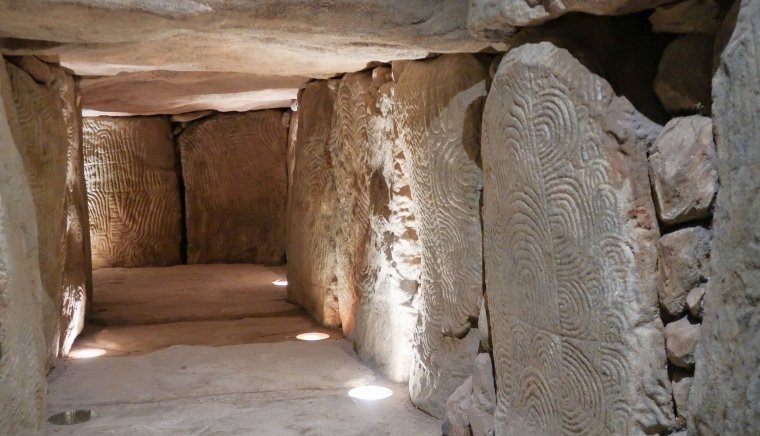
The Gavrinis tomb is set on a small, picturesque island that’s accessible only by boat, adding to its allure. The site itself is relatively small, but its impact is huge. You enter through a narrow passageway, which is about 14 meters (46 feet) long, leading you to the burial chamber at the heart of the structure. The passage walls are lined with stone slabs, known as orthostats, many of which feature some of the most intricate and fascinating carvings found in Europe. Spirals, lines, zigzags, and other geometric patterns decorate the stones, showcasing the artistic skill and creativity of the Neolithic people. These carvings are thought to have held symbolic or spiritual significance, perhaps representing natural elements or the cosmos. The tomb is capped by a massive, 17-ton stone slab that was once part of the structure’s roof, further emphasizing the ancient builders’ mastery of stonework and their dedication to this sacred space.
Usage
The original purpose of Gavrinis remains open to interpretation, but most agree that it was likely a sacred site, possibly serving as a burial ground or a place for spiritual rituals. While it might have housed the remains of significant individuals, some theories suggest it was more than just a tomb. The intricate carvings hint that it could have been a site for ceremonies, perhaps to honor ancestors, appease deities, or mark astronomical events. Over the millennia, it fell out of use and was sealed, only to be rediscovered and opened to the public in more recent centuries. Today, it’s preserved as a historical monument, and visitors can walk the same path as ancient people did, marveling at the craftsmanship and speculating about its purpose.
Interesting Facts
- Older than the Pyramids: Gavrinis predates the Egyptian pyramids by around a thousand years, making it one of the oldest stone structures in the world.
- Incredible Stonework: The carvings inside Gavrinis are among the most detailed examples of Neolithic art. Some even theorize that they represent abstract maps or astronomical symbols.
- Heavy Lifting: The 17-ton capstone on the tomb is proof of the Neolithic people’s advanced understanding of engineering, given that they had no machines to aid them.
- Hidden for Centuries: The tomb remained hidden under an earthen mound for centuries, likely helping to preserve the carvings from erosion and vandalism.
- A Mystical Island: The Gulf of Morbihan is rich in myth, with many local legends suggesting that the standing stones and megaliths in the area were placed by ancient giants or magical beings.
Activities
Gavrinis isn’t just about the tomb—there’s plenty more to enjoy while you’re here. Some of the top activities include:
- Guided Tours: Explore the tomb’s passageway and burial chamber with knowledgeable guides who provide insights into the history, architecture, and meaning behind the carvings.
- Photography: The island offers fantastic photo opportunities, from capturing the ancient carvings up close to panoramic shots of the Gulf of Morbihan.
- Nature Walks: Take a leisurely stroll around the island, enjoying its natural beauty and spotting local wildlife.
- Boating in the Gulf: Gavrinis is accessible only by boat, and the trip across the gulf adds an extra sense of adventure to the journey.
- Archaeological Exploration: For archaeology enthusiasts, the entire area around the Gulf of Morbihan is a treasure trove, with other nearby megalithic sites worth exploring.
Getting There
- By Car: Drive to the town of Larmor-Baden in Brittany, where there is a ferry port for boats to Gavrinis.
- By Boat: Ferries run from Larmor-Baden during the summer months. Book tickets in advance as the tours can fill up quickly.
- By Train: The nearest major train station is in Vannes, which has connections to Larmor-Baden by bus or taxi.
- By Bus: Buses run between Vannes and Larmor-Baden, making it accessible even for those without a car.
- By Air: The closest airport is Nantes Atlantique Airport, and from there, you can reach Larmor-Baden by train or car.
Nearby Points of Interest & Landmarks
- Carnac Stones: Located nearby, the Carnac Stones are a larger, more famous collection of megalithic alignments that cover several kilometers.
- Locmariaquer Megaliths: A significant site with standing stones and ancient structures, including the Grand Menhir, one of the largest known standing stones in the world.
- Vannes: A charming medieval town with beautiful half-timbered houses, cobblestone streets, and a vibrant market.
- Île-aux-Moines: Another nearby island with historical landmarks, beaches, and great hiking trails.
- Auray: A quaint, picturesque town with a historic port area and scenic views.
Final Thoughts
Gavrinis is one of those special places where history, mystery, and natural beauty come together to create a unique experience. From the mesmerizing carvings on ancient stones to the tranquil waters of the Gulf of Morbihan, this site has a quiet magic that lingers long after you leave. Whether you’re a history buff, an art lover, or someone who enjoys off-the-beaten-path adventures, Gavrinis offers a captivating glimpse into humanity’s distant past and reminds us of the incredible feats our ancestors achieved. / photo credit