




Case Studies of Transformed Industrial Sites
The transformation of industrial sites into cultural attractions has taken place across the globe, each with its unique approach and outcome. Here are three compelling examples that showcase the diverse ways in which industrial heritage can be preserved and repurposed:
- Case Studies of Transformed Industrial Sites
- The Importance of Preserving Industrial Heritage
- 1. Historical and Cultural Significance
- 2. Educational Value
- 3. Architectural and Engineering Significance
- 4. Environmental Considerations
- 5. Economic Revitalization
- 6. Community Identity and Pride
- 7. Artistic and Creative Inspiration
- 8. Research Opportunities
- Challenges and Opportunities in Industrial Heritage Preservation
- 1. Financial Constraints
- 2. Environmental Concerns
- 3. Scale and Complexity
- 4. Legal and Regulatory Issues
- 5. Public Perception
- 6. Technical Preservation Challenges
- 7. Balancing Preservation and Development
- 8. Long-term Sustainability
- 9. Digital Preservation and Interpretation
- Conclusion: The Future of Industrial Heritage
1. Tate Modern, London, UK
Former Use: Bankside Power Station Current Use: Modern and Contemporary Art Gallery
The Tate Modern is perhaps one of the most famous examples of industrial adaptive reuse. Housed in the former Bankside Power Station, this art gallery has become one of London’s most visited attractions.
- History: Built in two phases between 1947 and 1963, the power station was designed by Sir Giles Gilbert Scott. It ceased operations in 1981.
- Transformation: The conversion, led by architects Herzog & de Meuron, began in 1995 and was completed in 2000.
- Key Features:
- The iconic Turbine Hall, once housing electricity generators, now hosts large-scale installations and performances.
- The original industrial character of the building was maintained, including the central chimney.
- A new extension, the Blavatnik Building, was added in 2016 to increase gallery space.
- Impact: The Tate Modern has significantly contributed to the regeneration of the Southwark area and attracts millions of visitors annually.
2. Zeche Zollverein, Essen, Germany
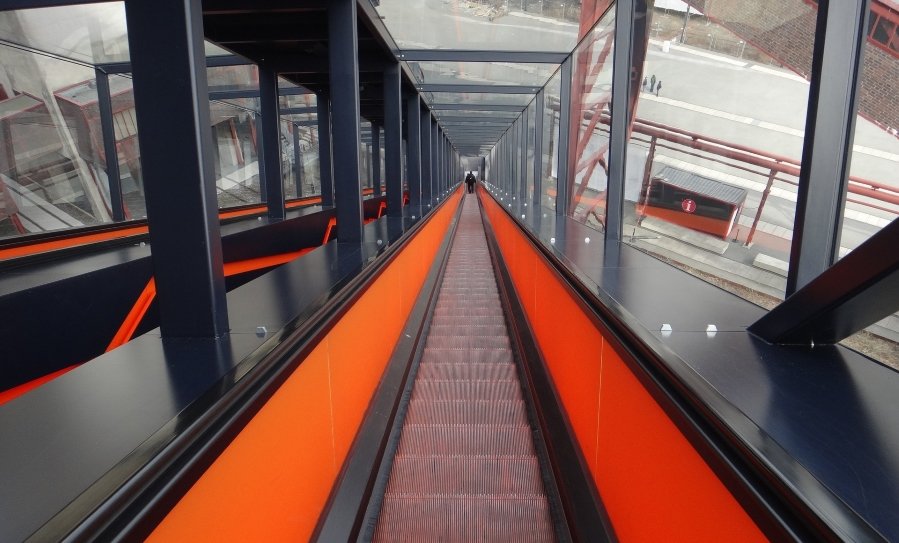
Former Use: Coal Mine and Coking Plant Current Use: Museum and Cultural Center
Once the largest and most modern colliery in Europe, Zeche Zollverein has been transformed into a vibrant cultural complex.
- History: Operational from 1851 to 1986, the site was known as the “most beautiful coal mine in the world” due to its Bauhaus-inspired design.
- Transformation: Preservation efforts began immediately after its closure, with the site being declared a UNESCO World Heritage Site in 2001.
- Key Features:
- The Ruhr Museum, housed in the former coal washing plant, tells the natural and cultural history of the Ruhr area.
- The Red Dot Design Museum occupies the former boiler house.
- In winter, the former coking plant cooling pool becomes an ice rink.
- Various industrial buildings host art exhibitions, concerts, and theatrical performances.
- Impact: Zollverein has become a symbol of the structural change in the Ruhr area, attracting over 1.5 million visitors annually.
3. Highline, New York City, USA
Former Use: Elevated Freight Rail Line Current Use: Public Park and Walking Trail
While not a traditional industrial site, the High Line demonstrates how industrial infrastructure can be reimagined as public space.
- History: Built in the 1930s to lift dangerous freight trains off Manhattan’s streets, the line was abandoned in 1980.
- Transformation: Inspired by the Promenade Plantée in Paris, local residents formed “Friends of the High Line” in 1999 to advocate for its preservation and reuse.
- Key Features:
- The 1.45-mile-long elevated park retains many of the original railroad tracks, integrating them with wild-type plantings inspired by the self-seeded landscape that grew during its period of disuse.
- Art installations, performance spaces, and seating areas are incorporated along the route.
- The design, by James Corner Field Operations and Diller Scofidio + Renfro, maintains a strong connection to the High Line’s industrial past.
- Impact: The High Line has spurred real estate development in adjacent neighborhoods and attracts millions of visitors annually, serving as a model for similar projects worldwide.
These case studies demonstrate the diverse approaches to repurposing industrial heritage, from art galleries and museums to public parks. Each project not only preserves important aspects of industrial history but also creates new cultural and economic value, contributing to urban regeneration and offering unique experiences for visitors.
The Importance of Preserving Industrial Heritage
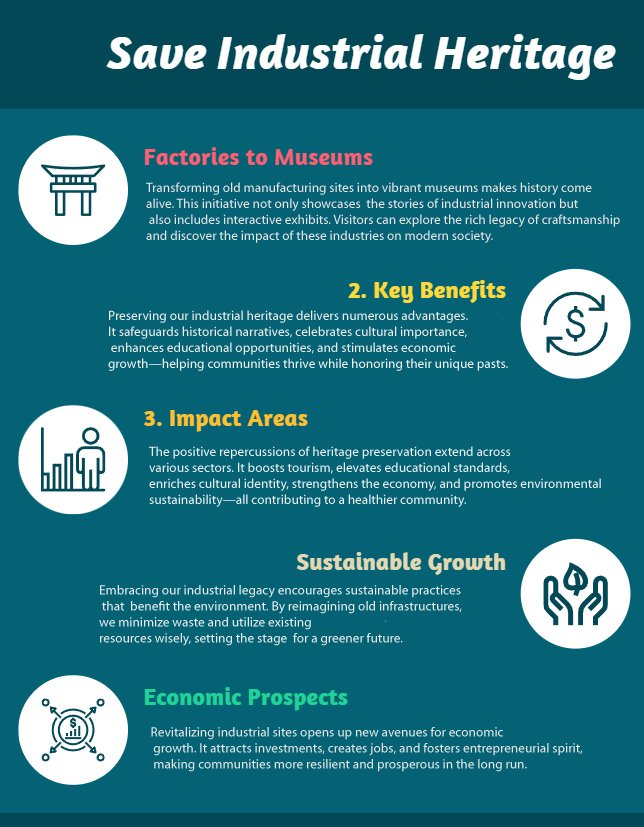
The preservation and repurposing of industrial heritage sites extend far beyond mere nostalgia or aesthetic appreciation. These efforts play a crucial role in maintaining our collective memory, fostering community identity, and contributing to sustainable urban development. Here are key reasons why preserving industrial heritage is of utmost importance:
1. Historical and Cultural Significance
- Tangible Links to the Past: Industrial sites provide physical evidence of technological, social, and economic developments that shaped our modern world.
- Labor History: These sites tell the stories of workers, their struggles, and the evolution of labor rights.
- Technological Innovation: Preserved industrial structures and machinery document the progression of technological advancements.
2. Educational Value
- Hands-on Learning: Repurposed industrial sites often serve as interactive museums, offering immersive educational experiences.
- STEM Education: These sites can inspire interest in science, technology, engineering, and mathematics by showcasing historical innovations.
- Social Studies: Industrial heritage sites provide context for understanding economic systems, urbanization, and globalization.
3. Architectural and Engineering Significance
- Unique Architectural Styles: Many industrial buildings represent distinctive architectural approaches, often blending function with aesthetic considerations.
- Engineering Marvels: Preserving industrial structures maintains examples of innovative engineering solutions.
- Inspiration for Modern Design: The raw, functional aesthetic of industrial architecture continues to influence contemporary design.
4. Environmental Considerations
- Land Reclamation: Repurposing industrial sites prevents them from becoming derelict and potentially hazardous.
- Sustainable Development: Adapting existing structures is often more environmentally friendly than demolition and new construction.
- Green Spaces: Some industrial sites, like the High Line in New York, have been transformed into urban green spaces, contributing to biodiversity and improving air quality.
5. Economic Revitalization
- Tourism: Well-preserved industrial heritage sites can become significant tourist attractions, bringing economic benefits to local communities.
- Job Creation: The process of preservation and ongoing management of these sites creates employment opportunities.
- Urban Regeneration: Successful industrial heritage projects often catalyze wider urban renewal and attract further investment.
6. Community Identity and Pride
- Local Distinctiveness: Industrial heritage sites often embody the unique character and history of a region.
- Collective Memory: Preserving these sites helps maintain connections between generations and fosters a sense of shared history.
- Social Cohesion: The process of preserving and repurposing industrial sites can bring communities together around a common cause.
7. Artistic and Creative Inspiration
- Unique Venues: Many industrial sites provide distinctive spaces for artistic performances, exhibitions, and creative endeavors.
- Artistic Subjects: The stark beauty of industrial landscapes has long been a source of inspiration for artists, photographers, and filmmakers.
8. Research Opportunities
- Industrial Archaeology: Preserved sites provide valuable data for researchers studying the development of industry and technology.
- Social History: These sites offer insights into past working conditions, social structures, and daily life in industrial communities.
Preserving industrial heritage is not about freezing the past in time, but rather about creating a dialogue between our industrial legacy and our current needs and aspirations. By safeguarding these sites, we not only honor the labor and innovation of past generations but also create spaces that can inspire, educate, and serve communities in new ways. As we face global challenges like climate change and rapid technological advancement, the lessons and inspirations drawn from our industrial heritage can provide valuable perspectives and solutions for the future.
Challenges and Opportunities in Industrial Heritage Preservation
While the preservation and repurposing of industrial heritage sites offer numerous benefits, the process is not without its challenges. However, each challenge often presents unique opportunities for innovation and community engagement. Let’s explore some of the key challenges and the opportunities they present:
1. Financial Constraints
Challenges:
- High costs of restoration and maintenance
- Limited public funding for preservation projects
- Ongoing operational costs
Opportunities:
- Public-private partnerships for funding
- Innovative fundraising techniques (e.g., crowdfunding)
- Development of sustainable business models for repurposed sites
2. Environmental Concerns
Challenges:
- Contamination and pollution from past industrial activities
- Need for extensive site remediation
- Compliance with current environmental regulations
Opportunities:
- Advancement in green remediation technologies
- Integration of sustainable practices in site redevelopment
- Educational programs on environmental restoration
3. Scale and Complexity
Challenges:
- Large size of many industrial sites
- Complex structures and outdated infrastructure
- Difficulty in finding appropriate new uses for specialized industrial spaces
Opportunities:
- Creative adaptive reuse strategies
- Phased development approaches
- Collaboration with architects and designers for innovative solutions
4. Legal and Regulatory Issues
Challenges:
- Navigating preservation laws and regulations
- Ownership disputes and property rights issues
- Zoning restrictions
Opportunities:
- Development of specialized legal expertise in industrial heritage
- Creation of new policy frameworks to facilitate preservation
- Collaboration between preservationists and urban planners
5. Public Perception
Challenges:
- Negative associations with industrial sites (e.g., pollution, job loss)
- Lack of public awareness about the value of industrial heritage
- Resistance to change in local communities
Opportunities:
- Public education and outreach programs
- Community engagement in preservation planning
- Storytelling and interpretation to highlight site significance
6. Technical Preservation Challenges
Challenges:
- Lack of documentation for historical industrial processes
- Scarcity of materials and skills for authentic restoration
- Balancing preservation with modern safety and accessibility standards
Opportunities:
- Development of specialized conservation techniques
- Training programs for traditional industrial crafts
- Use of digital technologies for documentation and interpretation
7. Balancing Preservation and Development
Challenges:
- Pressure for new development in urban areas
- Conflicting interests between preservationists and developers
- Adapting industrial sites to meet contemporary needs
Opportunities:
- Integrated approaches combining preservation and new development
- Creation of unique, character-rich spaces that attract residents and businesses
- Development of best practices for sensitive adaptive reuse
8. Long-term Sustainability
Challenges:
- Ensuring ongoing relevance and use of preserved sites
- Adapting to changing community needs over time
- Maintaining public interest and support
Opportunities:
- Development of flexible, multi-use spaces
- Integration of industrial heritage into broader urban planning strategies
- Creation of long-term community stewardship programs
9. Digital Preservation and Interpretation
Challenges:
- Keeping pace with rapidly evolving digital technologies
- High costs of implementing cutting-edge interpretive technologies
- Maintaining the authenticity of the industrial experience
Opportunities:
- Use of virtual and augmented reality for immersive experiences
- Digital documentation and archiving of industrial heritage
- Global sharing of industrial heritage through online platforms
By addressing these challenges creatively, the preservation of industrial heritage can lead to innovative solutions that benefit communities, enhance our understanding of history, and contribute to sustainable urban development. The process of overcoming these hurdles often results in unique projects that not only preserve our industrial past but also point the way toward our collective future.
Conclusion: The Future of Industrial Heritage
As we’ve explored the hidden gems of industrial heritage and their transformation from factories to museums, it’s clear that these sites represent far more than relics of a bygone era. They are vibrant testaments to human ingenuity, resilience, and adaptability.
The journey from smoke-belching factories to cultural landmarks has not been without its challenges. Financial constraints, environmental concerns, and the sheer scale of many industrial sites have posed significant hurdles. Yet, as we’ve seen through numerous examples worldwide, from the Tate Modern in London to the Zollverein Coal Mine Complex in Germany, these challenges have often sparked innovative solutions and collaborative efforts.
The preservation and repurposing of industrial heritage sites offer multifaceted benefits:
- They serve as tangible links to our industrial past, providing invaluable educational opportunities.
- They contribute to sustainable urban development by reimagining existing structures.
- They often act as catalysts for economic revitalization in post-industrial areas.
- They foster community pride and social cohesion by preserving local history and identity.
- They inspire creativity, providing unique spaces for artistic expression and cultural events.
Looking to the future, the field of industrial heritage preservation is likely to continue evolving. We can anticipate:
- Increased use of digital technologies for both preservation and interpretation, offering immersive experiences that bring industrial history to life.
- Greater integration of industrial heritage into urban planning and sustainable development strategies.
- More interdisciplinary approaches, combining expertise from fields such as archaeology, engineering, environmental science, and digital humanities.
- Growing recognition of the global nature of industrialization, leading to more international collaborations in preservation efforts.
As we face global challenges like climate change and rapid technological advancement, our industrial heritage takes on new significance. These sites not only tell the story of our past but also offer lessons for our future. They remind us of our capacity for innovation and adaptation, qualities that remain crucial as we navigate the complexities of the 21st century.
The transformation of industrial sites into museums, galleries, parks, and mixed-use developments represents a powerful form of recycling – not just of materials and spaces, but of ideas and inspiration. By preserving these hidden gems of industrial heritage, we honor the labor and ingenuity of past generations while creating spaces that can educate, inspire, and serve communities in new ways.
As we continue to uncover and reimagine these industrial treasures, we’re not just preserving history – we’re building bridges between our industrial past and our sustainable future. In doing so, we ensure that the story of human industry, with all its complexities and contradictions, remains a vital part of our ongoing cultural narrative.