




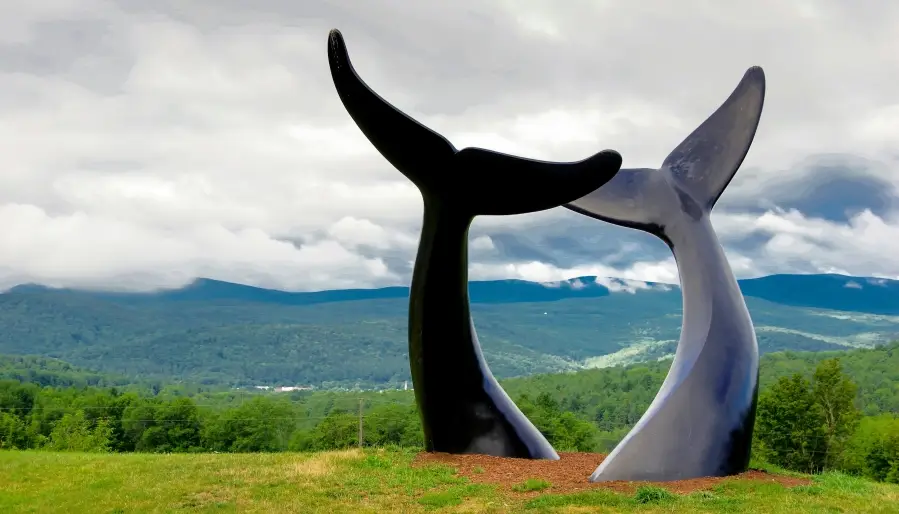
In the heart of Randolph, Vermont, far from any coastline, you’ll find an extraordinary sculpture known as Whale Dance. Created by the renowned artist Jim Sardonis, this monumental sculpture brings the ocean to the mountains. The bronze whale tails, rising gracefully from the earth as if breaching the surface of the sea, captivate visitors with their beauty and message. Symbolizing harmony between humans and nature, Whale Dance offers a thought-provoking experience. Whether you’re a fan of public art or simply love unique landmarks, this sculpture is a must-see when visiting central Vermont.
History of the Reverence sculpture
The story behind Whale Dance begins with Jim Sardonis, a Vermont-based sculptor known for his nature-inspired works. Sardonis first gained recognition for his 1989 sculpture, Reverence, which featured two whale tails rising from the ground in South Burlington, Vermont. These tails represented not only the beauty of the creatures but also served as a monument to the endangered species that inhabit our world.
After the success of Reverence, Sardonis decided to create another whale-themed sculpture in Randolph, Vermont. In 2019, Whale Dance was installed at the Gifford Medical Center as part of a larger project celebrating art and wellness. The sculpture consists of five bronze whale tails, arranged to appear as though the massive mammals are playfully dancing in the fields of Randolph. This installation was met with excitement by locals and visitors alike, quickly becoming a new iconic piece of public art in the state.
Sardonis’ passion for whales stems from his deep respect for nature and his concern for the environment. His works often reflect themes of conservation and coexistence with the natural world. Whale Dance, like many of Sardonis’ sculptures, invites viewers to pause and reflect on the beauty of the natural world and our responsibility to protect it.
Vermont may seem like an unusual place for a whale sculpture, but the idea behind Whale Dance is to bring attention to nature’s beauty, regardless of location. Sardonis chose whales as his subjects because they represent both majesty and vulnerability. Despite their massive size, whales are gentle creatures that face constant threats from human activities. The remote setting of Randolph makes the installation even more striking, reminding viewers of the interconnectedness of all living things, even in places where they may not naturally reside.
Reverence sculpture Details:
Whale Dance is a visually stunning piece, with five bronze whale tails gracefully emerging from the earth. Each tail varies slightly in size and curvature, suggesting the playful movements of whales as they dance in the ocean. The surface of the tails is finely textured, with intricate detailing that mimics the texture of real whale skin, from the barnacle marks to the subtle grooves of the tails’ flukes.
Standing at varying heights, the tails create a dynamic visual effect, inviting viewers to walk around the installation and appreciate it from different angles. The scale of the sculpture is impressive, with the tallest tail standing over 12 feet high. Sardonis designed the layout of the tails to evoke a sense of motion, as though the whales are moving in synchrony, celebrating the freedom of the open sea.
Key Features:
- Material:
The sculpture is made from bronze, a durable and weather-resistant material. This choice ensures that Whale Dance will endure the harsh Vermont winters while maintaining its majestic presence year-round. - Location and Setting:
Set against the rolling green hills of Randolph, the contrast between the marine-inspired sculpture and the pastoral Vermont landscape is striking. The open field where the sculpture is placed allows visitors to fully appreciate its scale and the serene beauty of the surrounding nature. - Environmental Message:
Whale Dance is more than just a visual spectacle—it carries a powerful environmental message. By placing these ocean giants in a rural setting, Sardonis encourages viewers to think about the human impact on marine life and the environment as a whole, bridging the gap between land and sea.
Getting There:
Whale Dance is located at the Gifford Medical Center in Randolph, Vermont, making it easily accessible for visitors traveling through the area. If you’re coming from Interstate 89, take Exit 4, then follow Route 66 into Randolph. The medical center is located just a short drive from the exit, and there is ample parking available for visitors. The sculpture is located outdoors, so you can visit it at any time of year, though summer and fall are particularly lovely times to take in the surrounding scenery.
For those traveling by public transportation, Randolph is served by Amtrak’s Vermonter line, which makes it a convenient stop for travelers exploring Vermont by train. From the Randolph train station, the medical center is just a quick taxi or ride-share trip away.
Final Thoughts:
Whale Dance is a one-of-a-kind sculpture that connects two vastly different worlds: the ocean and the mountains. Jim Sardonis’ ability to capture the beauty and grace of whales, even in a landlocked state like Vermont, is a testament to his artistic vision and environmental passion. Whether you’re a local or just passing through, visiting Whale Dance offers a moment of reflection on nature’s wonders, leaving a lasting impression long after you’ve left the Green Mountains.