

Hey there, history buffs and adventure seekers! Buckle up, because we’re about to dive into one of the most famous maritime rebellions of all time – the Mutiny on the Bounty. This isn’t just your average ship-gone-wrong story; it’s a tale of tyranny, tropical paradise, and what happens when you push people to their limits. So grab your sea legs, and let’s set sail!
- Setting the Scene: The HMS Bounty and Its Mission
- The Cast of Characters
- The Voyage Begins: Smooth Sailing… At First
- Tahiti: Paradise Found (and Lost)
- Tension Builds: The Road to Mutiny
- The Mutiny: When It All Hits the Fan
- Bligh’s Incredible Journey
- The Mutineers: Life on the Run
- The Aftermath: Justice, Hollywood, and Lasting Legacy
- Why It Still Matters Today
- In Conclusion: A Story That Keeps on Sailing
- Quotes
- Fascinating Facts
Setting the Scene: The HMS Bounty and Its Mission
Picture this: It’s 1787, and the British Royal Navy is itching to get its hands on some breadfruit plants. Why? Well, they thought these starchy fruits would make cheap food for enslaved people on Caribbean plantations. (Yeah, not the noblest mission, but stick with us – it gets more interesting!)
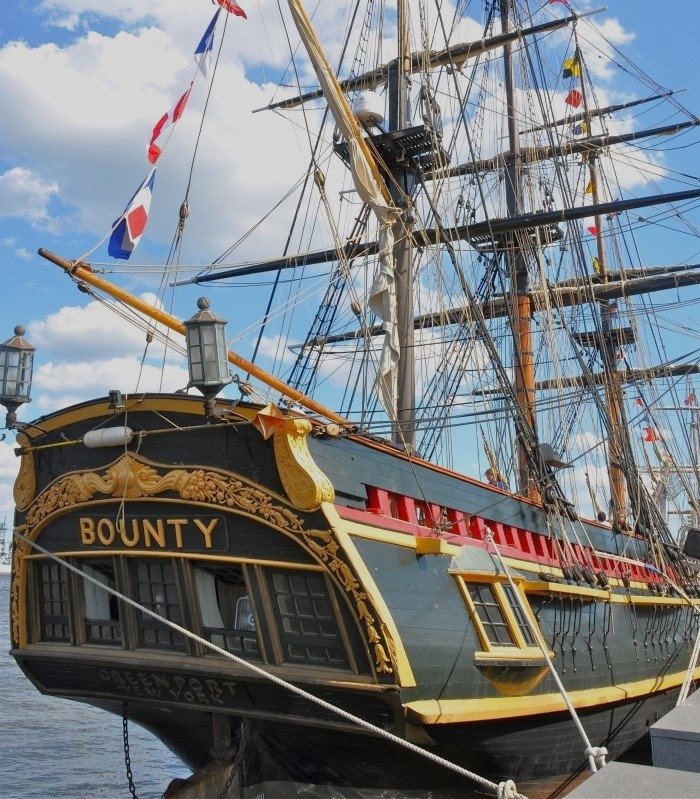
Enter the HMS Bounty, a small merchant vessel refitted for a special mission. Its goal? Sail halfway around the world to Tahiti, pick up a bunch of breadfruit saplings, and cart them off to the West Indies. Simple enough, right? Well, not quite.
The Cast of Characters
Before we dive into the juicy details, let’s meet our main players:
- Lieutenant William Bligh: The captain of the Bounty. Smart guy, excellent navigator, but with people skills that left a lot to be desired.
- Fletcher Christian: The charming master’s mate who would lead the mutiny. Think of him as the Brad Pitt of the 18th century (and yes, he’s been played by actual movie stars in films).
- The Crew: A mix of seasoned sailors and greenhorns, all about to embark on the adventure (or nightmare) of a lifetime.
The Voyage Begins: Smooth Sailing… At First
In December 1787, the Bounty set sail from England with a crew of 46 men. The first part of the journey was your typical sea voyage – long, a bit boring, and probably smelly (hey, it was the 18th century, folks).
After a failed attempt to round Cape Horn (those pesky storms!), Bligh decided to take the long way around, sailing east past Africa and across the Indian Ocean. Finally, in October 1788, they reached Tahiti. And that’s when things got interesting.
Tahiti: Paradise Found (and Lost)
Imagine you’re a sailor who’s been stuck on a cramped ship for months. Suddenly, you’re in Tahiti – a tropical paradise with beautiful beaches, friendly people, and a much more relaxed way of life. For the crew of the Bounty, it was like spring break, 18th-century style.
They spent five months in Tahiti, collecting breadfruit plants and, well, enjoying the local hospitality. Many of the crew, including our boy Fletcher Christian, formed relationships with Tahitian women. Life was good.
But all good things must come to an end. In April 1789, it was time to say goodbye to paradise and get back to the mission. And that’s when the trouble really started.
Tension Builds: The Road to Mutiny
Now, remember Captain Bligh? The guy with the not-so-great people skills? Well, he didn’t exactly make the transition back to ship life easy. Here’s what went down:
- Bligh started enforcing strict discipline, which felt extra harsh after months of island living.
- He accused crew members of stealing (which, to be fair, some probably did).
- He cut rations and handed out harsh punishments for minor offenses.
Meanwhile, Fletcher Christian was having a rough time. He’d fallen hard for his Tahitian girlfriend and was struggling with the idea of leaving her behind. Plus, he was getting the brunt of Bligh’s bad moods.
The Mutiny: When It All Hits the Fan
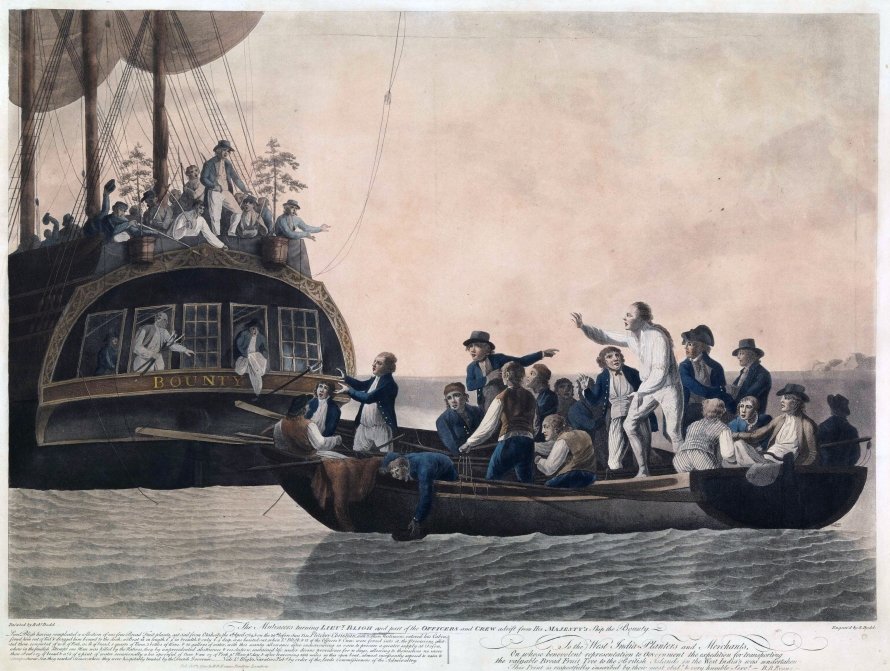
On April 28, 1789, just three weeks after leaving Tahiti, everything came to a head. In the early morning hours, Fletcher Christian and a group of supporters seized control of the ship. They woke up Bligh, tied him up, and basically said, “That’s it, we’ve had enough!”
Now, here’s where it gets wild. Instead of, you know, killing Bligh (which was kind of the norm for mutinies back then), they decided to set him adrift in the ship’s launch – a small boat – along with 18 loyal crew members.
Picture this: Bligh and his loyalists, crammed into a 23-foot open boat in the middle of the Pacific, with limited supplies and no charts. It seemed like a death sentence. But spoiler alert: Bligh was one tough cookie.
Bligh’s Incredible Journey
While the mutineers sailed off with the Bounty, Bligh and his team embarked on one of the most remarkable survival voyages in maritime history. Here’s the short version:
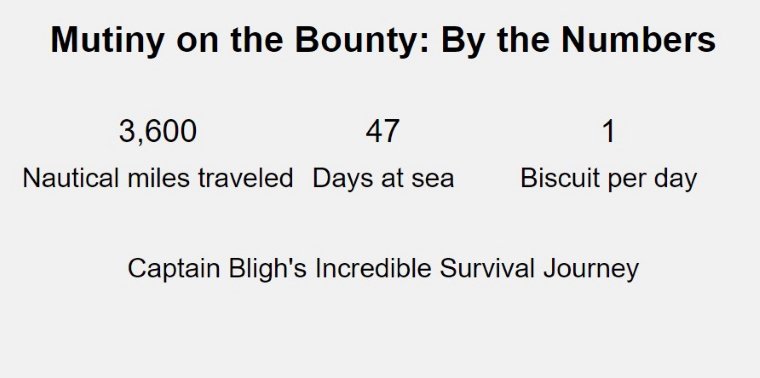
- They traveled over 3,600 nautical miles in 47 days.
- They battled storms, starvation, and hostile islanders.
- They had to carefully ration their meager supplies, surviving on the equivalent of a single biscuit and a sip of water per day.
Against all odds, Bligh managed to navigate them to safety in Timor, losing only one man along the way (and that was to an attack by hostile islanders, not the journey itself). It’s like “Cast Away,” but with 18 Tom Hanks and no volleyball.
The Mutineers: Life on the Run
Meanwhile, what about Fletcher Christian and his merry band of mutineers? Well, they weren’t exactly living it up:
- They tried to settle on the island of Tubuai, but that didn’t work out (turns out, the locals weren’t thrilled about a bunch of mutineers moving in).
- They headed back to Tahiti, where some of the crew decided to stay (spoiler: bad move, guys).
- Christian and eight other mutineers, along with six Tahitian men, eleven women, and a baby, set sail to find a safe haven.
After months of searching, they stumbled upon Pitcairn Island – a tiny, isolated spot that wasn’t even correctly charted. Perfect for hiding out!
The Aftermath: Justice, Hollywood, and Lasting Legacy
The story doesn’t end there, folks. Here’s the quick rundown of what happened next:
- The mutineers who stayed in Tahiti? Yeah, they got caught when the Royal Navy came looking. Some were tried and hanged, others were acquitted.
- Bligh made it back to England and was initially hailed as a hero for his incredible survival journey. But as news of the mutiny spread, his reputation took a hit.
- The Pitcairn settlers weren’t discovered until 1808. By then, only one mutineer, John Adams, was still alive, along with several women and children.
The Mutiny on the Bounty has captured imaginations for centuries. It’s been the subject of books, movies, and endless debates. Was Bligh really a tyrant? Was Christian justified? It’s the kind of story that makes you wonder: what would you have done?
Why It Still Matters Today
So why should we care about a bunch of sailors who had a beef with their boss over 200 years ago? Well, the Mutiny on the Bounty touches on themes that are still relevant today:
- Leadership and Power: It raises questions about the use and abuse of authority. When is it okay to stand up to a leader you believe is unjust?
- Cultural Clash: The story highlights the contrast between European naval discipline and the more relaxed Polynesian way of life. It’s a reminder of how cultural differences can lead to conflict.
- The Lure of Paradise: The idea of leaving behind the constraints of “civilized” society for a simpler life is still appealing to many people today. Just look at how many “escape to the islands” fantasies are out there!
- Human Resilience: Both Bligh’s incredible survival journey and the mutineers’ quest for a safe haven showcase the amazing things people can do when pushed to their limits.
- The Complexity of Human Nature: There are no clear-cut heroes or villains in this story. It reminds us that people are complicated, and often act in ways that aren’t easily categorized as good or bad.
In Conclusion: A Story That Keeps on Sailing
The Mutiny on the Bounty isn’t just a dusty old tale from history books. It’s a story that continues to fascinate us because it’s about things we still grapple with: justice, freedom, survival, and the search for paradise.
So the next time you’re having a bad day at work or dreaming of escaping to a tropical island, remember the Bounty. Maybe your boss isn’t so bad after all – at least they’re not making you sail across the Pacific on hardtack and a sip of water a day!
And who knows? Maybe someday you’ll find yourself on a beach in Tahiti or hiking the cliffs of Pitcairn Island. If you do, take a moment to think about the incredible events that unfolded there over two centuries ago. Just try not to start any mutinies of your own, okay?
Interesting Quotes and Facts: Mutiny on the Bounty
Quotes
- “Think of him as the Brad Pitt of the 18th century” – About Fletcher Christian
- “It’s like ‘Cast Away,’ but with 18 Tom Hanks and no volleyball” – Describing Bligh’s survival journey
- “For the crew of the Bounty, it was like spring break, 18th-century style” – On their time in Tahiti
- “That’s it, we’ve had enough!” – Imagined declaration of the mutineers
- “The next time you’re having a bad day at work or dreaming of escaping to a tropical island, remember the Bounty”
Fascinating Facts
- The Bounty’s original mission was to collect breadfruit plants to feed enslaved people in the Caribbean.
- Captain Bligh and 18 loyal crew members survived a 3,600 nautical mile journey in a small open boat after the mutiny.
- The mutineers tried to settle on multiple islands before finding Pitcairn Island, which wasn’t correctly charted at the time.
- Bligh’s group survived on the equivalent of a single biscuit and a sip of water per day during their 47-day journey.
- When Pitcairn Island was discovered in 1808, only one mutineer, John Adams, was still alive.
- The entire journey of the Bounty, from England to Tahiti and back, was supposed to take about 2 years.
- Fletcher Christian and other mutineers formed relationships with Tahitian women, which contributed to their reluctance to leave.
- The Mutiny on the Bounty has been the subject of numerous books and Hollywood films over the years.
- Bligh was initially hailed as a hero for his survival journey before his reputation was tarnished by accounts of the mutiny.
- The descendants of the mutineers still live on Pitcairn Island today, with a population of only about 50 people.