




Situated in the heart of the Oaxaca Valley lies Mitla, a mesmerizing archaeological site that whispers tales of the ancient Zapotec and Mixtec civilizations. Known for its unique geometric stonework and spiritual significance, Mitla isn’t just a collection of ruins—it’s a living testament to pre-Hispanic architecture and culture. Whether you’re a history buff, an archaeology enthusiast, or simply seeking inspiration, Mitla offers a glimpse into the artistry and mysticism of Mexico’s past.
Get ready to journey through sacred halls and intricate mosaics that speak of life, death, and everything in between.
Mitla, whose name derives from the Nahuatl word Mictlán meaning “place of the dead,” was a ceremonial center deeply tied to Zapotec beliefs about the afterlife. While Monte Albán served as the political heart of the Zapotec civilization, Mitla became its spiritual hub, hosting elaborate rituals and serving as a gateway between the mortal world and the divine.
The site reached its zenith between the 8th and 10th centuries, though its origins date back as far as 500 CE. After the Mixtec took over in the late Classic Period, they incorporated their own cultural elements, making Mitla a blend of Zapotec and Mixtec influences. The arrival of Spanish conquistadors in the 16th century saw the construction of churches atop ancient temples, but the site’s mystical allure endures to this day.
Mitla: Description, Location, and Features
Mitla is located about 44 kilometers southeast of Oaxaca City, easily accessible by road. The site spans five distinct groups of structures:
- The Church Group: Featuring the San Pablo Church, this area highlights the blending of indigenous and Spanish cultures.
- The Columns Group: Known for its Hall of Columns, this area showcases beautifully carved monolithic columns supporting massive stone lintels.
- The Adobe Group: Smaller but significant, this area offers a glimpse into residential life in ancient Mitla.
- The South Group: Features a sunken patio and remnants of intricate mosaic work.
- The Arroyo Group: Perched on a hill, it offers stunning views of the surrounding valley.
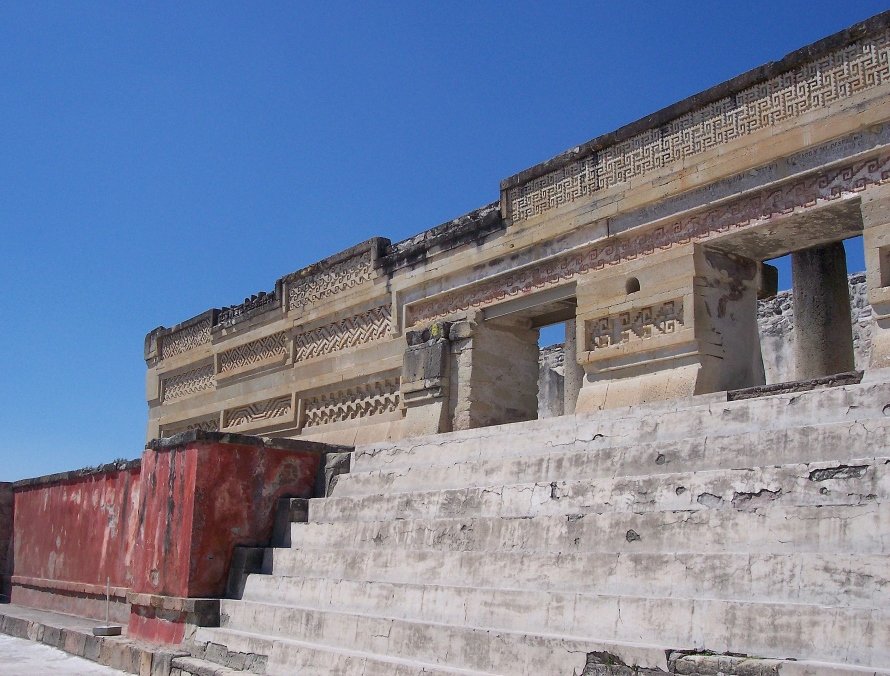
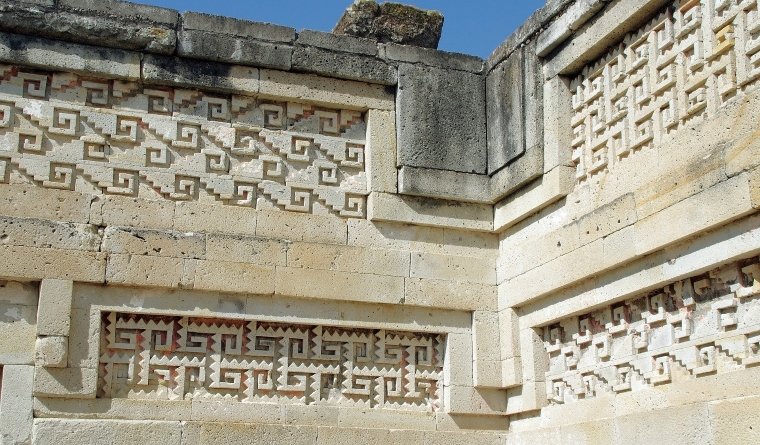
Mitla’s hallmark is its geometric mosaics, created with thousands of polished stones assembled without mortar. These designs, unique to Mitla, symbolize eternity, the cosmos, and the Zapotec view of the afterlife.
In Operation
Mitla wasn’t just a ceremonial site—it was a fully functioning urban center with residences, tombs, and plazas. The Hall of Columns likely served as an administrative hub, while the richly decorated tombs housed the remains of priests and rulers. Rituals performed here were steeped in spirituality, focusing on life’s transition to the afterlife.
The Spanish conquest altered the landscape significantly, with churches built directly atop sacred Zapotec structures to assert dominance. Despite this, Mitla remains a sacred place for modern Zapotec communities.
Myths / In Popular Culture
According to legend, Mitla was the entrance to the underworld, where souls embarked on their journey to eternity. The site’s geometric patterns are said to represent the threads of life’s labyrinthine nature, a belief still resonant among local communities.
Mitla has appeared in various cultural works, from Mexican literature to documentaries, as a symbol of indigenous resilience and artistry.
Travel Tips and Practical Information
- Hours: Open daily from 8:00 AM to 5:00 PM.
- Entry Fee: Around 85 MXN (subject to change).
- Guides: Hiring a local guide is highly recommended to understand the site’s rich history and symbolism.
- Best Time to Visit: October to April for cooler, dry weather.
Nearby Points of Interest & Landmarks
- Hierve el Agua: A natural wonder with petrified waterfalls and mineral-rich pools, just a short drive away.
- Teotitlán del Valle: Famous for its traditional Zapotec weaving and vibrant textiles.
- Monte Albán: The political and cultural hub of the Zapotec civilization.
- Tlacolula Market: A bustling weekly market offering local crafts, food, and textiles.
Recap
Mitla is more than an archaeological site—it’s a portal to a world of ancient beliefs, stunning craftsmanship, and enduring cultural pride. From its intricate mosaics to its mythical significance, Mitla offers visitors a profound connection to the rich heritage of Oaxaca. Whether you’re exploring its sacred tombs or marveling at its artistry, Mitla promises an unforgettable journey through time. / photo credit.
[put_wpgm id=275]