
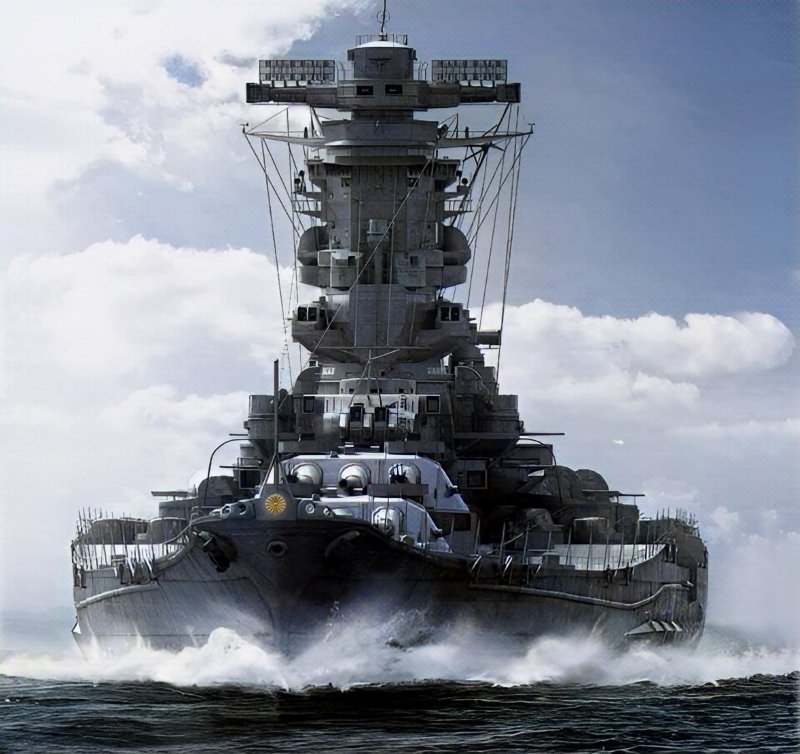

Ah, the Yamato—a name that conjures visions of sheer naval power and ingenuity. This Japanese battleship was not just a ship; it was a statement. Designed to dominate the seas during World War II, the Yamato was the pride of the Imperial Japanese Navy and the largest battleship ever built. But its story is more than just steel and firepower; it’s a tale of ambition, innovation, and, ultimately, sacrifice.
- The Birth of a Giant: Yamato’s History
- Design and Development: Building a Monster
- Specifications: The Numbers That’ll Blow Your Mind
- Armament: Bringing the Big Guns (Literally)
- Crew: Life Aboard the Giant
- Service History: A Giant’s Short Life
- Interesting Facts, Key Points, and Legends
- Modern Reconstructions
- Legacy: More Than Just a Battleship
- Wrapping It Up
Let’s set sail on a journey through the Yamato’s storied history, exploring its design, firepower, and legacy. By the end, you’ll understand why this ship remains an icon even decades after its demise.
The Birth of a Giant: Yamato’s History
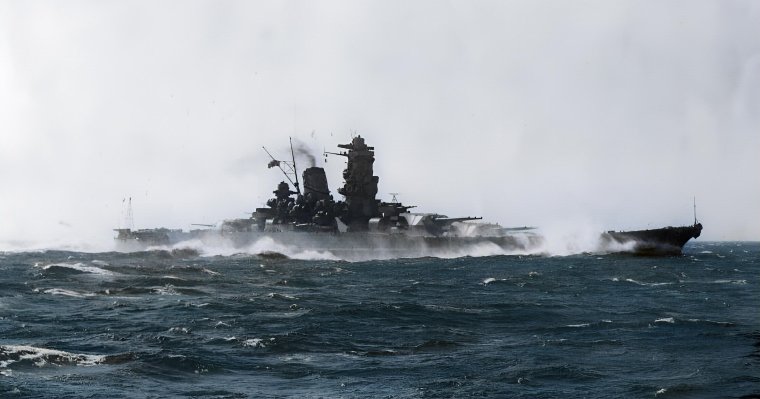
The story of the Yamato begins in the 1930s, when Japan was flexing its military muscles and dreaming big about naval dominance. Japan knew it couldn’t match the U.S. Navy in numbers, so they went for something different – quality over quantity. Their answer? Build something so massive and powerful that it would make other battleships look like toy boats.
The Japanese navy kept the whole project super secret. They built special docks hidden from prying eyes and even used coded language – workers couldn’t say “battleship” or mention the ship’s true size. Instead, they called it a “special ship” or “hull number 111.” The security was so tight that even most Japanese officials didn’t know the true specs of the ship until after the war!
Construction started in 1937 at the Kure Naval Arsenal, with workers laboring around the clock. The total cost? A whopping 250 million yen – enough to build several smaller warships. When the Yamato finally launched in 1941, it was such a secret that they did it at night, with minimal ceremony. Talk about keeping things under wraps!
The ship represented everything Japan hoped to achieve – technological superiority, national pride, and the ability to stand toe-to-toe with Western powers. But here’s the ironic part: by the time the Yamato was ready for action, naval warfare had already started shifting away from battleships toward aircraft carriers.
Design and Development: Building a Monster
Creating the Yamato wasn’t just about making everything bigger – it was an exercise in pushing engineering to its absolute limits. The designers had to solve problems nobody had faced before, like how to build turrets that could handle the massive 18.1-inch guns or how to make a hull strong enough to support all that weight.
The Japanese engineers came up with some pretty clever solutions. They developed new types of armor plating and even created special dock facilities just to handle the ship’s massive size. The design process was so thorough that they tested over 50 different hull designs before settling on the final version.
Some of the engineering innovations included:
- A unique torpedo defense system with multiple layers of armor and void spaces
- Special pumping systems that could counterflood compartments to maintain stability after damage
- Advanced fire control computers that could track multiple targets
- A revolutionary turret design that could handle the massive recoil of the main guns
The Japanese actually built a full-scale model of one main turret on land to test the loading mechanisms. This test turret still existed after the war and provided Allied engineers with valuable information about the ship’s capabilities.
Specifications: The Numbers That’ll Blow Your Mind
Let’s talk stats that’ll make your jaw drop:
- Length: 863 feet (longer than three football fields!)
- Beam (width): 127 feet
- Draft: 36 feet
- Displacement: 72,800 tons fully loaded
- Speed: 27 knots (about 31 mph)
- Range: 7,200 nautical miles
-
Let’s compare the Yamato to other famous battleships:
USS Iowa:
- Length: 887 feet (slightly longer)
- Displacement: 45,000 tons (much lighter)
- Main guns: 16-inch (smaller)
Bismarck:
- Length: 823 feet (shorter)
- Displacement: 50,300 tons (much lighter)
- Main guns: 15-inch (smaller)
The Yamato’s armor was equally impressive:
- Main belt: 16 inches thick
- Turret faces: 26 inches thick (thickest ever mounted on a ship)
- Deck armor: up to 9 inches thick
- Total armor weight: over 22,000 tons (more than the total weight of most destroyers!)
Armament: Bringing the Big Guns (Literally)
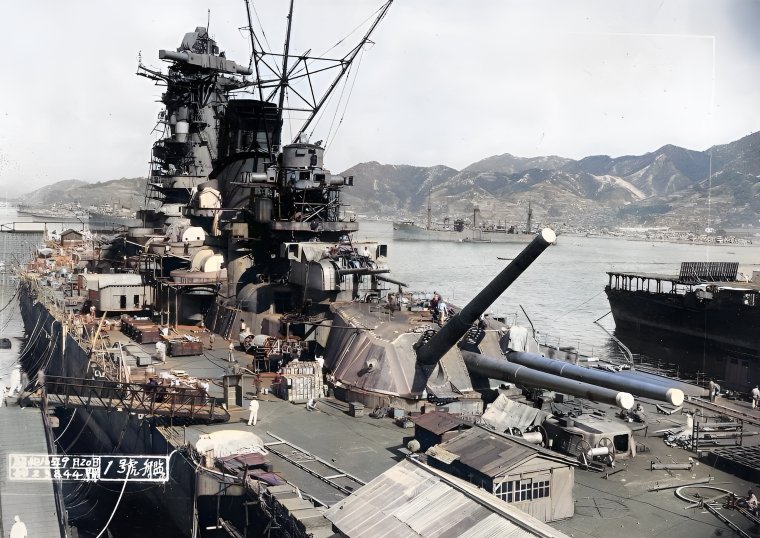
The Yamato’s main guns were absolute monsters. We’re talking about:
- Nine 18.1-inch guns (the biggest ever mounted on a battleship)
- Twelve 6.1-inch guns
- Twelve 5-inch dual-purpose guns
- Multiple anti-aircraft guns
Those main guns could fire shells weighing 3,200 pounds each up to 26 miles away! To put that in perspective, each shell weighed about as much as a small car. When these guns fired, the blast was so powerful it could knock sailors off their feet if they weren’t prepared.
The main gun stats are mind-boggling:
- Each gun barrel was 69 feet long
- Rate of fire: 2 rounds per minute
- Each turret weighed 2,774 tons
- Total weight of a full broadside: 28,800 pounds
- Shell penetration: Could pierce 26 inches of steel at 20,000 yards
The secondary armament was impressive too:
- The 6.1-inch guns could fire 5-6 rounds per minute
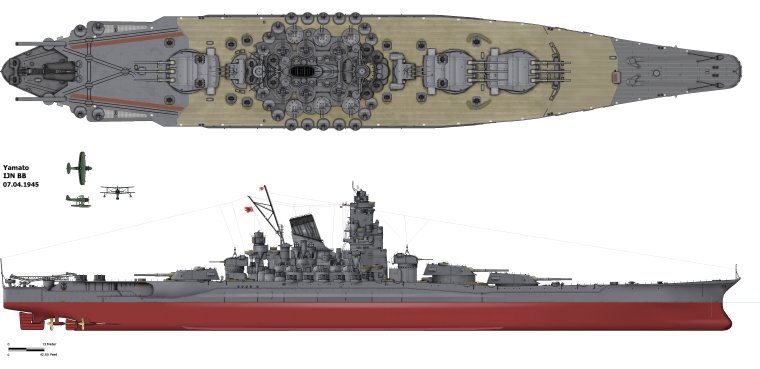
- Anti-aircraft suite included 162 25mm guns by 1945
- Two aircraft catapults for launching reconnaissance planes
Crew: Life Aboard the Giant
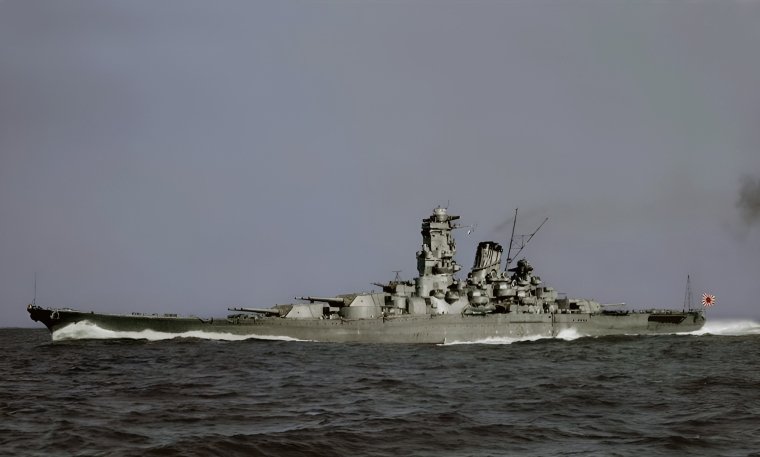
Running this floating city required a small army – 2,500 sailors and officers to be exact. Life aboard the Yamato was different from other ships. The massive size meant more space for crew amenities, including:
- A real bakery making fresh bread daily
- Multiple bathing facilities
- A dental clinic
- Even a small cinema!
But it wasn’t all luxury. The crew had to deal with constant training, tight quarters (despite the ship’s size), and the psychological pressure of serving on Japan’s most important warship.
The crew hierarchy was complex, with distinct divisions:
- Navigation Division
- Engineering Division
- Gunnery Division
- Supply Division
- Medical Division
- Aviation Division
Daily life followed a strict routine:
- 0500: Wake-up call
- 0600: Breakfast
- 0700-1200: Morning watch and drills
- 1200: Lunch
- 1300-1700: Afternoon watch and maintenance
- 1800: Dinner
- 2200: Lights out
Special features included:
- A traditional Japanese bath (unusual for warships)
- A ceremonial samurai sword kept on the bridge
- A special emperor’s quarters (though never used)
- Multiple galleys cooking different types of food
Service History: A Giant’s Short Life
Despite its impressive specs, the Yamato’s combat career was surprisingly limited. The Japanese navy was so protective of their super battleship that they rarely risked it in major battles. The ship spent most of its early war years moving between bases, training, and acting as a fleet flagship.
Its first real action came during the Battle of the Philippine Sea in 1944, but it never got close enough to fire its main guns at enemy ships. The Yamato’s final mission in April 1945 was essentially a suicide run – Operation Ten-Go – where it was sent to defend Okinawa with barely enough fuel for a one-way trip. American aircraft swarmed the mighty ship, sending it to the bottom of the East China Sea.
Key engagements:
Battle of the Philippine Sea (June 1944):
- First major operation
- Never fired main guns
- Served as Admiral Toyoda’s flagship
- Survived multiple air attacks
Battle of Leyte Gulf (October 1944):
- Part of Admiral Kurita’s Center Force
- Fired main guns at enemy ships for the first time
- Sank the USS Gambier Bay
- Survived multiple torpedo attacks
Operation Ten-Go (April 1945):
- Final suicide mission to Okinawa
- Carried only enough fuel for a one-way trip
- Attacked by 386 U.S. aircraft
- Hit by at least 11 torpedoes and 6 bombs
- Took over two hours to sink
- 3,055 crew members lost their lives
Interesting Facts, Key Points, and Legends
Here are some wild facts that’ll make you the hit of any history buff gathering:
- The Yamato used special wood for its deck – the same type used in Shinto temples
- Its armor was so thick in places (up to 26 inches!) that modern scientists study pieces to understand how it was made
- Some crew members survived by swimming through oil fires on the surface after the sinking
- The ship was so big it created its own wake pattern visible from miles away
-
Lesser-known facts:
- The ship had its own wind tunnel for testing shell ballistics
- Carried special “beehive” shells filled with anti-aircraft ammunition
- Had a special “flood room” where crew practiced damage control
- Used special steel alloys that are still studied today
- Had an ice cream machine (rare for Japanese warships)
- Carried special ceremonial sake for victory celebrations
- Had a complete darkroom for developing reconnaissance photos
Common myths debunked:
- The Yamato wasn’t invulnerable (though incredibly tough)
- It could be detected by radar (despite claims of special paint)
- Its guns couldn’t shoot down aircraft (though this was attempted)
- The ship wasn’t painted black (it was dark grey)
Modern Reconstructions
Today, you can see amazing recreations of the Yamato:
- A 1:10 scale model at the Yamato Museum in Kure, Japan
- Multiple highly detailed plastic model kits
- Digital reconstructions in video games and simulations
- The ship features prominently in anime and manga, especially “Space Battleship Yamato”
-
Recent developments:
- Advanced sonar mapping of the wreck in 2016
- VR reconstructions allowing virtual tours
- Multiple documentary investigations
- New scale models with working features
- Full-size replicas of portions of the ship
- Interactive museum exhibits worldwide
Major museum displays:
- Yamato Museum (Kure, Japan)
- Multiple items at the U.S. Naval Academy
- Artifacts in the Tokyo National Museum
- Preserved pieces in various maritime museums
Legacy: More Than Just a Battleship
The Yamato has become much more than just a warship in Japanese culture. It represents both the height of Japanese technical achievement and the futility of war. The ship appears in countless books, movies, games, and anime, often symbolizing different aspects of Japan’s wartime experience and post-war identity.
The Yamato’s influence extends far beyond military history:
In Literature:
- Featured in countless novels
- Subject of numerous historical works
- Inspiration for poetry and plays
- Central to many military analyses
In Popular Culture:
- Star Blazers/Space Battleship Yamato franchise
- Multiple video games
- Subject of documentaries
- Featured in many anime and manga series
Symbolic Meaning:
- Represents Japan’s technological achievement
- Symbol of sacrifice and dedication
- Metaphor for the costs of war
- Icon of Japanese engineering prowess
Modern Relevance:
- Study of construction techniques
- Research into materials science
- Influence on naval architecture
- Impact on military doctrine development
Wrapping It Up
The Yamato’s story is one of contrasts – a technological marvel that came too late to make a difference, a symbol of national pride that met an inglorious end, and a warship that found greater fame in peace than it ever did in war. While it may not have changed the course of World War II, it certainly left an indelible mark on naval history and popular culture.
Today, the Yamato rests nearly 1,200 feet below the surface of the East China Sea, a silent monument to both human engineering achievement and the futility of war. Its legacy lives on, not as a weapon of war, but as a reminder of human ingenuity and the importance of peace.