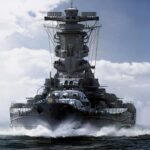





German battleship Bismarck ,a ship so powerful, so fearsome, that its very name strikes a chord in maritime history. — a battleship whose legacy still echoes across naval lore. Whether you’re a history buff or just a curious reader, get ready to dive into the fascinating story of the Bismarck: its rise, fall, and the indelible mark it left on the world.
- From Drawing Board to Deadly Reality: The Birth of Bismarck
- Design and Development: Engineering Excellence
- Specifications: The Numbers That Made It Legendary
- Armament: Bringing the Thunder
- Life Aboard: The Crew Experience
- Service History: Nine Days That Shook The World
- Fascinating Facts and Persistent Myths
- Modern Reconstructions and Digital Life
- The Wreck: Silent Witness on the Ocean Floor
- Legacy: More Than Just a Battleship
- Wrapping It Up
From Drawing Board to Deadly Reality: The Birth of Bismarck
The story of the Bismarck begins in the aftermath of World War I, when Germany was desperately trying to rebuild its naval power. Despite the restrictions of the Treaty of Versailles, German engineers secretly planned something huge – literally! They wanted to create the most powerful battleship ever seen in European waters.
Named after the famous German chancellor Otto von Bismarck, the ship was laid down in 1936 at the Blohm & Voss shipyard in Hamburg. Picture this: thousands of workers, sparks flying, and massive steel plates coming together to form what would become Nazi Germany’s pride and joy. The construction was done in total secrecy, with Germany basically telling the rest of Europe, “Nothing to see here, folks!”
When Bismarck was launched in 1939, with Hitler’s mistress Eva Braun doing the honors of christening the ship, it was clear that Germany had created something special. The launch itself was a massive propaganda event, showing the world that Germany was back as a naval power. Even British intelligence was shocked when they realized just how massive and advanced this new battleship was.
The Bismarck represented everything the Nazi regime wanted to project: strength, technological superiority, and the ability to challenge British naval dominance. It was designed to be not just a warship, but a symbol of German military might. The ship’s very existence violated international treaties, but by 1939, Hitler wasn’t exactly concerned about playing by the rules.
During its sea trials in 1940, Bismarck proved to be even better than expected. It was faster, more stable, and more accurate with its guns than anyone had anticipated. The German naval command was ecstatic – they finally had their super-weapon to challenge British control of the Atlantic shipping lanes.

Design and Development: Engineering Excellence
The Bismarck wasn’t just big – it was smart. The German engineers who designed it incorporated several innovative features that made it one of the most advanced battleships of its time:
The hull was divided into 22 watertight compartments and had a double bottom that ran for 83% of the length of the ship. Think of it as having multiple backup plans if something went wrong – if one section was damaged, the others could keep the ship afloat.
The armor protection was incredibly sophisticated. The main armor belt was 320mm thick in the most critical areas, angled to deflect incoming shells better. The deck armor was designed to withstand plunging fire from long range – basically, it had a really tough roof!
Specifications: The Numbers That Made It Legendary
Let’s talk about just how massive this beast was:
- Length: 251 meters (823 feet) – about as long as three football fields!
- Displacement: 50,300 tons fully loaded
- Speed: 30 knots (about 35 mph) – incredibly fast for such a huge ship
- Range: 8,870 nautical miles at 19 knots
Armament: Bringing the Thunder
The Bismarck packed some serious firepower:
- Eight 15-inch main guns in four twin turrets
- Twelve 5.9-inch secondary guns
- Sixteen 4.1-inch anti-aircraft guns
- Dozens of smaller anti-aircraft weapons
The main guns could fire shells weighing as much as a small car over 21 miles away! Each turret weighed as much as a destroyer, and the guns could fire every 18 seconds – pretty impressive for 1941!
Life Aboard: The Crew Experience
The Bismarck’s crew consisted of 2,065 officers and enlisted men. Life aboard was surprisingly comfortable by World War II standards:
- The ship had a bakery that made fresh bread daily
- There were modern amenities like washing machines
- The crew had access to a small pool for exercise
- The officers had their own mess with a piano

Service History: Nine Days That Shook The World
The Bismarck’s active service was incredibly brief but intense. Operation Rheinübung, its only combat mission, began on May 18, 1941. Within days, it had sunk the pride of the British fleet, HMS Hood, killing all but three of its 1,419 crew members.
This success was short-lived. The British, enraged by the Hood’s destruction, launched what Churchill called “the greatest British naval pursuit of the war.” Practically every available British warship joined the hunt for the Bismarck.
Fascinating Facts and Persistent Myths
Did you know?
- The Bismarck never actually served alongside its sister ship Tirpitz in combat
- The ship’s end was partially caused by a lucky torpedo hit that jammed its rudder
- Some crew members claimed the ship was cursed after a filming accident during its launch
- The Bismarck’s paint scheme was changed multiple times during its brief career
Modern Reconstructions and Digital Life
The Bismarck lives on in various forms:
- Detailed computer simulations help researchers understand its final battle
- Several museums feature large-scale models
- Video games like World of Warships let players command a virtual Bismarck
- Multiple documentaries have used CGI to recreate key moments in its history

The Wreck: Silent Witness on the Ocean Floor
In 1989, Robert Ballard (the same guy who found the Titanic) discovered the Bismarck’s wreck. Lying 15,719 feet below the surface, it’s remarkably well-preserved, though broke in half during its descent to the bottom.
Recent studies of the wreck have sparked controversy:
- Some historians argue the ship was scuttled rather than sunk
- The wreck shows evidence of both battle damage and intentional scuttling
- Marine life has made the wreck its home, creating an artificial reef
Legacy: More Than Just a Battleship
The Bismarck’s legacy extends far beyond its brief service:
- It changed naval warfare tactics
- Inspired countless books, movies, and songs
- Demonstrated the vulnerability of even the mightiest warships
- Became a symbol of both German engineering excellence and the futility of war
Wrapping It Up
The Bismarck’s story is more than just a tale of a powerful warship – it’s a story of human ambition, technological achievement, and the high cost of war. While it sailed for only nine days, its impact on naval history and popular culture continues to resonate decades later.
From its secret construction to its discovery on the ocean floor, the Bismarck remains one of the most fascinating vessels ever built. It reminds us that even the mightiest machines are vulnerable, and that the true cost of war can never be measured solely in steel and firepower.