




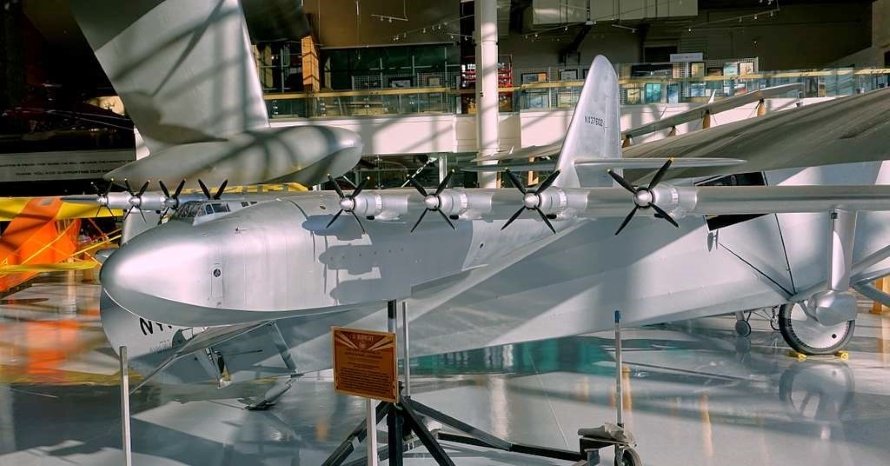
The Hughes H-4 Hercules, commonly (and famously) known as the “Spruce Goose,” is one of the most iconic aircraft ever built. A product of ambitious engineering, intense patriotism, and a touch of eccentricity, this seaplane has captured imaginations for decades. Built in the 1940s during WWII, the H-4 was designed by eccentric billionaire Howard Hughes to be the largest flying boat ever made, with a singular purpose: to carry troops and supplies over the Atlantic without facing threats from enemy submarines.
- The Backstory: Why Build Such a Giant?
- Size and Scale: The World’s Largest Flying Boat
- Why “Spruce” Goose?
- The Engineering Marvel: What Made It So Special?
- The Only Flight: A Test in 1947
- Cost and Controversy: Was It Worth It?
- Legacy and Where to Find the H-4 Hercules Today
- Why Is the Spruce Goose Still Relevant?
- Fun Facts and Myths
- Conclusion: The Lasting Appeal of the Spruce Goose
Let’s dive into the details of this incredible plane, why it was built, its unique features, and why it has remained such a legendary piece of aviation history.
The Backstory: Why Build Such a Giant?
During WWII, German submarines made shipping across the Atlantic perilous, sinking countless supply ships and threatening Allied war efforts. The United States needed a way to transport troops and essential supplies without risking them to these attacks. Enter Howard Hughes and Henry Kaiser, an ambitious industrialist known for his Liberty Ships, who proposed a solution: a massive flying boat capable of carrying large amounts of cargo and personnel across the Atlantic. The aircraft, they reasoned, could bypass the dangers lurking beneath the sea.
Thus, the H-4 Hercules was born. But building a plane of this scale wasn’t just ambitious; it was unprecedented.
Size and Scale: The World’s Largest Flying Boat
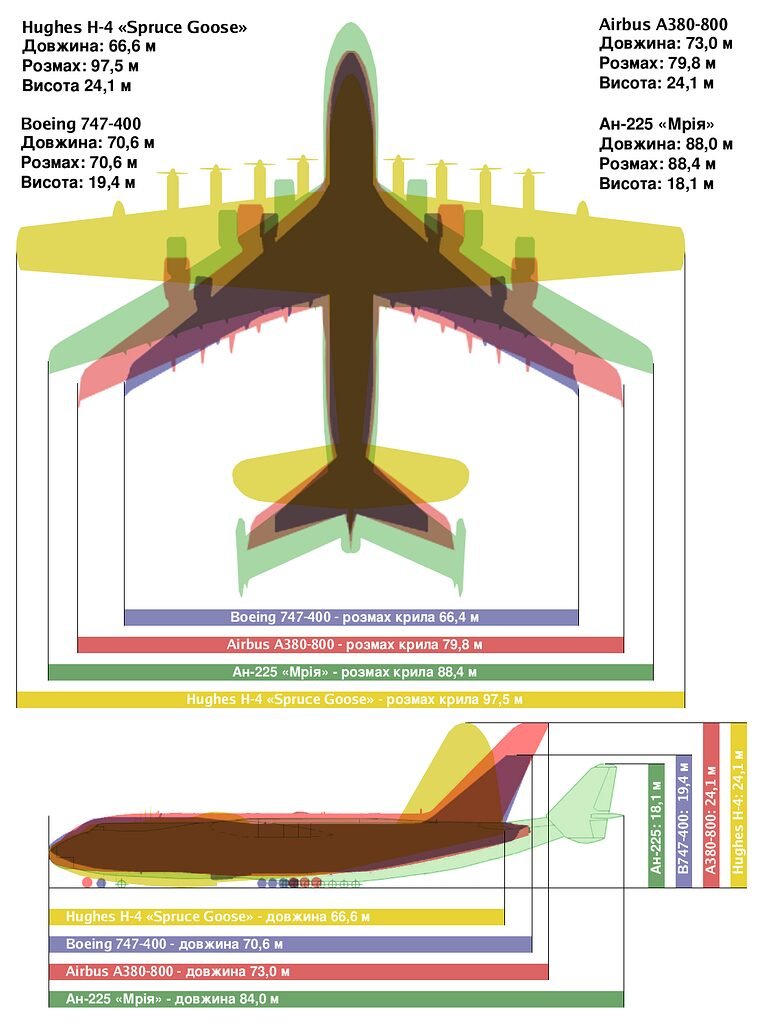
One of the most jaw-dropping aspects of the H-4 Hercules is its sheer size. With a wingspan of 320 feet—even longer than a football field—the H-4 is still the largest flying boat and holds the record for the widest wingspan of any plane ever built until recently.
Dimensions at a glance:
- Wingspan: 320 feet (97.5 meters)
- Length: 218 feet (66.6 meters)
- Height: 79 feet (24.1 meters)
- Weight: Over 400,000 pounds (fully loaded)
For comparison, its wingspan was nearly 1.5 times that of a Boeing 747! Its size was essential for accommodating its envisioned purpose, which was to carry over 750 troops or two Sherman tanks if needed.
Why “Spruce” Goose?
Despite its nickname, the H-4 Hercules is not actually made of spruce. The plane was constructed primarily from birch wood, as metals were in short supply due to the war effort. Hughes’s engineers innovated with duramold, a layered wooden construction method that bonded thin sheets of wood with resin, creating a lightweight yet strong material.
Critics mockingly dubbed it the “Spruce Goose,” a name that stuck despite Hughes’s disdain for it. The wood construction, though effective, only contributed to its reputation as an impractical and eccentric experiment in aviation.
The Engineering Marvel: What Made It So Special?
The H-4 Hercules was an engineering marvel of its time, combining size, durability, and innovation. Here are some of its standout features:
a. Eight Powerful Engines
To lift its enormous frame, the H-4 Hercules was equipped with eight Pratt & Whitney R-4360 Wasp Major radial engines, each capable of producing around 3,000 horsepower. These engines were the largest piston aircraft engines ever built in their time, providing the necessary power to lift the massive seaplane out of the water.
b. Unique Hull Design
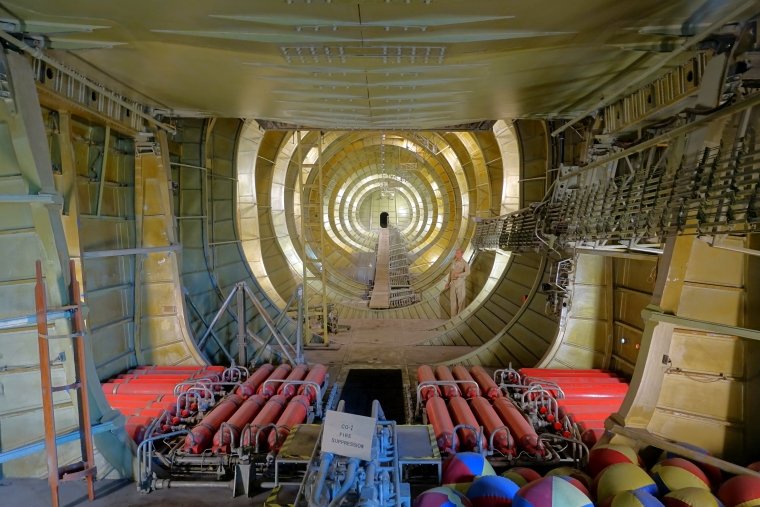
The H-4’s hull, resembling that of a boat, was designed to keep the plane stable on water. The engineers carefully crafted the hull to distribute the aircraft’s weight and withstand the forces encountered during takeoff and landing on water.
c. Duramold Technology
Duramold was a cutting-edge approach to using wood, with layers bonded by resin to give the plane strength without adding weight. This process allowed the engineers to create parts that were light yet strong, making the Spruce Goose much lighter than if it had been made from conventional metals.
d. Mind-Boggling Wingspan
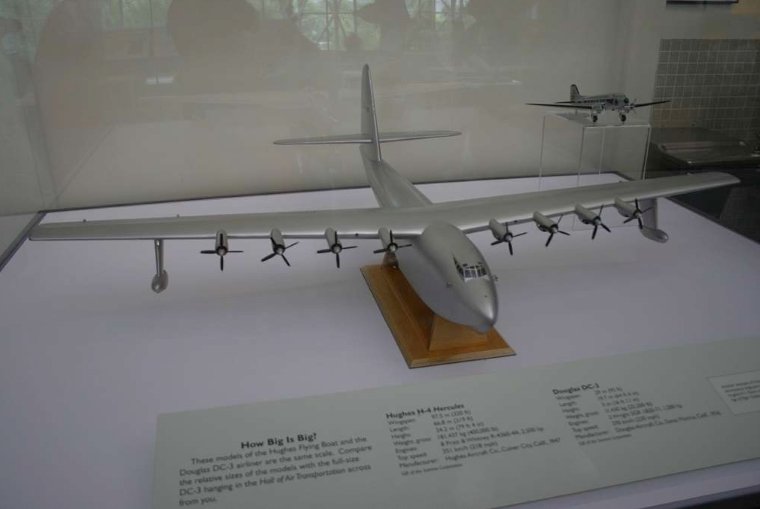
The 320-foot wingspan was not just for show—it was essential for providing the necessary lift. Each wing was built to handle extreme stresses, and the sheer size allowed the plane to maintain buoyancy on water, avoiding the need for pontoons.
The Only Flight: A Test in 1947
Howard Hughes was famously private and determined to see the H-4 Hercules take to the skies, despite widespread criticism and a skeptical public. After years of delays, cost overruns, and intense scrutiny, the Spruce Goose finally took its one and only flight on November 2, 1947.
With Hughes himself at the controls, the H-4 Hercules lifted off from Long Beach Harbor, flying just 70 feet above the water for roughly one mile at a speed of about 135 mph before safely landing. It lasted only about 26 seconds, but Hughes had proven that his colossal flying boat could indeed take to the skies.
Despite this success, the flight didn’t change the fate of the H-4. The war was long over, and there was no longer a need for the flying boat. The Hercules was carefully stored and maintained under Hughes’s direction for many years afterward, though it would never fly again.
Cost and Controversy: Was It Worth It?
The H-4 Hercules was not just a giant in size but also in cost. Initial estimates put the project around $2 million, but by the time it was completed, it had ballooned to nearly $23 million—equivalent to several hundred million dollars today. Hughes spent over $18 million of his own money on the project, illustrating his commitment (or obsession) with the aircraft.
Congress became involved due to the massive expenditure of public funds with minimal results. Hughes defended the project, claiming it was an investment in American ingenuity and a demonstration of what was possible if only people were willing to dream big.
This led to a famous 1947 hearing where Hughes appeared before the U.S. Senate War Investigating Committee to defend his expenditures on the H-4 and other projects. He passionately argued that he had every intention of making the plane operational, which he claimed was proven by its test flight.
Legacy and Where to Find the H-4 Hercules Today
After Hughes’s death, the H-4 Hercules changed ownership several times, eventually finding a permanent home at the Evergreen Aviation & Space Museum in McMinnville, Oregon. It remains there to this day, open to the public and awe-inspiring to all who see it in person. The H-4’s legendary status remains intact, and it serves as a monument to human ambition, innovation, and the courage to tackle the impossible.
Why Is the Spruce Goose Still Relevant?
The Spruce Goose is often cited as a cautionary tale about over-ambition and impractical projects. But for many, it represents something much more inspiring: the willingness to challenge norms, push boundaries, and pursue a vision even when the odds seem insurmountable.
a. Technological Inspiration
While wood construction fell out of favor, the principles behind the H-4’s duramold technology are similar to modern carbon fiber composites, which are now standard in many high-performance aircraft, from military jets to commercial airliners like the Boeing 787.
b. Icon of Innovation
The H-4 Hercules embodies the innovative spirit of the 20th century. It’s a reminder that progress often requires risks and that remarkable achievements often come from those willing to ignore conventional wisdom.
c. A Symbol of Determination
Howard Hughes may have been a controversial figure, but his commitment to the H-4 Hercules and its completion are testaments to his character. Hughes’s grit and dedication have inspired generations of engineers, aviators, and innovators who saw in him the will to bring dreams to life.
Fun Facts and Myths
The H-4 Hercules has accumulated its share of myths and legends. Here are some fun tidbits:
- Not Really a Goose: The “Spruce Goose” was a media invention that Hughes detested, preferring the plane’s official name, H-4 Hercules.
- The Only Flight: Some believe it never actually left the water, but archival footage clearly shows it airborne, even if just briefly.
- A Real-Life Marvel: The plane remains the largest wooden aircraft ever built, a record that may never be broken.
Conclusion: The Lasting Appeal of the Spruce Goose
The Hughes H-4 Hercules, aka the Spruce Goose, might have only flown once, but it continues to inspire the aviation world. With its ambitious design, engineering innovation, and the sheer size of its physical and symbolic footprint, the H-4 represents the heights of human ambition. Although impractical for its intended use, it has earned a special place in aviation history.