




The Maiden Tower in Baku, Azerbaijan, is one of the most iconic structures in the Caucasus region. It stands tall, a silent guardian of Baku’s Old City, holding secrets that go back to the 12th century—or possibly even further. Whether you’re a history buff, a mystery lover, or a traveler looking to explore Azerbaijan’s hidden gems, the Maiden Tower offers something truly unique. This guide delves into the rich history, intriguing legends, and practical details about this UNESCO-listed marvel, helping you make the most of your visit to one of Baku’s most intriguing landmarks.
- The History of Maiden Tower: A Journey Through Time
- Maiden Tower Description: Architectural Marvel and Cultural Symbol
- Interesting Facts: Legends and Mysteries of the Maiden Tower
- Did You Know?
- Getting There: Practical Tips for Visiting the Maiden Tower
- Final Thoughts: Why the Maiden Tower Should Be on Your Travel List
The History of Maiden Tower: A Journey Through Time
Ancient Beginnings
The Maiden Tower, or “Qız Qalası” in Azerbaijani, is shrouded in mystery regarding its origins. Historians debate when it was first built, with some dating it back to the 12th century and others suggesting that its foundations could be even older, possibly from as early as the 4th century AD. This period marked the time when the region was known as Caucasian Albania, and Baku served as a crucial port city. Many believe that the tower might have initially been part of a Zoroastrian temple complex, pointing to an era when Zoroastrianism was the dominant religion in the area.
A Tower with Many Purposes
Over the centuries, the Maiden Tower has served a variety of roles. Originally, it may have functioned as a defensive fortress, thanks to its thick stone walls and strategic positioning overlooking the Caspian Sea. During the medieval era, it acted as part of Baku’s fortified defenses, and its height allowed sentries to spot approaching invaders from afar. There is evidence that the tower could have also been a lighthouse, helping guide ships navigating the Caspian’s waters. Its architecture reflects the influence of Persian and Islamic styles, with intricate carvings and inscriptions in Arabic script, showcasing Baku’s cultural crossroads.
The 12th Century and Beyond
In the 12th century, Baku began to flourish as a city, and the Maiden Tower took on more cultural significance. The Shirvanshahs, a prominent ruling dynasty in the region, contributed to the tower’s construction and renovations. They fortified it further and used it as a watchtower. By the 15th century, when the Shirvanshahs built their grand palace nearby, the tower became a symbol of their power and resilience. With its robust design and ability to withstand earthquakes and invasions, the Maiden Tower stood firm even as other buildings in Baku crumbled or faded.
A UNESCO Heritage Site
In 2000, UNESCO designated the Maiden Tower, along with the Walled City of Baku, as a World Heritage Site. This recognition highlights the tower’s significance not only to Azerbaijan but to the entire world. Preservation efforts have since maintained the tower’s structural integrity, allowing visitors to climb its winding staircase, enjoy the panoramic views of Baku, and imagine what life in the ancient city might have been like.
Maiden Tower Description: Architectural Marvel and Cultural Symbol
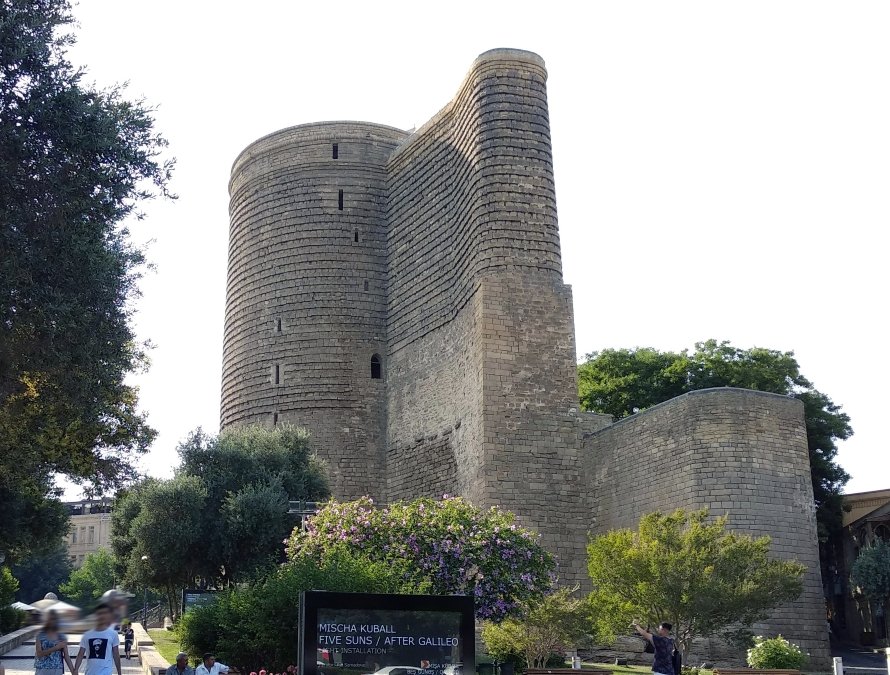
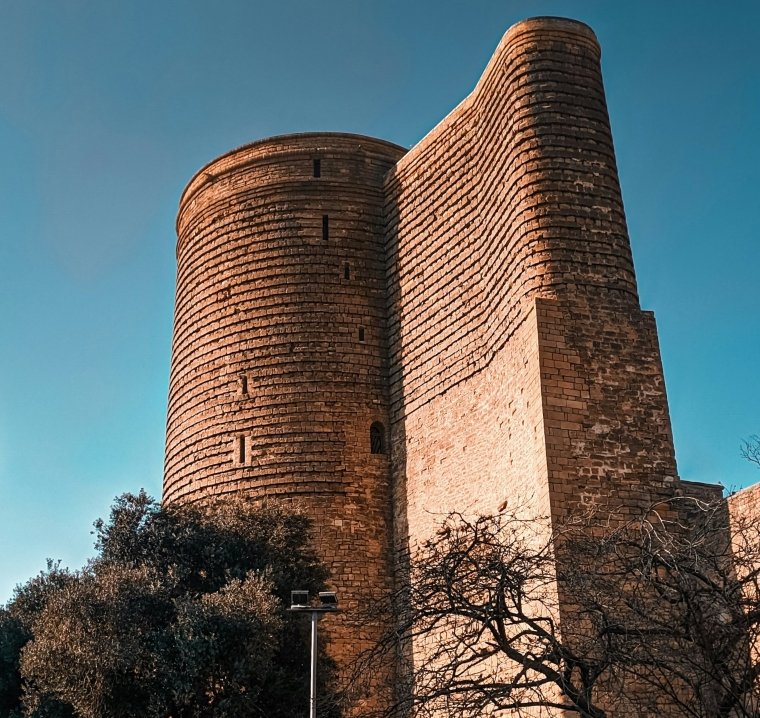
The Maiden Tower stands about 29.5 meters (97 feet) tall, with a diameter of 16.5 meters (54 feet) at its base. Its unique cylindrical structure is divided into eight levels, each with a distinct design and purpose. The exterior of the tower is built from limestone, which has a warm, golden tone that reflects the sun beautifully, especially at sunset.
The interior of the tower is as intriguing as its outer facade. Inside, you’ll find narrow winding staircases connecting each level, small windows providing natural light, and walls nearly 5 meters thick in places. These features reveal its intended function as a defensive structure, built to withstand sieges and attacks.
The top of the tower offers an incredible 360-degree view of Baku, the Caspian Sea, and the surrounding landscape. During the Soviet era, the Maiden Tower became an essential symbol of Baku and was featured on the city’s official emblem. Even today, it’s a treasured cultural landmark, frequently depicted in Azerbaijani art, literature, and media.
Interesting Facts: Legends and Mysteries of the Maiden Tower
Legend of the Maiden’s Plunge
The most famous legend surrounding the tower is that of a young maiden who threw herself from the top. According to the story, a powerful king fell in love with his daughter and demanded her hand in marriage. Horrified by the idea, the princess asked for one last wish: for the king to build a tall tower so she could delay the marriage. When it was completed, she climbed to the top and, in an act of despair, jumped into the Caspian Sea below. This tragic tale has made the Maiden Tower a symbol of sacrifice, love, and freedom, adding an air of mystery and melancholy to its history.
The Zoroastrian Connection
Another fascinating theory links the Maiden Tower to the ancient fire-worshipping Zoroastrians. Some believe that the tower served as a fire temple where priests kept an eternal flame burning as part of their rituals. This theory is supported by evidence of other Zoroastrian temples in the region, including the famous Ateshgah Fire Temple near Baku. If true, this makes the Maiden Tower a unique combination of fortress, temple, and lighthouse.
The Mysterious Inscription
One of the most puzzling features of the Maiden Tower is an ancient Arabic inscription on its walls. Translated, it reads: “Kubey Mesud ibn Davud.” Scholars believe this refers to an architect or builder named Masud, son of David, but the true meaning and context of this inscription remain unclear. It adds yet another layer to the tower’s mystique, leaving historians to wonder who Masud was and what role he played in its construction.
Did You Know?
- Nighttime Glow: The Maiden Tower is beautifully illuminated at night, making it a breathtaking sight against Baku’s modern skyline.
- Symbol of Independence: Some Azerbaijanis view the Maiden Tower as a symbol of their national resilience and independence, much like the young maiden in the legend who chose freedom over oppression.
Getting There: Practical Tips for Visiting the Maiden Tower
The Maiden Tower is located in the heart of Baku’s Old City, or “Icherisheher.” This historic area is easily accessible by public transportation, taxi, or even on foot if you’re staying nearby. Here’s what you need to know to make the most of your visit:
- Metro: Take the Baku Metro and get off at Icherisheher Station. From there, it’s a short walk to the tower.
- Opening Hours: The Maiden Tower is typically open from 10:00 AM to 6:00 PM, but check locally for any seasonal changes.
- Ticket Prices: Admission fees are usually around 15-20 Azerbaijani Manat (approximately $9-12 USD). Discounts may be available for students and children.
- Climbing the Tower: Wear comfortable shoes! The stairs are narrow and steep, and it can be a workout climbing to the top, but the view is worth it.
- Nearby Attractions: Don’t miss the Shirvanshah’s Palace, located nearby, or the many charming cafes and souvenir shops scattered throughout Icherisheher.
Final Thoughts: Why the Maiden Tower Should Be on Your Travel List
The Maiden Tower is more than just a historic monument—it’s a gateway into Baku’s layered past, full of stories, mysteries, and stunning views. Whether you’re drawn by its architecture, its legends, or its breathtaking views of the Caspian Sea, this UNESCO site offers a unique experience that captures the spirit of Azerbaijan’s capital. The Maiden Tower is an essential stop for anyone seeking to understand Baku’s soul, blending ancient history with modern vibrancy in a way few landmarks can match. So, next time you’re planning a trip to the Caucasus, make sure the Maiden Tower is at the top of your list!