




From the mist-shrouded stones of Stonehenge to the enigmatic statues of Easter Island, archaeological mysteries have captivated human imagination for centuries. These silent remnants of ancient civilizations stand as testaments to human ingenuity and creativity, yet they also pose profound questions that continue to baffle even the most brilliant minds of our time.
- 1. The Moai of Easter Island: Silent Sentinels of a Lost Civilization
- The Mystery of Construction and Transportation
- Theories About Their Purpose
- The Enigma of Easter Island’s Societal Collapse
- 2. Göbekli Tepe: Rewriting the History of Civilization
- A Glimpse into Prehistoric Sophistication
- The Mystery of Hunter-Gatherer Builders
- Theories About Its Purpose and Use
- The Puzzling Deliberate Burial
- 3. The Antikythera Mechanism: An Ancient Computer That Shouldn’t Exist
- 4. The Nazca Lines: Ancient Artistry Visible Only From the Sky
- A Canvas of Colossal Proportions
- Theories of Creation and Purpose
- Modern Research and Preservation Challenges
- 5. Stonehenge: A Prehistoric Monument of Celestial Significance
- An Engineering Marvel of the Ancient World
- Theories About Its Purpose
- Recent Discoveries and Ongoing Research
- 6. The Great Sphinx: Guardian of Ancient Secrets
- A Monumental Enigma
- The Water Erosion Controversy
- The Riddle of the Sphinx’s Face
- Restoration Efforts and New Technologies
- Conclusion
Archaeology, the study of human history through the excavation and analysis of artifacts and physical remains, has unlocked countless secrets of our past. However, for every mystery solved, another seems to emerge, challenging our understanding of ancient cultures and their capabilities. In this article, we delve into some of the most perplexing archaeological enigmas that have stubbornly resisted explanation, despite decades—sometimes centuries—of intensive study.
Prepare to embark on a journey through time as we explore monumental structures that seem to defy the technological limitations of their eras, artifacts that hint at knowledge far beyond their years, and entire civilizations that vanished under circumstances we still struggle to comprehend. From the windswept plains of Peru to the sun-baked deserts of Egypt, these mysteries span the globe and traverse the breadth of human history.
As we unravel these ancient puzzles, we’ll examine the latest theories, cutting-edge research, and the innovative technologies being employed in the quest for answers. Join us as we push the boundaries of our historical understanding and challenge the limits of archaeological interpretation.
1. The Moai of Easter Island: Silent Sentinels of a Lost Civilization
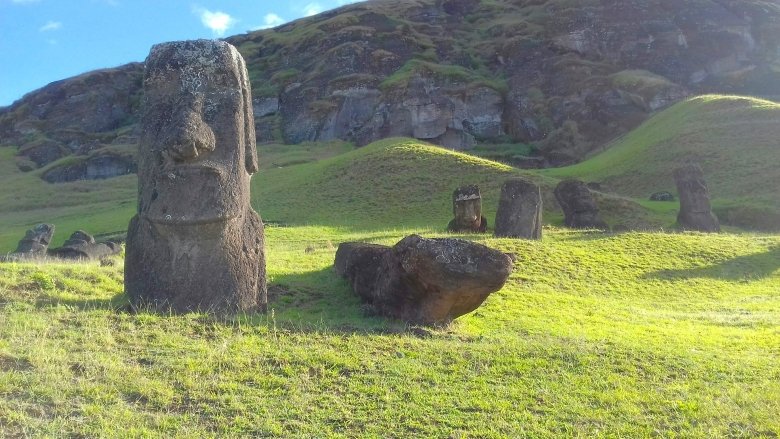
On a remote speck of land in the vast Pacific Ocean, hundreds of colossal stone figures stand in silent vigil. These are the Moai of Easter Island, one of the most isolated inhabited places on Earth. With their oversized heads, elongated ears, and inscrutable expressions, the Moai have long been a source of wonder and speculation.
Easter Island, known to its native Rapa Nui people as Rapa Nui, is a tiny volcanic island more than 2,000 miles from the coast of Chile. It’s here that these monumental statues, averaging 13 feet in height and weighing up to 80 tons, were carved and erected between the 13th and 16th centuries.
The Mystery of Construction and Transportation
The first mystery that confronts researchers is how these massive statues were created using only stone tools. The Moai were primarily carved from compressed volcanic ash found in the island’s Rano Raraku quarry. Remarkably, many statues remain half-carved, still attached to the bedrock, providing clues to their creation process.
Even more baffling is how these behemoths were transported across the island. Various theories have been proposed, from the use of log rollers to sledges, or even rocking the statues forward in an upright position—a method locals refer to as “walking” the Moai. Recent experiments have demonstrated the feasibility of some of these methods, but the exact techniques used by the ancient Rapa Nui remain a topic of debate.
Theories About Their Purpose
What drove the ancient inhabitants to devote such immense resources to creating and moving these statues? The prevailing theory suggests that the Moai represented ancestral chiefs who were believed to possess supernatural powers. By erecting these statues, the Rapa Nui may have been attempting to harness and distribute this power for the benefit of their communities.
Other theories propose that the Moai served as territorial markers, astronomical aids, or even as part of a complex water management system. The truth may involve a combination of these purposes, reflecting the multifaceted nature of Rapa Nui society and beliefs.
The Enigma of Easter Island’s Societal Collapse
Perhaps the most haunting mystery surrounding the Moai is tied to the fate of their creators. By the time European explorers arrived in the 18th century, Easter Island’s population had dwindled, and many of the Moai had been toppled.
What led to this dramatic decline? Some researchers argue that the island underwent an ecological collapse, triggered by deforestation and overpopulation. Others point to the introduction of European diseases or the impact of slave raids. The truth likely involves a complex interplay of factors, serving as a sobering reminder of the fragility of human societies.
As we continue to study the Moai and the civilization that created them, we’re left with a profound sense of the ingenuity and determination of our ancestors, as well as the enduring power of the mysteries they left behind.
2. Göbekli Tepe: Rewriting the History of Civilization
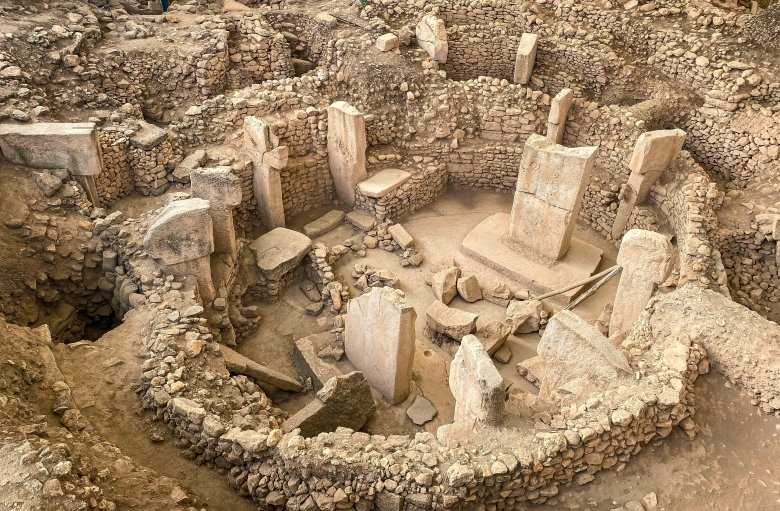
Nestled in the Southeastern Anatolia Region of Turkey lies a discovery that has forced archaeologists to reconsider the very timeline of human civilization. Göbekli Tepe, a Neolithic archaeological site, has been dubbed “zero point in history” due to its potential to revolutionize our understanding of the rise of human societies.
A Glimpse into Prehistoric Sophistication
Göbekli Tepe consists of a series of circular structures supported by massive stone pillars, many of which are adorned with intricate carvings of animals and abstract symbols. What makes this site truly extraordinary is its age—radiocarbon dating suggests that the oldest layers of the site date back to the 10th millennium BCE, making it over 11,000 years old.
To put this into perspective, Göbekli Tepe predates pottery, metallurgy, writing, and even the wheel. It was built roughly 6,000 years before Stonehenge and 7,000 years before the Great Pyramid of Giza. This timeline challenges the conventional view that complex societies only emerged after the development of agriculture.
The Mystery of Hunter-Gatherer Builders
One of the most perplexing aspects of Göbekli Tepe is that it appears to have been built by hunter-gatherers, not by a settled agricultural society. This raises profound questions about the organizational capabilities of pre-agricultural humans and the impetus behind such a monumental undertaking.
How did a nomadic society marshal the resources and labor necessary to construct such a complex? Some theories suggest that Göbekli Tepe might have been a central gathering point for various hunter-gatherer groups, possibly serving ritual or social functions that we’re only beginning to understand.
Theories About Its Purpose and Use
The exact purpose of Göbekli Tepe remains a subject of intense debate. Some researchers view it primarily as a religious sanctuary, a “temple” that drew pilgrims from great distances. The intricate animal carvings might represent totems or spirit animals, suggesting a complex belief system.
Others hypothesize that it might have served as an observatory, a center for healing, or even a site for funerary rituals, though no burial remains have been found. The diversity of theories reflects the site’s complexity and our limited understanding of the societies that created it.
The Puzzling Deliberate Burial
Perhaps the most enigmatic aspect of Göbekli Tepe is that it was deliberately buried around 8,000 BCE. This burial preserved the site remarkably well, but it also raises questions about why a structure of such evident importance would be carefully covered up.
Was this a ritual act of closure? A way to preserve the site for future generations? Or perhaps a response to changing cultural or environmental conditions? The answers remain elusive, adding another layer of mystery to this already perplexing site.
As excavations continue at Göbekli Tepe, each new discovery seems to raise more questions than it answers. This ancient wonder continues to challenge our preconceptions about prehistoric societies and the dawn of human civilization, reminding us that the path of human progress is far more complex and fascinating than we ever imagined.
3. The Antikythera Mechanism: An Ancient Computer That Shouldn’t Exist
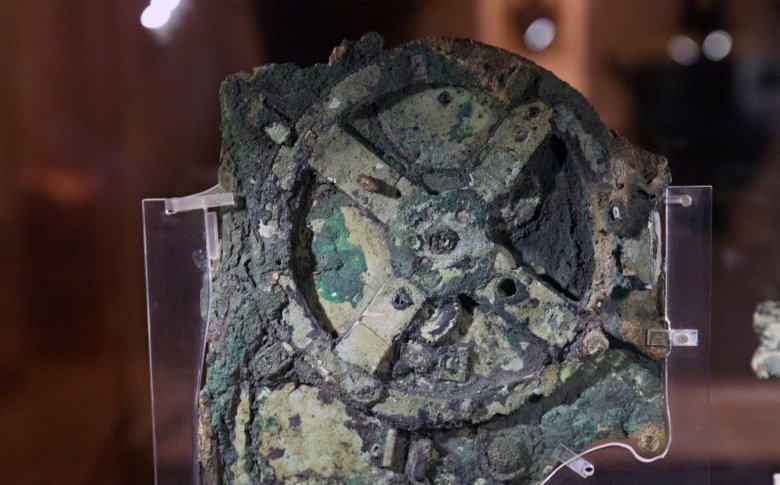
In 1901, divers exploring an ancient shipwreck off the coast of the Greek island Antikythera made an astonishing discovery. Among the usual artifacts of ancient sea trade—statues, pottery, and coins—they found a corroded lump of metal that would go on to rewrite our understanding of ancient technology.
A Marvel of Ancient Engineering
This mysterious object, now known as the Antikythera Mechanism, has been described as the world’s first analog computer. Dating back to around 100-150 BCE, it’s a complex system of bronze gears and dials housed in a wooden box, roughly the size of a mantel clock.
What makes the Antikythera Mechanism truly remarkable is its sophistication. It was used to predict astronomical positions and eclipses for calendar and astrological purposes, as well as to track the four-year cycle of athletic games that was similar to an Olympiad.
Complexity Beyond Its Time
The device’s complexity is staggering, especially considering its age. It contains at least 30 meshing bronze gears, with teeth as tiny as 1.5 millimeters long. The largest gear is about 14 centimeters in diameter and has 223 teeth.
This level of mechanical complexity was not seen again in Europe until the development of mechanical astronomical clocks in the 14th century. The existence of the Antikythera Mechanism suggests that the ancient Greeks possessed mathematical and engineering knowledge far beyond what was previously believed possible for that era.
Theories and Implications
The discovery of the Antikythera Mechanism has profound implications for our understanding of ancient Greek technology and knowledge. It suggests that the ancient Greeks had a much more sophisticated understanding of astronomical cycles and mechanical engineering than previously thought.
Some researchers speculate that this device might not have been unique, but rather an example of a whole class of complex mechanical calculators that have been lost to time. If true, this would significantly alter our perception of ancient technological capabilities.
The mystery deepens when we consider why similar devices aren’t found from the same period. Was this technology lost, or deliberately suppressed? Did it represent the pinnacle of ancient engineering, or was it a more common tool that simply hasn’t survived elsewhere?
As research continues, the Antikythera Mechanism stands as a humbling reminder that our ancestors were capable of far more than we often give them credit for, and that there may be many more surprises waiting to be uncovered in the annals of ancient history.
4. The Nazca Lines: Ancient Artistry Visible Only From the Sky
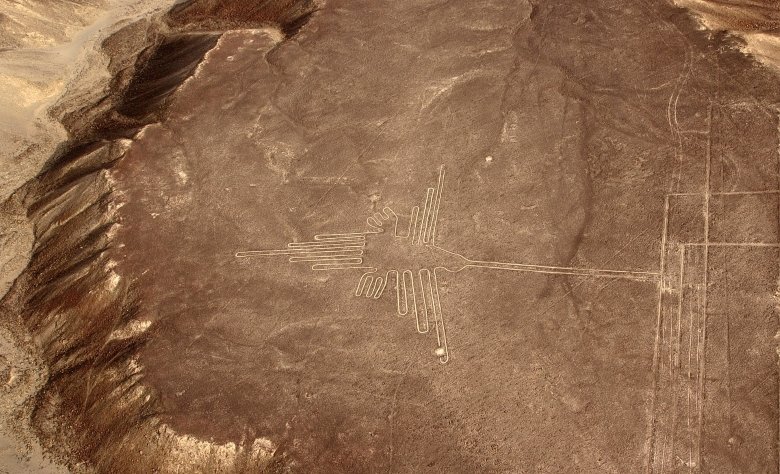
Etched into the arid coastal plains of southern Peru, the Nazca Lines have puzzled researchers since their discovery in the 1920s. These enormous geoglyphs, depicting various animals, plants, and geometric shapes, are only fully visible from the air, raising intriguing questions about their purpose and creation.
A Canvas of Colossal Proportions
The Nazca Lines cover an area of nearly 1,000 square kilometers. They consist of over 300 different figures, including a hummingbird, a spider, a monkey, and various geometric shapes. Some of these designs are up to 30 meters wide and stretch for 9 kilometers.
What makes these lines particularly mysterious is the fact that they can only be fully appreciated from a considerable height. This has led to wild speculation about their purpose and the means by which they were created, given that they predate any known form of flight in the region by over a millennium.
Theories of Creation and Purpose
Various theories have been proposed to explain the purpose of the Nazca Lines:
- Astronomical Calendar: Some researchers suggest the lines form a giant astronomical calendar, used to track seasonal changes and celestial events.
- Water Rituals: Given the desert environment, others propose the lines were part of water-seeking rituals.
- Alien Landing Strips: More controversial theories suggest the lines were created as landing strips for extraterrestrial visitors.
- Religious Significance: Many scholars believe the lines had a religious or ceremonial purpose, possibly used in rituals to appease the gods.
The method of creation is less contentious but no less impressive. It’s believed the Nazca people created the designs by removing the reddish pebbles that cover the ground, exposing the lighter-colored earth underneath. The dry, windless climate of the Nazca Desert has preserved these lines for centuries.
Modern Research and Preservation Challenges
Today, researchers use drones and satellite imagery to study the Nazca Lines in unprecedented detail. These technologies have led to the discovery of new figures and have helped in conservation efforts.
However, the lines face threats from both natural erosion and human activity. Climate change, leading to increased rainfall in the region, poses a significant risk to these ancient wonders. Additionally, urban expansion and unauthorized access to the sites continue to be concerns.
As we continue to study and protect the Nazca Lines, they remain a testament to the ingenuity and artistry of ancient civilizations, challenging our understanding of their capabilities and purposes.
5. Stonehenge: A Prehistoric Monument of Celestial Significance
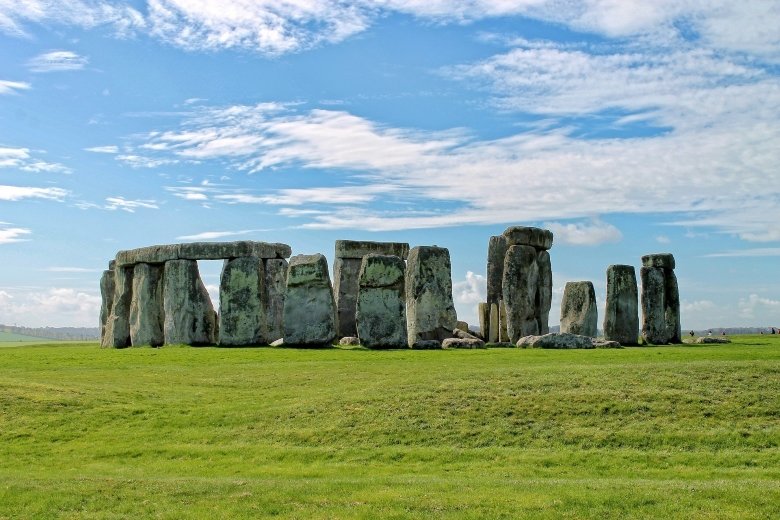
Standing solemnly on the Salisbury Plain in Wiltshire, England, Stonehenge has captured human imagination for millennia. This prehistoric monument, with its massive standing stones arranged in a circular pattern, continues to be one of the world’s most famous and mysterious archaeological sites.
An Engineering Marvel of the Ancient World
Stonehenge was built in several stages, with the oldest parts dating back about 5,000 years. The most striking feature is the ring of standing stones, each around 4 meters high, 2.1 meters wide, and weighing about 25 tons. These are crowned with horizontal lintel stones, creating the iconic stone circle we recognize today.
What makes Stonehenge particularly remarkable is the level of engineering skill required for its construction. The stones were transported from quarries up to 240 kilometers away, a staggering feat for a Neolithic society. Additionally, the precision with which the stones were shaped and fitted together demonstrates a sophisticated understanding of construction techniques.
Theories About Its Purpose
The true purpose of Stonehenge remains one of archaeology’s greatest debates. Some of the prevailing theories include:
- Celestial Observatory: The monument aligns with the midsummer sunrise and midwinter sunset, suggesting it may have been used to track celestial movements and seasons.
- Healing Center: Some researchers propose it was a place of healing, supported by the discovery of ancient burials of individuals who appear to have traveled long distances, possibly seeking cures.
- Burial Ground: The presence of cremated human remains suggests Stonehenge may have served as an elite burial ground.
- Unification Monument: A more recent theory proposes that Stonehenge symbolized the unification of different British tribes, serving as a monument to ancient diplomacy.
Recent Discoveries and Ongoing Research
Modern archaeological techniques continue to unveil new secrets about Stonehenge. Ground-penetrating radar and other remote sensing technologies have revealed a hidden landscape of burial mounds, shrines, and other monuments surrounding Stonehenge.
In 2020, archaeologists announced the discovery of a large circle of shafts surrounding Durrington Walls, a Neolithic settlement near Stonehenge. This “Durrington Shafts” discovery suggests that the landscape around Stonehenge was even more complex than previously thought.
Despite these advances, many questions remain. How exactly were the stones transported and erected? What was the true significance of the site to its builders? As research continues, Stonehenge stands as a testament to the ingenuity of our ancestors and the enduring power of human curiosity.
6. The Great Sphinx: Guardian of Ancient Secrets
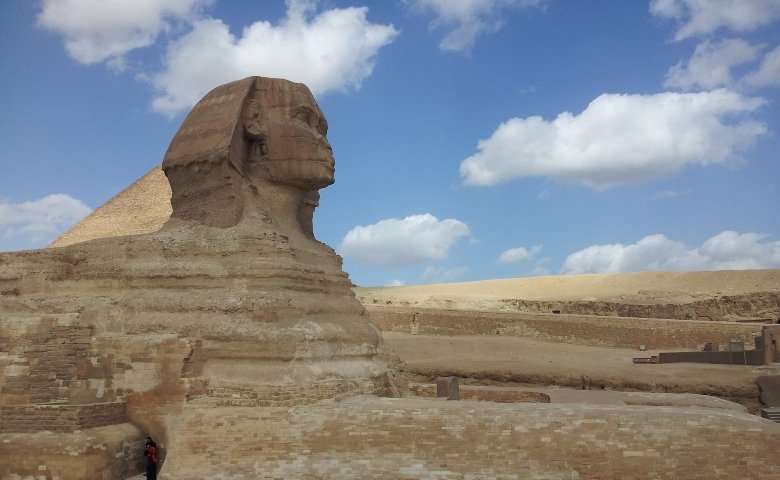
Gazing eternally towards the eastern horizon, the Great Sphinx of Giza has captured the imagination of travelers, scholars, and mystics for millennia. This colossal statue, with the head of a human and the body of a lion, continues to be a source of mystery and debate among Egyptologists and researchers.
A Monumental Enigma
The Great Sphinx, measuring 73 meters long and 20 meters high, is believed to be one of the oldest and largest monumental sculptures in the world. Traditionally, Egyptologists have attributed its construction to the Pharaoh Khafre, dating it to around 2500 BCE. However, this conventional dating has been challenged in recent years, adding to the statue’s mystique.
The Water Erosion Controversy
One of the most contentious debates surrounding the Sphinx involves evidence of water erosion on its enclosure walls. Some geologists argue that the erosion patterns are indicative of prolonged exposure to heavy rainfall, which would date the Sphinx to a much earlier period—possibly as far back as 10,000 BCE.
This theory, if proven, would dramatically alter our understanding of ancient Egyptian civilization and potentially human history as a whole. However, it remains highly controversial within the archaeological community, with many scholars arguing for alternative explanations for the erosion patterns.
The Riddle of the Sphinx’s Face
Another mystery surrounds the identity of the face depicted on the Sphinx. While traditionally associated with Pharaoh Khafre, some researchers argue that the facial features don’t match other depictions of the pharaoh. Alternative theories suggest it could represent an earlier pharaoh or even a pre-dynastic ruler.
Adding to the intrigue is the Sphinx’s missing nose. While popular legend blames Napoleon’s troops for using the nose for target practice, historical evidence suggests it was actually destroyed centuries earlier, possibly by a Sufi Muslim in the 14th century who considered the statue idolatrous.
Restoration Efforts and New Technologies
Over the millennia, the Sphinx has faced numerous threats, from intentional damage to natural erosion. Recent restoration efforts have focused on stabilizing the monument and preventing further degradation.
Modern technologies are also shedding new light on the Sphinx’s secrets. Thermal imaging has revealed temperature differences in the monument’s structure, potentially indicating hidden chambers or passages. Meanwhile, photogrammetry and 3D modeling are allowing for unprecedented detailed study of the Sphinx’s features and construction.
As research continues, the Great Sphinx remains a symbol of ancient Egypt’s enduring mystique, challenging our understanding of history and reminding us that some of the greatest mysteries lie hidden in plain sight.
Conclusion
As we’ve journeyed through these archaeological enigmas, from the towering Moai of Easter Island to the inscrutable gaze of the Great Sphinx, we’re left with a profound sense of wonder at the ingenuity and complexity of ancient civilizations. These mysteries challenge our preconceptions about the capabilities of our ancestors and the linear nature of human progress.
Each of these sites and artifacts represents not just a puzzle to be solved, but a window into the rich tapestry of human history. They remind us that our understanding of the past is constantly evolving, shaped by new discoveries, technologies, and perspectives.
The enduring nature of these mysteries also highlights the importance of continued research and preservation efforts. As we develop new technologies and methodologies, we gain fresh insights into these ancient enigmas. Yet, for every question answered, new ones emerge, ensuring that the field of archaeology remains as dynamic and exciting as ever.
These unsolved cases serve as a humbling reminder of how much we have yet to learn about our own history. They invite us to question, to explore, and to imagine—keeping alive the same spirit of curiosity that likely inspired the creators of these wonders.
As we look to the future, we can be certain that these ancient mysteries will continue to captivate researchers and enthusiasts alike, driving us to push the boundaries of our knowledge and understanding of human civilization.
We invite you to continue exploring these fascinating archaeological mysteries. What theories resonate most with you? Do you have favorite unsolved historical enigmas that weren’t covered here?
Share your thoughts in the comments below, and don’t forget to check out our related articles on ancient civilizations and archaeological discoveries. For those eager to dive deeper, we recommend the following resources:
- “Archaeology: Theories, Methods, and Practice” by Colin Renfrew and Paul Bahn
- National Geographic’s archaeology portal (nationalgeographic.com/archaeology-and-history)
- The Archaeological Institute of America’s website (archaeological.org)
Remember, the next great breakthrough in understanding these mysteries could come from anywhere. Keep questioning, keep exploring, and who knows—you might be the one to unravel history’s next great archaeological puzzle!