




Noor Inayat Khan: The Spy Princess
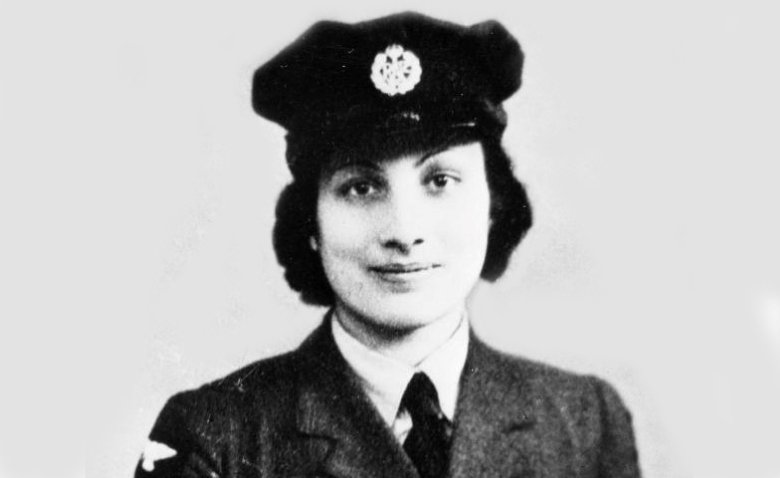
In the annals of World War II espionage, few stories are as captivating and inspiring as that of Noor Inayat Khan. A woman of extraordinary courage and unwavering commitment, Noor’s life reads like a thrilling novel, filled with bravery, intrigue, and ultimate sacrifice. This article delves into the remarkable journey of the woman known as the “Spy Princess,” exploring her background, her crucial role in the war effort, and her enduring legacy.
A Unique Heritage
Born in 1914 in Moscow to an Indian father and an American mother, Noor Inayat Khan’s early life was as cosmopolitan as it was unconventional. Her father, Hazrat Inayat Khan, was a musician and Sufi teacher who brought his family to Europe to spread his spiritual message. Noor spent her formative years in Paris, where she imbibed a rich cultural heritage that blended East and West.
Growing up, Noor developed a passion for music and writing. She studied child psychology at the Sorbonne and music at the Paris Conservatory. By the late 1930s, she had established herself as a children’s author, publishing stories that reflected her pacifist and spiritual upbringing. Little did she know that her life was about to take a dramatic turn.
The Call to Action
When World War II erupted and Nazi Germany occupied France in 1940, Noor’s pacifist beliefs were put to the test. Faced with the brutality of the Nazi regime, she made the difficult decision to actively resist. Along with her brother Vilayat, Noor fled to England, where she joined the Women’s Auxiliary Air Force (WAAF) in 1940.
Noor’s unique background and skills soon caught the attention of British intelligence. Fluent in French and skilled in radio operation, she was recruited by the Special Operations Executive (SOE), a secret organization established by Winston Churchill to conduct espionage and sabotage behind enemy lines.
Training for Danger
The training to become an SOE agent was rigorous and demanding. Noor, despite her gentle nature, demonstrated remarkable aptitude and determination. She learned hand-to-hand combat, weapons handling, and advanced radio operation. Her instructors noted her exceptional memory and her ability to maintain her composure under pressure – skills that would prove crucial in the field.
However, they also expressed concerns about her idealism and strong moral convictions. Some worried that she might not be suited for the ruthless world of espionage. Nevertheless, Noor’s unwavering commitment to the cause and her unique qualifications made her an invaluable asset.
Behind Enemy Lines
In June 1943, Noor became the first female radio operator to be sent to occupied France. Operating under the codename “Madeleine,” she joined the Prosper resistance network in Paris. Her mission was critical: to maintain communication between the French Resistance and British intelligence, coordinating supply drops and sabotage operations.
The job was incredibly dangerous. The average life expectancy for a radio operator in occupied France was just six weeks. Nazi direction-finding vans constantly swept the streets, searching for illicit transmissions. Noor had to change locations frequently, lugging her heavy radio equipment across Paris, always one step ahead of the Gestapo.
Betrayal and Capture
Disaster struck when the Prosper network was betrayed and collapsed under a wave of arrests. Noor was advised to return to England, but she refused, knowing she was now the last vital link between occupied France and British intelligence. For three months, she evaded capture, continuing to transmit crucial information while constantly on the move.
Tragically, in October 1943, Noor was betrayed by a double agent. She was arrested by the Gestapo and interrogated at their headquarters on Avenue Foch. Despite brutal interrogation, Noor refused to reveal any information. Her captors described her as uncooperative and dangerous.
Imprisonment and Sacrifice
Noor made two escape attempts from her prison, but was recaptured both times. Eventually, she was sent to Pforzheim prison in Germany, where she was kept in solitary confinement, chained and barely fed. Yet, even in these horrific conditions, her spirit remained unbroken.
In September 1944, Noor, along with three other SOE agents, was transferred to Dachau concentration camp. On the morning of September 13, 1944, she was executed by the SS. Her last word, witnesses later recounted, was “Liberté.”
A Lasting Legacy
Noor Inayat Khan’s extraordinary courage and sacrifice did not go unrecognized. She was posthumously awarded the George Cross by Britain and the Croix de Guerre by France. Her story, long overlooked, has in recent years gained increasing recognition.
In 2012, a bronze bust of Noor was unveiled in Gordon Square, London, near her former family home. In 2014, the Royal Mail issued a stamp in her honor. Books, documentaries, and even a feature film have brought her inspiring story to new generations.
Noor Inayat Khan’s life serves as a testament to the power of individual courage in the face of tyranny. Her unwavering commitment to freedom, even at the cost of her own life, continues to inspire people around the world. In an era of conflict and division, Noor’s story reminds us of the enduring strength of human spirit and the universal values of liberty and justice.
As we reflect on the sacrifices made during World War II, let us remember Noor Inayat Khan – the pacifist who became a warrior, the princess who became a spy, and the hero who gave everything for freedom.