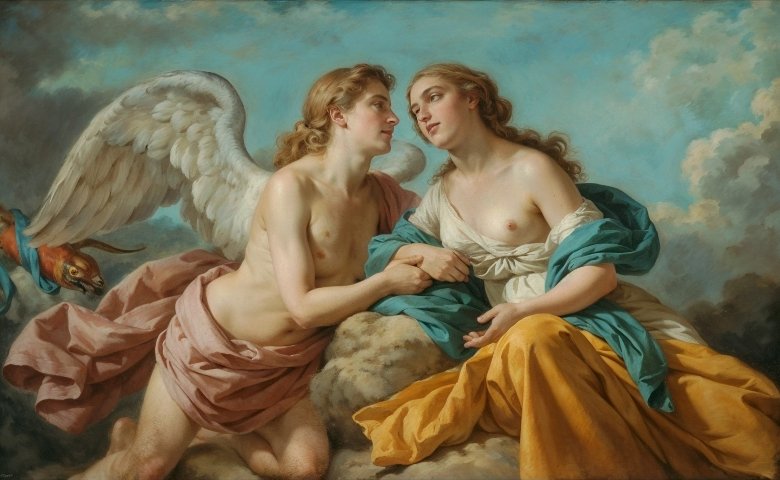





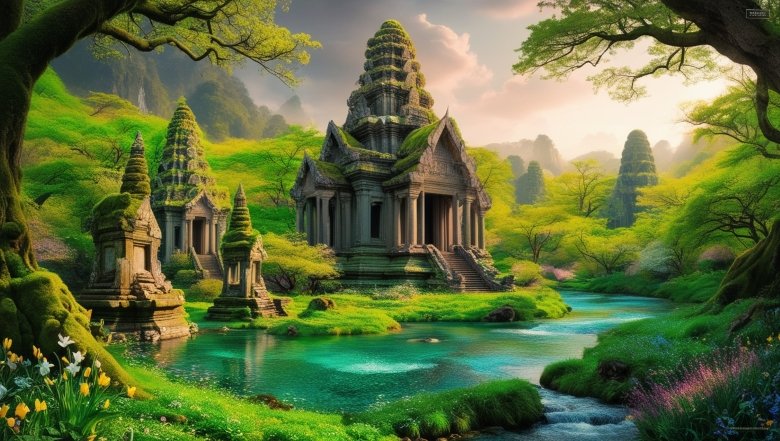
Hyperborea, the fabled land of eternal spring and perpetual sunlight, has captivated minds for millennia. This comprehensive guide delves deep into the mysteries of this ancient Greek legend, exploring its origins, inhabitants, and enduring influence on culture and mythology. Whether you’re a history buff, mythology enthusiast, or curious reader, join us on an extraordinary journey to uncover the truth behind the Hyperborean myth.
- Key Takeaways:
- The Historical Trail: Tracing Hyperborea Through Time
- Origins & Etymology: Unraveling the Name
- The Blessed Inhabitants: Who Were the Hyperboreans?
- The Elusive Location: Where Was Hyperborea?
- Legends and Lore: Stories from the Far North
- Hyperborea in Popular Culture: From Ancient Myth to Modern Media
- The Significance of Hyperborea in World Folklore
- Recurring Themes in Hyperborean Mythology
- Hyperborea: Myth or Reality? Concluding Thoughts
Key Takeaways:
- Hyperborea is a mythical land of eternal spring in Greek legend
- The name means “beyond the North Wind” in Ancient Greek
- Inhabitants were said to be blessed with long life and happiness
- Hyperborea’s location remains a subject of debate and speculation
- The myth has influenced literature, art, and esoteric thought for centuries
The Historical Trail: Tracing Hyperborea Through Time
The concept of Hyperborea boasts a rich and fascinating historiography, with roots embedded deep in ancient Greek literature. First introduced by the renowned poet Pindar in the 5th century BCE, this idea of a blessed northern realm quickly captured the Hellenic imagination. Herodotus, often hailed as the “Father of History,” further popularized the notion in his writings, painting a vivid picture of Hyperborea as a land of abundance where people enjoyed millennia-long lifespans.
As classical knowledge spread across Europe during the Renaissance, interest in Hyperborea experienced a revival. Scholars and mystics alike endeavored to reconcile ancient accounts with contemporary geographic understanding, often weaving intricate tapestries of fact and fantasy in their interpretations. The 19th and 20th centuries witnessed a resurgence of Hyperborean themes in occult and esoteric circles, with some groups claiming spiritual or racial connections to this mythical land.
Today, Hyperborea continues to be a subject of academic study and popular fascination, serving as a unique lens through which we can examine the evolution of geographical knowledge, cultural exchange, and humanity’s enduring penchant for mythmaking.
Origins & Etymology: Unraveling the Name
The term “Hyperborea” originates from Ancient Greek, literally translating to “beyond the North Wind.” In Greek mythology, Boreas personified the north wind, and the Hyperboreans were thus believed to inhabit a land untouched by his frigid gusts. This etymology reflects the Greek conception of a paradise free from winter’s harsh grip, existing in a state of eternal spring.
The Blessed Inhabitants: Who Were the Hyperboreans?
Ancient accounts paint a picture of the Hyperboreans as a truly blessed race:
- Longevity: Said to live for a thousand years
- Health: Free from disease and the ravages of old age
- Peace: Untouched by war and conflict
- Beauty: Described as tall and physically perfect
- Wisdom: Possessed of great knowledge and artistic talents
- Spirituality: Closely associated with the worship of Apollo
These idealized people were thought to live in perfect harmony with nature and the gods, embodying the Greek ideal of a utopian society.
The Elusive Location: Where Was Hyperborea?
The exact whereabouts of Hyperborea have been debated for centuries. While ancient Greeks placed it vaguely in the far north, various theories have attempted to identify it with real locations:
- The British Isles
- Scandinavia
- Arctic regions
- Central Asia
- The North Pole
Modern scholars generally agree that Hyperborea was more conceptual than geographical, representing the Greek notion of an earthly paradise beyond the known world. However, the search for a “real” Hyperborea continues to inspire explorers and theorists alike.
Legends and Lore: Stories from the Far North
Hyperborea has spawned numerous captivating legends:
- The Apollo Connection: Annual tributes sent to Delos to honor the god
- Abaris the Aeronaut: A priest who could fly on an arrow
- Giants and Advanced Civilizations: Tales of a superior ancient race
- Celtic Origins: Beliefs linking Hyperborea to the ancestors of the Celts
These stories have contributed to Hyperborea’s enduring mystique and its influence on later mythologies and esoteric traditions.
Hyperborea in Popular Culture: From Ancient Myth to Modern Media
The concept of Hyperborea has left an indelible mark on various forms of media and literature:
- Literature: H.P. Lovecraft’s Cthulhu Mythos, Clark Ashton Smith’s Hyperborean Cycle
- Comics: Marvel’s Thor series
- Video Games: “Conan Exiles”
- Occult Writings: Numerous new age and esoteric texts
This widespread presence underscores Hyperborea’s continued relevance in modern storytelling and imagination.
The Significance of Hyperborea in World Folklore
Hyperborea holds a pivotal place in global folklore as an archetype of the “earthly paradise” or “golden age” myth. It represents humanity’s universal longing for an ideal world free from hardship and close to the divine. The legend has influenced various mystical and spiritual traditions, serving as a powerful symbol of hidden wisdom and spiritual enlightenment.
Recurring Themes in Hyperborean Mythology
Several key themes frequently appear in stories about Hyperborea:
- Utopian society living in harmony with nature
- Advanced knowledge and spiritual wisdom
- Connection to ancient gods or divine beings
- Longevity or immortality of inhabitants
- Isolation from the rest of the world
- Perfect climate and abundant resources
- Superior physical and mental attributes of the population
These themes reflect common human aspirations and ideals, contributing to the myth’s enduring appeal.
Hyperborea: Myth or Reality? Concluding Thoughts
While concrete evidence for Hyperborea’s physical existence remains elusive, its lasting impact on human culture is undeniable. Whether viewed as a lost civilization, a spiritual ideal, or a metaphor for human potential, Hyperborea continues to captivate our collective imagination and inspire us to seek out the extraordinary.
As we conclude our exploration of this fascinating legend, we’re left with a deeper appreciation for the power of myth in shaping human thought and aspiration. Hyperborea may not appear on any modern map, but its influence on literature, art, and spirituality is profound and far-reaching.
Perhaps the true value of the Hyperborean myth lies not in its historical accuracy, but in its ability to inspire us to create a better world in the here and now. As we face global challenges and uncertainties, the dream of Hyperborea reminds us of our capacity for imagining and striving towards a more perfect world.
What aspects of the Hyperborean myth resonate most with you? How might we apply the ideals of this ancient legend to our modern lives? The journey to understand Hyperborea is, in many ways, a journey to understand ourselves and our deepest aspirations as a species.